 Save
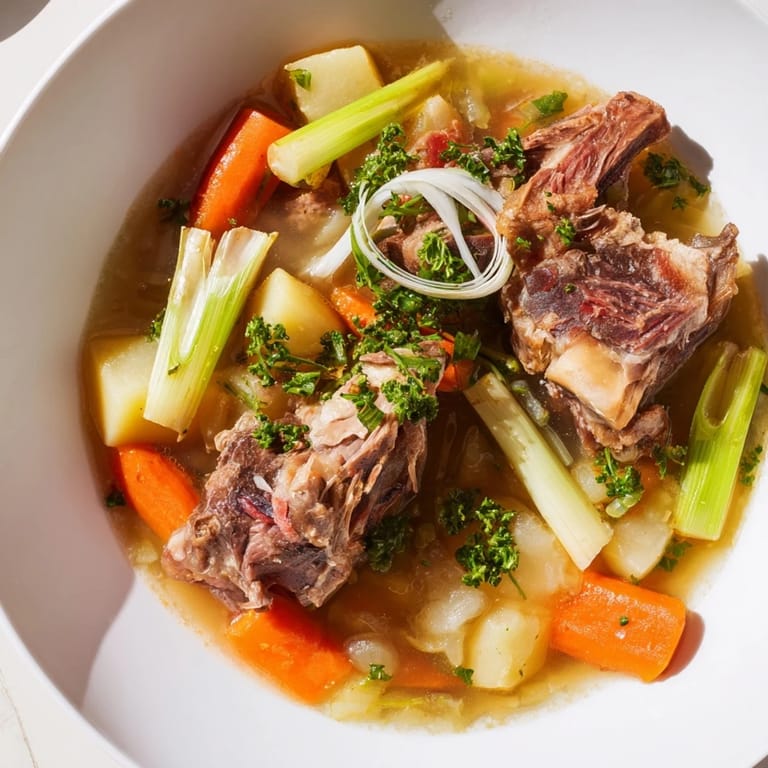
Save My neighbor from Cardiff brought a pot of cawl to our door one winter evening, steam rising from under the lid, and I remember thinking how something so simple—just lamb and vegetables in broth—could smell so deeply comforting. She told me it was her grandmother's recipe, the kind made without fuss or pretense, just honest ingredients left to do their work. That first spoonful was a revelation: tender meat that fell apart on my tongue, vegetables so soft they'd surrendered completely to the heat, and a broth that tasted like the whole dish had been simmering for years even though it hadn't. I asked for the recipe that night, and she laughed, saying there was nothing secret about it—just time and a good heavy pot. I've been making it ever since, and it never fails to transform a cold day into something warm.
I made this for my sister when she was going through a rough stretch, and she sat at my kitchen table while it bubbled away, the whole room filling with the smell of lamb and leeks. We didn't talk much at first, just listened to the gentle simmer and watched the vegetables soften through the glass lid. By the time I ladled it into bowls, something had shifted—the warmth of the stew seemed to ease whatever heaviness she'd brought with her. She's asked me to make it again more times than I can count.
Ingredients
- Lamb shoulder, 1 kg (2.2 lbs), bone-in and cut into large chunks: Bone-in meat gives the broth a deeper, richer flavor that boneless cuts simply can't match—it's worth the small extra effort to ask your butcher for this cut.
- Carrots, 2 large, peeled and sliced: Their sweetness balances the richness of the lamb and they'll soften into the broth beautifully over time.
- Parsnips, 2 medium, peeled and sliced: These add an earthy sweetness that makes cawl taste unmistakably Welsh in a way other root vegetables can't quite capture.
- Potatoes, 2 medium, peeled and diced: They thicken the broth naturally as they break down, so you don't need flour or any thickening agent.
- Swede (rutabaga), 1 small, peeled and diced: Its mild, slightly sweet flavor rounds out the vegetable medley without overpowering anything else.
- Leeks, 2, cleaned thoroughly and sliced: This is crucial—cawl without leeks isn't really cawl—and cleaning them properly means no hidden grit ruining a perfect bowl.
- Onion, 1 medium, diced: It dissolves into the broth and builds flavor depth without announcing itself as onion.
- Lamb or chicken stock, 1.5 liters (6 cups), low-sodium: Low-sodium lets you season to your own taste and prevents the broth from becoming oversalty as it reduces.
- Bay leaves, 2: They perfume the whole pot but must be removed before serving—a small detail that matters.
- Fresh parsley, 1 small bunch, chopped: Some goes in during cooking for subtle flavor, and fresh parsley at the end brightens everything up.
- Salt and freshly ground black pepper, to taste: Taste as you go, especially toward the end when flavors have concentrated.
Tired of Takeout? 🥡
Get 10 meals you can make faster than delivery arrives. Seriously.
One email. No spam. Unsubscribe anytime.
Instructions
- Sear the lamb gently to begin:
- Place your lamb pieces in a large, heavy-bottomed pot and pour the stock over them, then bring everything to a boil. You'll see foam rise to the surface—skim it off with a spoon, which keeps the broth clear and clean-tasting. This step takes just a few minutes but makes a noticeable difference.
- Let the lamb braise low and slow:
- Once you've skimmed the foam, add the bay leaves, turn the heat down, and cover the pot. The gentle simmer should barely bubble—you want to hear a quiet hiss, not an aggressive boil. This is where patience becomes an ingredient itself; let it sit undisturbed for a full hour.
- Build layers with the vegetables:
- After the hour is up, add your carrots, parsnips, potatoes, swede, onion, and most of the leeks, saving a handful of the leeks for the very end. Season with salt and pepper now, though you'll adjust again later. The vegetables will sink into the broth and cook in the lamb's flavorful liquid.
- Simmer until everything surrenders:
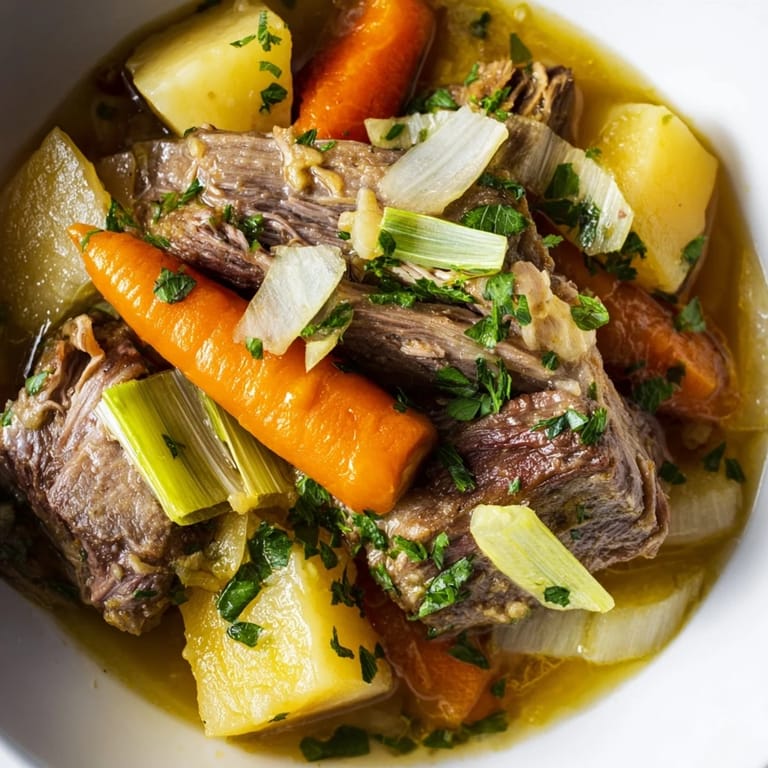
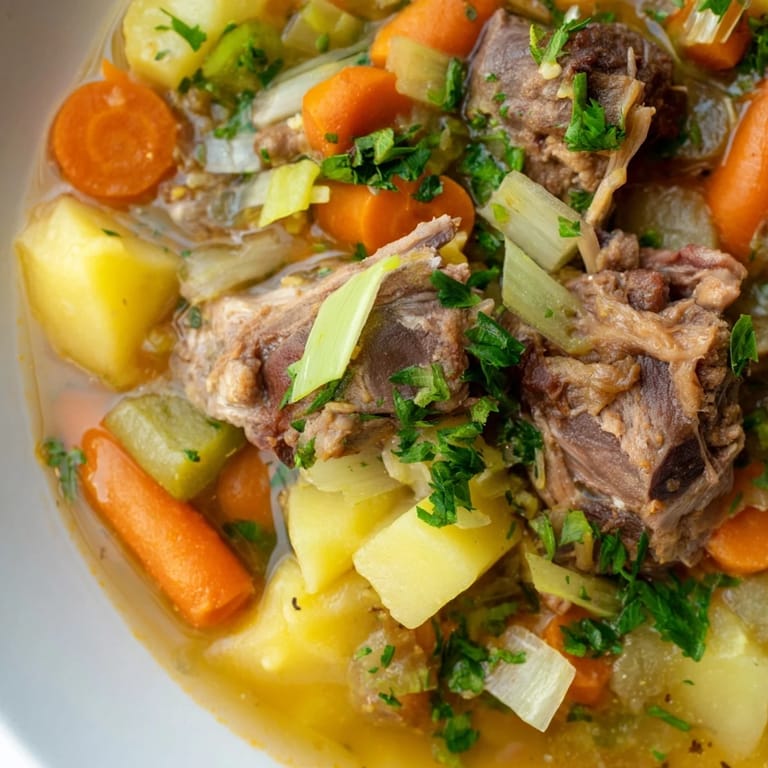
- Keep the heat gentle for another 45 minutes or so, letting the vegetables become completely tender and the meat so soft it nearly falls off the bone. You're looking for that moment where everything has melted together into one cohesive, deeply satisfying dish.
- Finish with fresh brightness:
- Add those reserved leeks and the chopped parsley, then simmer for just 10 more minutes. The fresh leeks add a subtle bite that cuts through the richness, and the parsley brings a whisper of green brightness to the bowl.
- Taste, adjust, and serve:
- Remove the bay leaves, taste the broth, and season once more if needed. Ladle it into bowls, garnish with extra parsley, and serve with crusty bread or a wedge of sharp Welsh cheese alongside.
 Save
Save There's a moment near the end of cooking when you lift the lid and the steam hits your face and you understand why this dish has survived centuries in Welsh kitchens—it's the smell of home made edible, a promise that warmth and fullness are coming. That's when I know it's right.
Why Cawl Matters
Cawl isn't fancy, and it doesn't pretend to be—it's the kind of food that was born from necessity, from making something nourishing out of what was on hand when the weather turned cold. There's something quietly powerful about eating food that has been made the same way in the same country for centuries. Every bowl connects you to a long line of people who also stood in front of a pot on a winter day and knew that time, heat, and honest ingredients were all they needed.
The Secret of Timing
The two-hour cooking time isn't arbitrary—it's been tested by generations. The first hour is for the lamb to become tender, and the second hour is for all the flavors to marry and deepen. If you rush it, the meat will still be tough and the broth will taste young and thin. There's no shortcut here that doesn't cost you something in the final bowl, so I've learned to accept the timeline and use that time to do something else entirely—read, sit with a cup of tea, or just stand at the stove and think.
Variations and When to Make Them
Cawl is flexible in the ways that matter and inflexible in the ways that matter too. You can swap beef for lamb if you prefer, or use chicken for something lighter, and the dish will still be delicious. What you can't skip is the long, slow cooking and the leeks—remove either of those and you've stopped making cawl and started making something else. Some people add more parsnips, some less; some use barley for texture; some cook it with the lid off to reduce the broth and concentrate flavors. The beauty is that your version will be just as valid as anyone else's.
- For a faster version, use chicken thighs and reduce the initial simmer to 30 minutes before adding vegetables.
- Cawl freezes beautifully, so make a double batch and you'll have comfort food waiting on a future cold day.
- If you're serving this to guests, make it a day ahead—the flavors deepen overnight and reheating takes only 15 minutes.
 Save
Save Make this when you need something warm, when the people you love need feeding, or when the world feels a little too cold. Cawl will meet you wherever you are and remind you that the simplest things, tended with care and time, become something transcendent.
Common Questions
- → What cut of meat is best for Welsh cawl?
Lamb shoulder with bone-in is preferred for rich flavor and tender texture, but leaner cuts or beef can also be used.
- → How long should I simmer the vegetables?
Vegetables like carrots, parsnips, potatoes, swede, and leeks should simmer about 45 minutes until tender but not falling apart.
- → Can I prepare Welsh cawl ahead of time?
Yes, making it a day early enhances the flavors as the ingredients meld beautifully overnight.
- → What side dishes pair well with Welsh cawl?
Crusty bread or traditional Welsh cheeses like Caerphilly complement the hearty stew perfectly.
- → Is Welsh cawl gluten-free?
The stew itself is gluten-free if served without bread; always check stock ingredients for any gluten content.