 Save
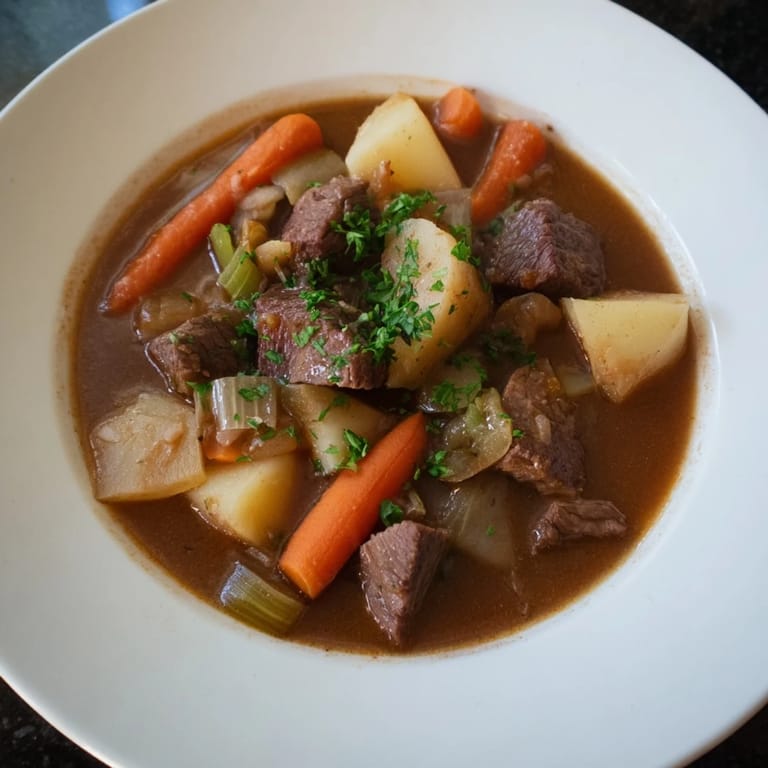
Save There's something about the smell of beef browning in a hot pot that makes you feel like you're doing something important. My neighbor once brought over a batch of Irish beef stew on a particularly gray afternoon, and watching her ladle it into bowls while rain drummed against the window made me realize this wasn't just food—it was a small act of care. That first spoonful, with meat so tender it dissolved on my tongue, convinced me that slow cooking wasn't a chore but a form of alchemy. I've been making it ever since, especially when the weather turns cold and the kitchen needs to become a warm refuge.
I made this for my partner on a night when we'd both had the kind of day that feels too long, and watching them eat it in near silence, then ask for seconds, reminded me why I love cooking. There's something grounding about creating something warm and nourishing when the world feels chaotic. That stew became a tradition—a weekly anchor on Thursday nights when we needed to just sit together with good food.
Ingredients
- Beef chuck: Use 1.5 kg cut into 2-inch cubes; the fattier cuts become silky after hours of simmering, so don't reach for lean meat.
- Potatoes: Four large ones peeled and chunked; they'll soften into the broth and thicken it naturally.
- Carrots: Four large ones sliced; their sweetness balances the savory depth as they break down.
- Onions: Two large ones chopped; they're the quiet foundation that makes everything taste richer.
- Celery: Two stalks sliced; adds a subtle earthiness that separates good stew from forgettable.
- Garlic: Three cloves minced; adds a gentle punch without overwhelming.
- Beef stock: 1.2 liters of good quality stock—homemade is ideal, but a decent store-bought version works fine.
- Guinness stout: 330 ml optional, but it deepens the color and adds a subtle bittersweet note that makes people ask what's in it.
- Tomato paste: Two tablespoons; a concentrated boost of umami that anchors the whole dish.
- Worcestershire sauce: Two tablespoons; the secret ingredient that makes people think you've been cooking all day.
- Bay leaves: Two of them; remove them before serving, but they infuse something unnameable.
- Dried thyme: One teaspoon; warm and subtle, the backbone of Irish cooking.
- Dried rosemary: One teaspoon; adds a piney hint that elevates the whole thing.
- Salt and black pepper: To taste; don't underseasion—taste as you go.
- Vegetable oil: Three tablespoons for searing; a neutral oil that lets the beef shine.
- Fresh parsley: Two tablespoons chopped for garnish; a bit of green against the rich browns.
Tired of Takeout? 🥡
Get 10 meals you can make faster than delivery arrives. Seriously.
One email. No spam. Unsubscribe anytime.
Instructions
- Prepare and sear the beef:
- Pat your beef cubes completely dry with paper towels, then season them generously with salt and pepper. Heat your Dutch oven over medium-high heat with 2 tablespoons of oil until it shimmers, then brown the beef in batches—don't crowd the pot or you'll steam them instead of searing. Each batch should take a few minutes until golden on all sides; transfer to a plate once done.
- Build the flavor base:
- In the same pot, soften your chopped onions and celery for about 5 minutes, scraping up those lovely browned bits stuck to the bottom. Add minced garlic and cook for another minute until it becomes fragrant, then stir in the tomato paste and cook for 1 minute more.
- Deglaze and darken:
- If using Guinness, pour it in now and let it simmer for 2 minutes while you scrape the bottom—this step adds depth that people won't be able to identify but will definitely taste. If you're skipping the beer, you can go straight to the next step.
- Simmer everything together:
- Return the beef to the pot, add your carrots and potatoes, scatter in the bay leaves, thyme, and rosemary, then pour in the beef stock and Worcestershire sauce. Stir gently to combine, bring to a gentle boil, then reduce the heat to low and cover.
- Let time do the work:
- Simmer covered for 2 to 2.5 hours, stirring occasionally, until the beef is fork-tender and pulls apart easily. You'll know it's ready when you can nearly push a piece of beef apart with a wooden spoon—that's the moment everything comes together.
- Finish and serve:
- Remove the bay leaves, taste your stew, and adjust seasoning with more salt, pepper, or Worcestershire sauce if needed. Ladle into bowls and finish with a scattered handful of fresh parsley.
 Save
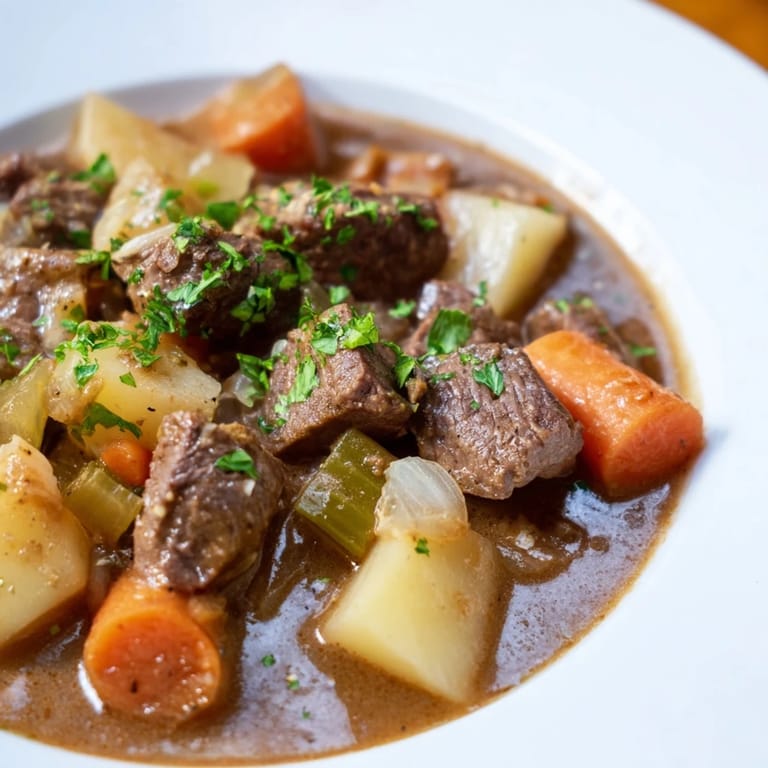
Save I once served this to friends who'd never had it before, and the room went quiet in that way that only happens when food is exactly what everyone needed. Watching someone discover that beef stew isn't something fancy—it's just proof that patience and good ingredients create something unforgettable—made me understand why this dish has lasted centuries.
Making It Your Own
The beauty of Irish beef stew is how forgiving it is. I've made it with red wine instead of beer, experimented with adding turnips or parsnips, and once used lamb because that's what I had on hand. Each variation taught me something—that cooking isn't about following rules perfectly but about understanding why those rules exist and feeling confident enough to bend them. The core of this dish is slow-cooked beef, humble vegetables, and time; everything else is just possibility.
Storage and Reheating
This stew actually improves after a night in the refrigerator, when all the flavors have time to deepen and meld. Store it in an airtight container for up to 4 days, or freeze it for months and thaw it slowly in the refrigerator when you need that kind of comfort. Reheat gently on the stovetop over low heat with the lid on, adding a splash of water or stock if it's thickened too much.
Serving Suggestions
Crusty bread is the obvious choice—something you can use to soak up every last drop of that rich, savory broth. But I've also served it over mashed potatoes, which turns a stew into something almost luxurious, and once even over creamy polenta on a night when I felt like being adventurous. The point is to give yourself a vehicle to eat more of it, because you will want more.
- Pair it with a simple green salad to cut through the richness.
- A glass of dark beer or red wine complements it perfectly.
- Leftover stew makes an incredible filling for a meat pie if you're feeling ambitious the next day.
 Save
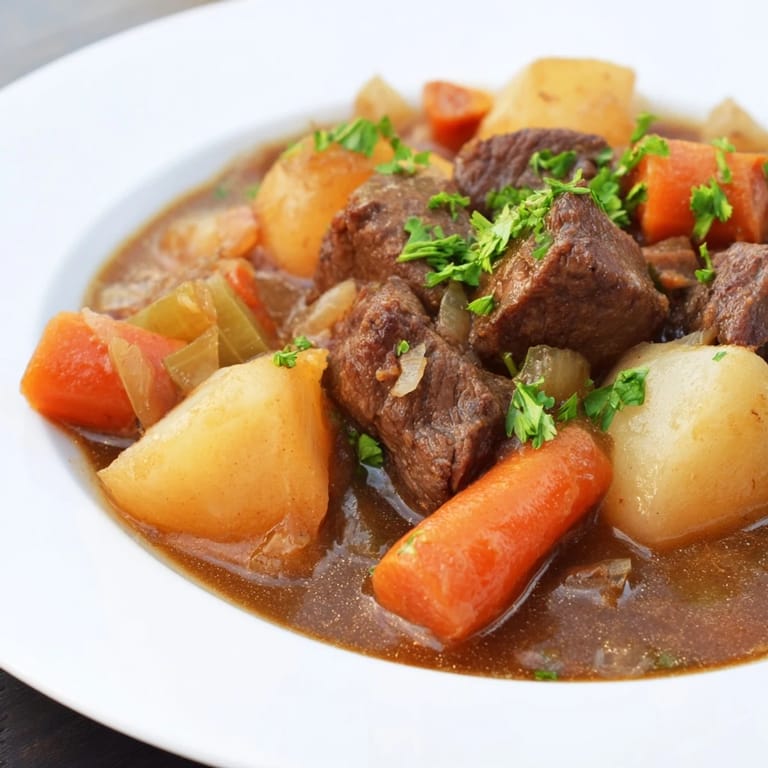
Save This is the kind of recipe that rewards you for slowing down. Once it's simmering, you can step away, knowing that something delicious is quietly becoming itself on your stove.
Common Questions
- → What cut of beef works best?
Beef chuck cut into cubes holds tenderness through slow simmering, yielding rich flavor and texture.
- → Can I use a substitute for Guinness?
Yes, replacing Guinness with beef stock keeps the depth without gluten, suitable for dietary needs.
- → How to achieve a thicker consistency?
Mash a few cooked potato pieces against the pot's side and stir in to naturally thicken the broth.
- → What herbs enhance the stew's flavor?
Bay leaves, dried thyme, and rosemary impart traditional Irish aromatic notes that complement the beef and vegetables.
- → Is this dish suitable for gluten-free diets?
Omitting stout or using gluten-free beer and ensuring sauces are gluten-free accommodates gluten sensitivities.