 Save
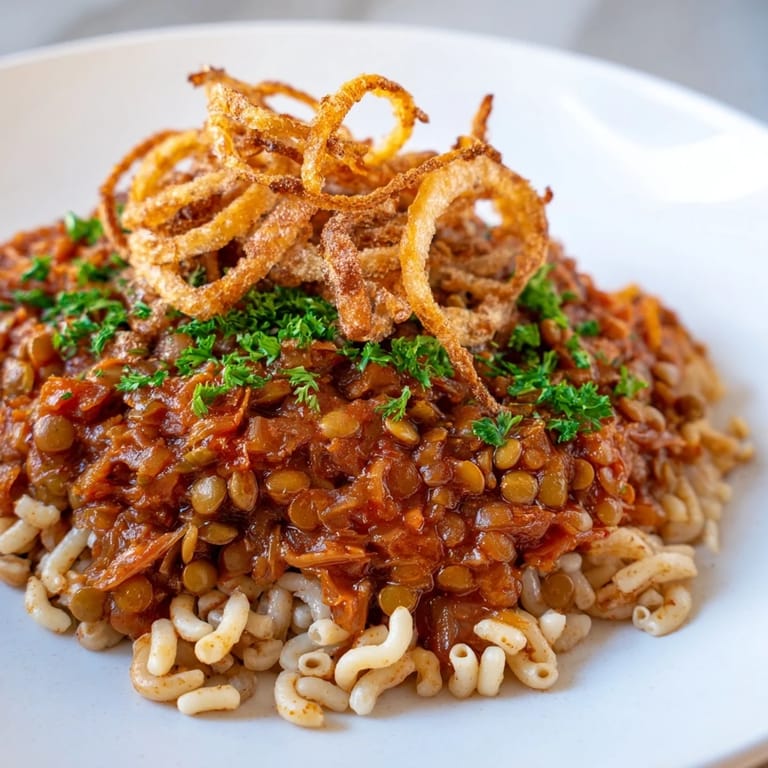
Save The first time I tasted Koshari was on a Cairo street corner at dusk, watching a vendor layer rice, lentils, and pasta with the practiced speed of someone who'd made this dish ten thousand times. There was something magical about how each component stayed distinct yet came together as one comforting whole. Years later, I finally recreated it at home, and that first bite transported me back to that exact moment—the chaos of the street, the warmth of the food, the feeling of discovering something that would become a kitchen staple.
I made this for a dinner party once and watched my friends fall silent the moment they took their first forkful—that's when I knew it wasn't just nostalgia talking. The beauty of Koshari is that it feels humble and fancy at the same time, like street food that somehow ended up on your best china.
Ingredients
- Medium-grain rice (1 cup): This absorbs liquid evenly and creates a tender base that won't turn mushy; rinsing removes excess starch so each grain stays separate.
- Brown or green lentils (1 cup): They hold their shape better than red lentils and add an earthy depth that balances the brightness of the tomato sauce.
- Elbow macaroni or ditalini pasta (1 cup): Small shapes work best here—they nestle into the layers and catch the sauce without overwhelming the dish.
- Crushed tomatoes (15 oz can): Use good quality; this is your sauce's foundation, so the flavor matters.
- Tomato paste (1 tablespoon): A small amount concentrates the umami and deepens the sauce's color without making it taste overly tomatoey.
- Cumin and coriander (1 teaspoon each): These warm spices are what make Koshari distinctly itself—don't skip them or substitute with generic curry powder.
- Crispy onions (2 large onions): The secret weapon; they add texture and a sweet, caramelized contrast that ties everything together.
- Garlic vinegar (optional but recommended): A tangy drizzle at the end brightens the dish and cuts through the richness beautifully.
Tired of Takeout? 🥡
Get 10 meals you can make faster than delivery arrives. Seriously.
One email. No spam. Unsubscribe anytime.
Instructions
- Set up your station:
- Get three pots or pans ready—one for lentils, one for rice, one for pasta. This parallel cooking saves time and keeps everything at the right texture.
- Cook the lentils:
- Cover lentils with 3 cups water and bring to a boil, then reduce heat to a gentle simmer for 20–25 minutes. They should be tender but not falling apart; you want them to hold their shape through assembly.
- Cook the rice:
- Combine rinsed rice with 2 cups water and 1/4 teaspoon salt, bring to a boil, cover, and simmer for 15–18 minutes until all water is absorbed. Let it sit covered for a few minutes, then fluff gently with a fork.
- Cook the pasta:
- Boil salted water and cook pasta until just al dente—it should have a tiny bit of resistance when you bite it. Drain and set aside; it'll finish cooking slightly when it meets the warm sauce.
- Build the tomato sauce:
- Heat olive oil over medium heat, add chopped onion, and sauté until it turns translucent and sweet, about 5 minutes. Add minced garlic for just 1 minute—you want its flavor, not burnt edges.
- Finish the sauce:
- Stir in crushed tomatoes, tomato paste, cumin, coriander, chili flakes if using, and sugar. Simmer uncovered for 15–20 minutes, stirring occasionally, until the sauce thickens and the flavors deepen and meld together.
- Make the crispy onions:
- Toss thin-sliced onions with flour and salt until evenly coated. Heat vegetable oil in a deep skillet over medium-high heat and fry in batches until golden and crispy, about 5–7 minutes per batch, stirring occasionally so they brown evenly.
- Prepare the garlic vinegar:
- Combine vinegar, minced garlic, and chili flakes in a small bowl and let sit for 10 minutes so the garlic infuses into the vinegar without overwhelming it.
- Layer and serve:
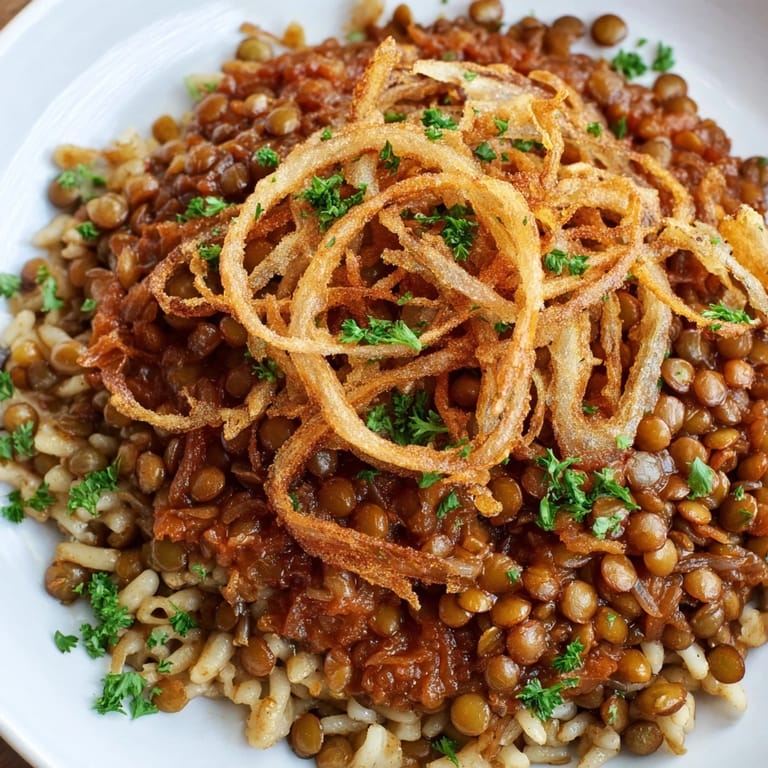
- In bowls or on a platter, create layers of rice, then lentils, then pasta. Spoon warm tomato sauce generously over the top, scatter crispy onions across, and add a small drizzle of garlic vinegar if using.
 Save
Save There's a moment when you finish layering and the warm sauce starts to seep down between the ingredients, and suddenly everything isn't separate anymore—it's one unified thing. That moment is when I remember why I keep making this dish.
Customizing Your Koshari
The beauty of Koshari is its flexibility—it's forgiving in the best way. I've made it with vegetable broth instead of water for extra depth, swapped in orzo or vermicelli when I didn't have elbow pasta, and once used chickpeas instead of lentils when that's what I had on hand. The framework stays the same, but the dish adapts to what your kitchen offers. Heat can be adjusted too; if you don't like spice, reduce or skip the chili flakes entirely, or add more if you're someone who loves a kick.
The Crispy Onion Secret
I learned the hard way that crispy onions cannot be made ahead—they soften the moment they hit moisture. The flour coating is what creates that shattering, golden texture, so don't skip that step or swap it for breadcrumbs. The oil temperature matters too; too cool and they'll absorb oil instead of crisping, too hot and they'll burn before the interior softens. Medium-high heat is the sweet spot, and patience while they cook in batches means they all finish evenly golden.
Serving and Storage Tips
Koshari is best served immediately while the sauce is warm and the onions are still crackling, but the components keep beautifully separately for up to 3 days in the fridge. I've found that assembling fresh each time tastes exponentially better than pre-assembled bowls, so I'll reheat just what I need and layer fresh. If you're making for a crowd, set up a little assembly line with each component in its own bowl and let people customize how much of each layer they want.
- Serve with extra tomato sauce and garlic vinegar on the side so people can adjust to their taste.
- A simple green salad or cucumber salad on the side cuts through the richness beautifully without competing.
- Leftover sauce keeps for up to 5 days and works wonderfully on pasta, rice, or roasted vegetables.
 Save
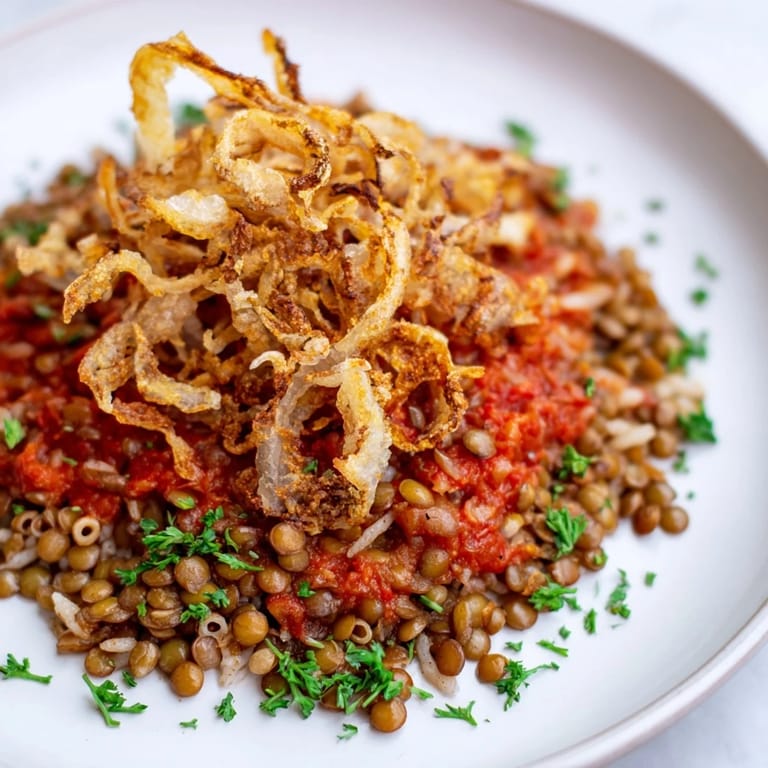
Save Koshari is street food philosophy made home: humble ingredients transformed into something that feels generous and warm. Every time I make it, someone asks for the recipe, and every time I smile because I know they're about to discover exactly what I discovered on that Cairo corner.
Common Questions
- → What grains are used in this Egyptian dish?
Medium-grain rice, brown or green lentils, and small elbow macaroni are layered to create a balanced texture and hearty base.
- → How is the tomato sauce flavored?
It is seasoned with ground cumin, coriander, garlic, chili flakes, and a touch of sugar for a spiced and slightly sweet profile.
- → What adds crunch to the dish?
Thinly sliced onions coated with flour are deep-fried until crispy, adding a delightful texture contrast to the soft grains and sauce.
- → Can the pasta type be substituted?
Yes, orzo or vermicelli can replace macaroni based on preference without altering the dish’s essence.
- → Is this dish suitable for vegan diets?
Absolutely, it contains no animal products, using plant-based ingredients throughout.
- → How can I add extra depth of flavor during cooking?
Using vegetable broth instead of water for cooking the rice or lentils enriches the overall taste.