 Save
Save There's something about the smell of butter melting into flour that instantly transported me back to my grandmother's kitchen, where mac and cheese wasn't just dinner—it was proof that simple ingredients could create pure comfort. The first time I made this version with three cheeses instead of one, my roommate literally stopped mid-conversation to taste it, and I knew I'd stumbled onto something special. That creamy, luxurious sauce clinging to every pasta shell became my go-to when life felt overwhelming or when I needed to feed people I cared about something that said I'd actually tried.
I made this for a dinner party once when I was nervous about impressing people, and somehow the act of slowly whisking that sauce, watching it thicken into something silky and perfect, calmed my whole body. One guest went back for seconds before everyone else had even finished their first plate, and it became the dish I'm now known for bringing to potlucks and gatherings.
Ingredients
- 350g elbow macaroni: Don't overcook it; you want it al dente because it'll soften slightly in the sauce and again if you bake it.
- Unsalted butter: The foundation of your béchamel, so use the good stuff without salt so you control the seasoning.
- All-purpose flour: This creates the roux that thickens your sauce—cook it just long enough to lose the raw taste but not so long it browns.
- Whole milk and heavy cream: Warm milk prevents lumps when whisking into the roux, and the cream is what makes this luxurious rather than just adequate.
- Sharp cheddar, Gruyère, and Parmesan: Each cheese brings something different: cheddar gives color and boldness, Gruyère adds nuttiness, Parmesan brings sharpness and helps it melt smoothly.
- Dijon mustard, garlic powder, onion powder: These seasonings are barely noticeable but they deepen the flavor so people can't quite figure out why yours tastes better.
- Salt, pepper, cayenne: Layer your seasoning as you build the sauce so it's balanced throughout.
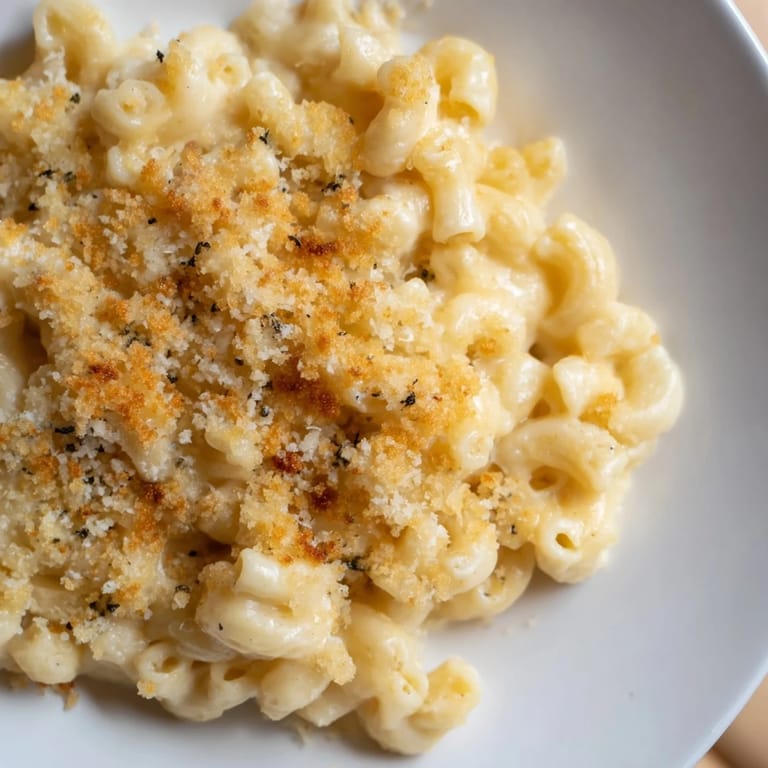
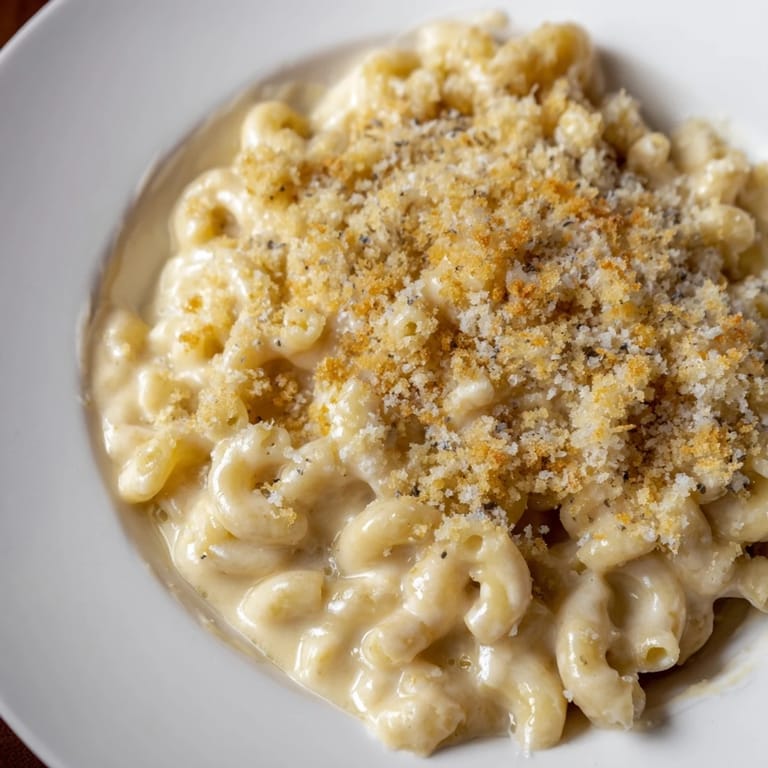
- Panko breadcrumbs, melted butter, Parmesan (for topping): The toasted, crispy top is the textural contrast that makes baked mac and cheese sing.
Tired of Takeout? 🥡
Get 10 meals you can make faster than delivery arrives. Seriously.
One email. No spam. Unsubscribe anytime.
Instructions
- Cook the pasta:
- Boil salted water like you're making pasta for dinner, then cook your macaroni about 1–2 minutes under the package time so it's still got a tiny bit of firmness. Drain it well and set aside—nobody wants waterlogged mac and cheese.
- Make your roux:
- Melt butter over medium heat, whisk in flour, and let it bubble gently for about 1–2 minutes until it smells toasty and looks like wet sand. You're cooking out the raw flour taste, not browning it, so watch it carefully.
- Build the sauce:
- Slowly whisk in your warm milk and cream, moving steadily so lumps don't form. Once it's smooth, let it simmer and thicken, stirring often, until it coats the back of a spoon—this takes about 4–5 minutes and transforms everything.
- Season and add cheese:
- Lower the heat, stir in mustard and spices, then add your cheeses in batches, stirring each handful until it completely melts before adding more. The sauce should be silky and taste like something you'd order at a restaurant.
- Combine everything:
- Fold the cooked pasta into the cheese sauce gently so you coat every piece without breaking it apart. If it goes to the stovetop immediately, it's ready to serve; if you're baking it, pour it into your buttered dish now.
- Finish (stovetop version):
- Plate it hot with extra cheese on top if you want, maybe a crack of black pepper—serve it immediately before it cools.
- Finish (baked version):
- Mix panko, melted butter, and Parmesan, then scatter it over the top in an even layer. Bake at 200°C for 20–25 minutes until the top is golden and the edges are bubbling, then let it rest 5 minutes so it sets just slightly without getting dry.
 Save
Save The first time someone closed their eyes after tasting this and said nothing for a second, I realized that food isn't just about feeding hunger—it's about creating these tiny moments where people feel genuinely taken care of. That's when mac and cheese stopped being a side dish in my kitchen and became something I make with intention.
Stovetop vs. Baked: What's Your Mood?
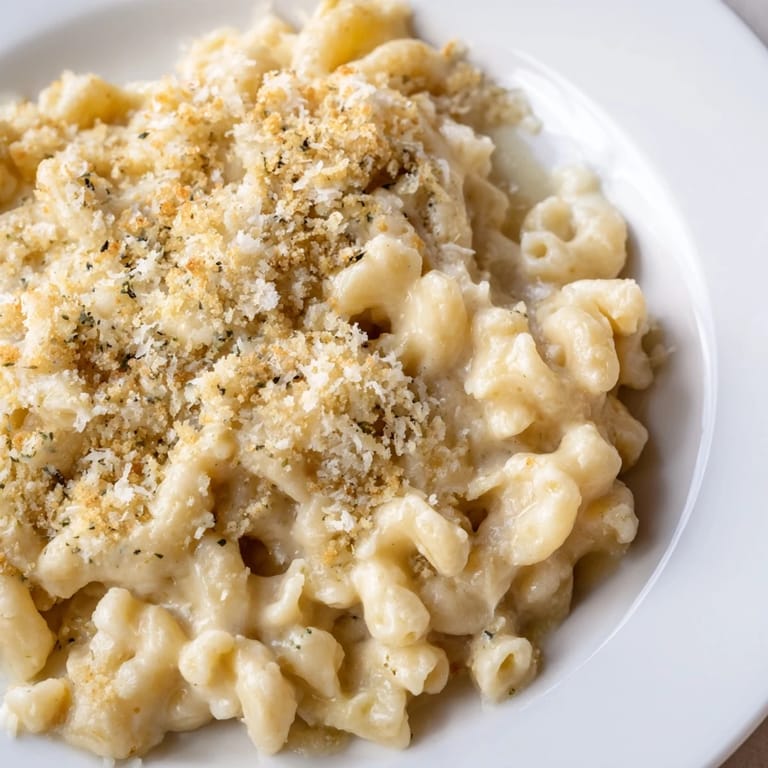
Stovetop mac and cheese is for when you want comfort right now—it takes about 30 minutes total and you're eating something warm and creamy in your bowl within the hour. There's something luxurious about serving it straight from the pot, still steaming, with a shower of extra cheese and maybe some fresh cracked pepper on top. Baked mac and cheese is for when you have 15 minutes to prep and 25 minutes to let the oven do its work; it's the version for dinner parties or when you want that textural contrast of a crispy golden top against the creamy filling. Both are legitimate, both are delicious, and honestly, which version you choose says something about the kind of day you're having.
Cheese Selection: The Secret Is Layering
Using one cheese is fine, but three cheeses is where this dish gets its personality—and I learned this through trial and error. Sharp cheddar gives you boldness and color, Gruyère brings an almost sweet, nutty complexity that you didn't know you needed, and Parmesan adds a sharpness and helps everything emulsify into something velvety. If Gruyère is expensive or hard to find where you are, Monterey Jack works beautifully and creates a milder, creamier sauce, or you can use good melting mozzarella if you want something gentler. The point isn't to follow rules exactly—it's to understand that different cheeses contribute different flavors, so you're creating a blend rather than just melting cheese into pasta.
Variations and Upgrades
The base recipe is perfect on its own, but this is one of those dishes that welcomes additions without losing its soul. I've made it with crispy bacon stirred in, with sautéed mushrooms that add earthiness, with blanched broccoli for people who want vegetables hidden in there, and even with roasted tomatoes when I was feeling experimental. The trick is adding things that complement cheese rather than fight it—keep any additions well-seasoned and cooked through before folding them into the sauce. If you're adding protein or vegetables, just remember they take up space, so you might not need quite as much pasta.
- Crispy bacon crumbled in adds smokiness that makes people keep coming back for more bites.
- Fresh thyme or a whisper of smoked paprika can change the whole mood without overwhelming the cheese.
- Jalapeños or hot sauce are for when you want this dish to have a backbone and a voice.
 Save
Save Mac and cheese is the dish that reminds me why I love cooking in the first place: because it's simple enough to make any weeknight but special enough to feed people you love. Every time someone asks for the recipe, I know I'm about to give them something that will become part of their own kitchen story.
Common Questions
- → What type of pasta works best?
Elbow macaroni is ideal for its size and shape, which holds the sauce well. Other small pasta shapes like shells or cavatappi can also be used.
- → How is the béchamel sauce prepared?
Butter and flour are cooked gently to form a roux, then warm milk and cream are gradually whisked in and simmered until thickened, creating a smooth base for the cheese.
- → Can I make it creamy without baking?
Yes, serving immediately after folding the cheese sauce and pasta together yields a rich, creamy stovetop version without the crispy topping.
- → What cheeses complement the flavor?
Sharp cheddar offers robust flavor, Gruyère adds nuttiness, and Parmesan provides umami depth; combining these creates a balanced, flavorful sauce.
- → Are there suggested flavor variations?
Adding cooked bacon, sautéed mushrooms, or blanched broccoli introduces extra texture and contrasting flavors that enhance the base dish.
- → How should I adjust seasoning?
Balance salt and spices like garlic and onion powders, Dijon mustard, and a touch of cayenne for subtle heat to enhance the cheese blend without overpowering it.