 Save
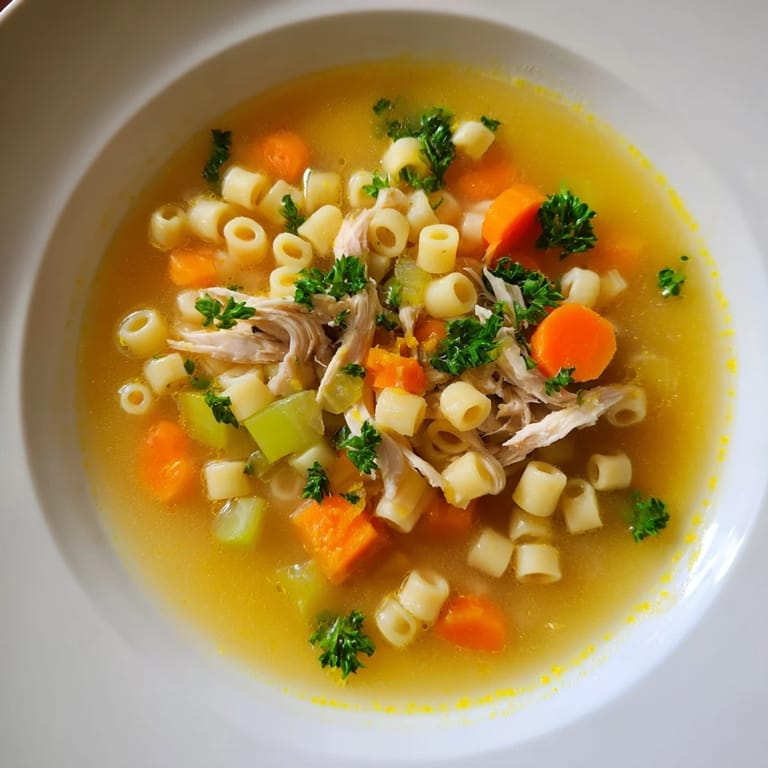
Save There's a moment during cold season when you realize soup isn't just food—it's a small act of self-care. I stumbled onto this chicken and ditalini combination one Wednesday evening when my sinuses felt like they were staging a rebellion, and I had almost nothing in the pantry except broth, pasta, and a knob of ginger that had been staring at me from the back of the fridge. Two hours later, I was cradling a warm bowl, watching the tiny pasta tubes catch the light, and feeling genuinely better in ways I couldn't quite explain.
I made this for my friend Maya when she was dealing with one of those colds that leaves you feeling hollowed out. She texted me the next morning saying she'd had three bowls the night before and slept better than she had in days. That message stayed with me—suddenly this simple soup felt like it held something more than just chicken and vegetables.
Ingredients
- Boneless, skinless chicken breasts (2, about 400 g): These cook quickly and shred beautifully, giving you tender pieces that distribute throughout the soup without overpowering each spoonful.
- Olive oil (1 tablespoon): Just enough to get a light sear on the chicken, which adds subtle depth to the broth without making the soup feel heavy.
- Onion, carrots, and celery (1 medium onion, 2 large carrots, 2 stalks): This trio is the flavor foundation—they soften into the broth so completely you almost forget they're there, but you'd definitely notice if they weren't.
- Fresh ginger and garlic (1 tablespoon grated ginger, 4 cloves minced): These are your immunity boosters and flavor anchors; fresh ginger makes all the difference over ground, though both work.
- Fresh or ground turmeric (1 teaspoon fresh or 1/2 teaspoon ground): The golden note that makes this soup feel intentional and warm, with anti-inflammatory properties that go beyond taste.
- Low-sodium chicken broth (8 cups): Quality broth matters here because it becomes the soul of the soup—choose one you'd actually drink on its own.
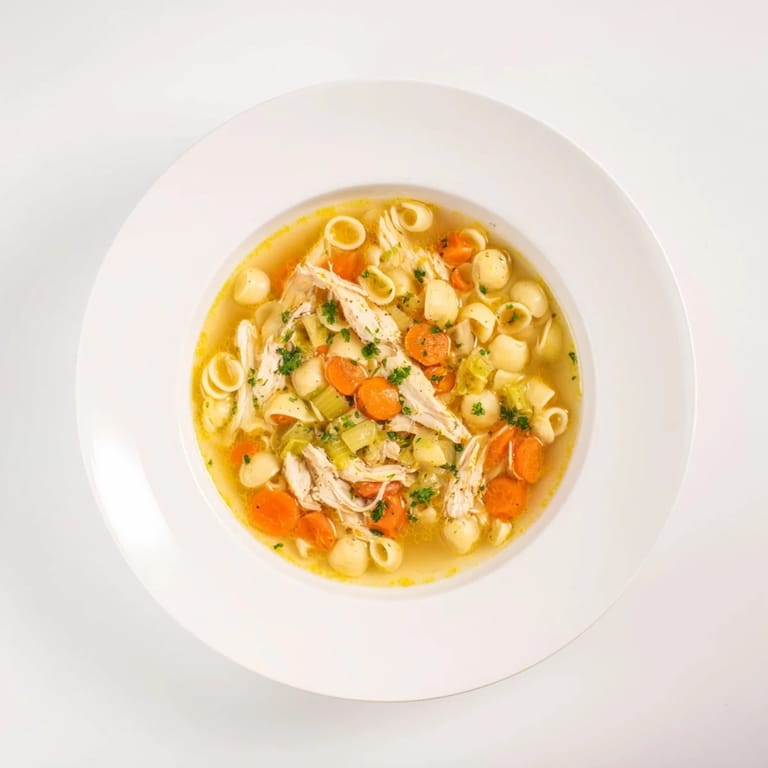
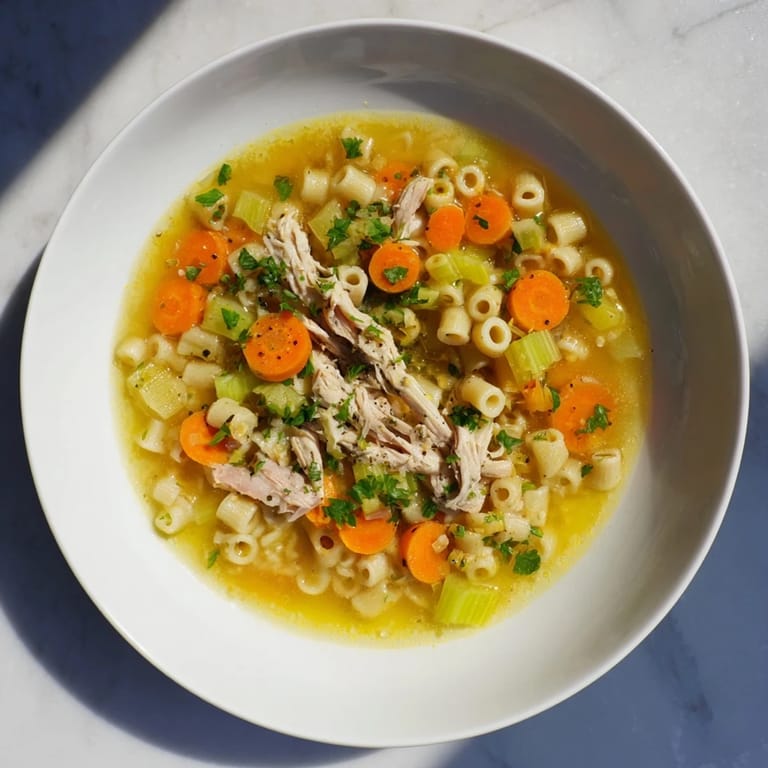
- Ditalini pasta (3/4 cup): These tiny tubes hold broth in each opening, creating little pockets of comfort with every bite; they're much friendlier than long noodles in soup.
- Bay leaf, salt, pepper, fresh parsley, and lemon juice: The parsley brightens everything at the end, while lemon juice lifts all the other flavors without making anything taste sour.
Tired of Takeout? 🥡
Get 10 meals you can make faster than delivery arrives. Seriously.
One email. No spam. Unsubscribe anytime.
Instructions
- Sear the chicken gently:
- Heat your oil over medium heat and place the chicken breasts in the pot, listening for that soft sizzle. After 2–3 minutes on each side, they should have a light golden crust that promises flavor to come.
- Build the flavor base:
- Once the chicken's out, add your onion, carrots, and celery to the same pot, letting them soften for 5 minutes while they release their sweetness. You'll notice the kitchen starting to smell like something worth making.
- Wake up the spices:
- Stir in the garlic, ginger, and turmeric, cooking for just 1 minute until the aroma hits you—that's the signal they're releasing their essential oils. Don't skip this step; it's where the magic intensity builds.
- Bring it all together:
- Return the chicken to the pot with the broth and bay leaf, then bring to a boil before lowering to a gentle simmer, covered, for 20 minutes. The broth will deepen in color and warmth as everything melds.
- Shred and return:
- Pull out the chicken, and using two forks, shred it into bite-sized pieces—the meat should come apart almost without resistance. Return it to the pot where it'll soak up all the flavored broth.
- Add the pasta:
- Stir in the ditalini along with salt and pepper, cooking uncovered for 8–10 minutes until the pasta is tender but still has a slight resistance when you bite it. This is the moment the soup truly becomes whole.
- Finish with brightness:
- Stir in the fresh parsley and lemon juice at the very end, tasting as you go to adjust seasonings. The lemon should whisper in the background, not announce itself.
 Save
Save What I love most about this soup is how it bridges the gap between eating something because it's good for you and eating something because it genuinely tastes like care. It's the kind of dish that reminds you that the simplest meals often matter the most.
The Turmeric Question
I debated whether to use fresh or ground turmeric for the longest time. Fresh has a brightness that ground can't quite capture, with a slightly floral undertone, but ground is more convenient and delivers consistent color and flavor. I tend to use fresh when I have it (usually found in the produce section near the ginger), but I've never felt like I was compromising when reaching for the ground version. The choice really depends on what your kitchen looks like on any given day.
Why Ditalini Matters
There's something about tiny pasta shapes in soup that changes the whole experience. Ditalini is small enough that every spoonful includes a mix of broth, vegetables, chicken, and pasta without any one element dominating. If you can't find it, orzo or small shells work beautifully as substitutes and deliver that same comfort.
Variations and Add-Ons
This soup has a quiet confidence—it doesn't demand much, but it welcomes enhancement if you're in the mood. Some people add spinach or kale at the end for extra greens and immunity support, others stir in a pinch of cayenne if they want subtle heat. I've even added a handful of chopped fresh dill when I had it on hand, which brought an unexpected brightness that worked beautifully with the lemon.
- A pinch of cayenne at the end adds warmth without making the soup spicy, perfect if you're looking for extra immune support.
- Spinach or kale stirred in during the last minute adds nutrition and a mild earthiness that complements the ginger and turmeric.
- Fresh dill or additional parsley at the finish brings brightness that lifts all the other flavors.
 Save
Save This soup lives in that beautiful space where cooking for yourself and cooking for others feel like the same generous act. Make it when you need it, and don't be surprised when someone asks you for the recipe.
Common Questions
- → What type of pasta works best in this soup?
Ditalini pasta is preferred for its small size and shape, which blends well with broth and ingredients. Orzo or small shell pasta can be suitable substitutes.
- → How can I enhance the immune-boosting qualities?
Adding fresh ginger, turmeric, and garlic supports immune health. For extra warmth, a pinch of cayenne or a handful of chopped spinach can be added at the end.
- → Can this dish be prepared ahead of time?
Yes, it can be made in advance and stored refrigerated for up to 3 days. Reheat gently to preserve texture and flavor.
- → What is the best way to shred the cooked chicken?
Use two forks to pull the cooked chicken breasts apart into bite-sized strips before returning to the broth.
- → How do I maintain the pasta’s texture during reheating?
Cook the pasta al dente initially to prevent overcooking. When reheating, heat gently and add broth if needed to loosen the consistency.