 Save
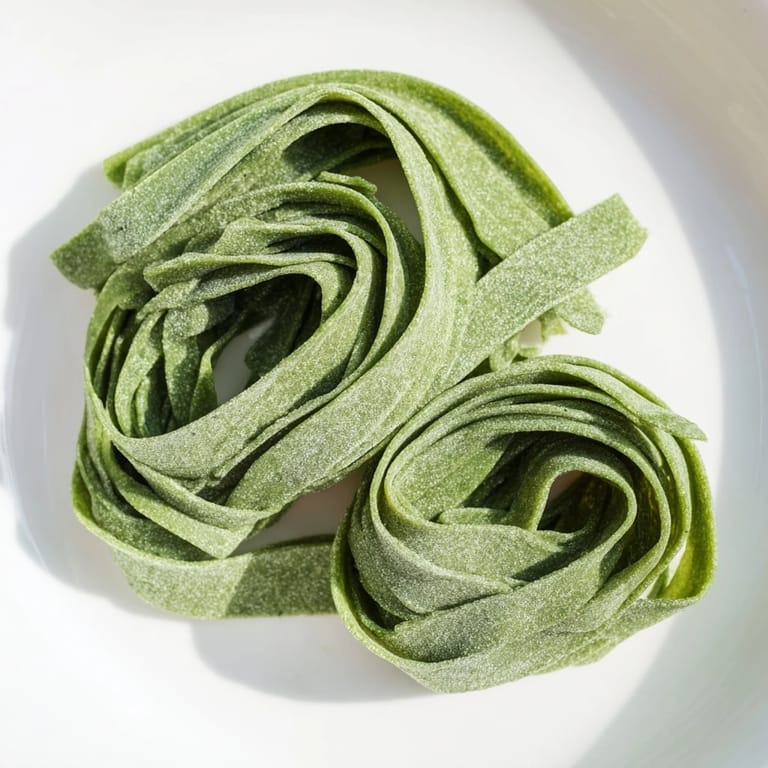
Save There's something almost magical about watching pasta dough transform from pale yellow to a soft shade of green. I discovered this recipe on a quiet afternoon when I had a bunch of spinach that needed using, and instead of wilting it into a side dish, I wondered what would happen if I worked it directly into fresh pasta. The moment the vibrant purée mixed into the flour, I knew I'd stumbled onto something special—a way to turn a simple vegetable into something that looked like you'd spent hours perfecting.
I made this for my sister on her birthday once, rolling it into delicate fettuccine while she sat at the kitchen counter with coffee, talking about her new job. When the pasta hit the boiling water and rose to the surface in less than two minutes, her face lit up—there's a particular joy in watching someone realize you made something from scratch, something that only took minutes to cook but felt entirely different from anything store-bought.
Ingredients
- Fresh baby spinach: Blanching removes excess water that would make your dough too wet; this single step is what separates silky dough from something sticky and frustrating.
- Eggs: The binder that brings everything together—use them at room temperature if you remember, though honestly, it makes barely any difference.
- Italian 00 flour: Its fineness creates that tender, silky texture you're after; don't skip this for all-purpose flour if you can help it.
- Semolina flour: Optional, but it adds a subtle texture and helps prevent sticking when you're rolling and cutting.
- Sea salt: Just enough to season without overwhelming the delicate spinach flavor.
Tired of Takeout? 🥡
Get 10 meals you can make faster than delivery arrives. Seriously.
One email. No spam. Unsubscribe anytime.
Instructions
- Blanch and squeeze the spinach:
- Boil the spinach briefly, then drain it completely and squeeze it dry with your hands—honestly, squeeze harder than you think you need to. You want barely any moisture left, or your dough will fight you during kneading.
- Make a smooth purée:
- A food processor makes this effortless, but even a fine chop works if you're patient. The smoother it is, the more evenly the green color distributes through the dough.
- Build your well:
- Mound your flours and salt, then use your fingers to create a well in the center, like a volcano waiting to erupt. This is the classic method, and it works because you have control over how much flour incorporates at once.
- Bring the dough together:
- Use a fork to gently break the eggs and spinach and start pulling flour in from the sides. Once it becomes too shaggy for a fork, get your hands in there and knead.
- Knead until smooth:
- This takes about 8 to 10 minutes of steady work—your arms will feel it. Push with the heel of your hand, fold, rotate, repeat until the dough becomes smooth, elastic, and springs back when you poke it.
- Rest and relax:
- Wrap it well and let it sit at room temperature for 30 minutes. This isn't just tradition; it actually makes the dough easier to roll out because the gluten relaxes.
- Roll and shape:
- Whether you use a machine or a rolling pin, work gently and dust generously with extra flour to prevent sticking. The dough should be thin enough to almost see light through it.
- Cook briefly:
- Fresh pasta cooks in 1 to 2 minutes—don't walk away. It's ready when it floats and tastes tender but still has a little resistance between your teeth.
 Save
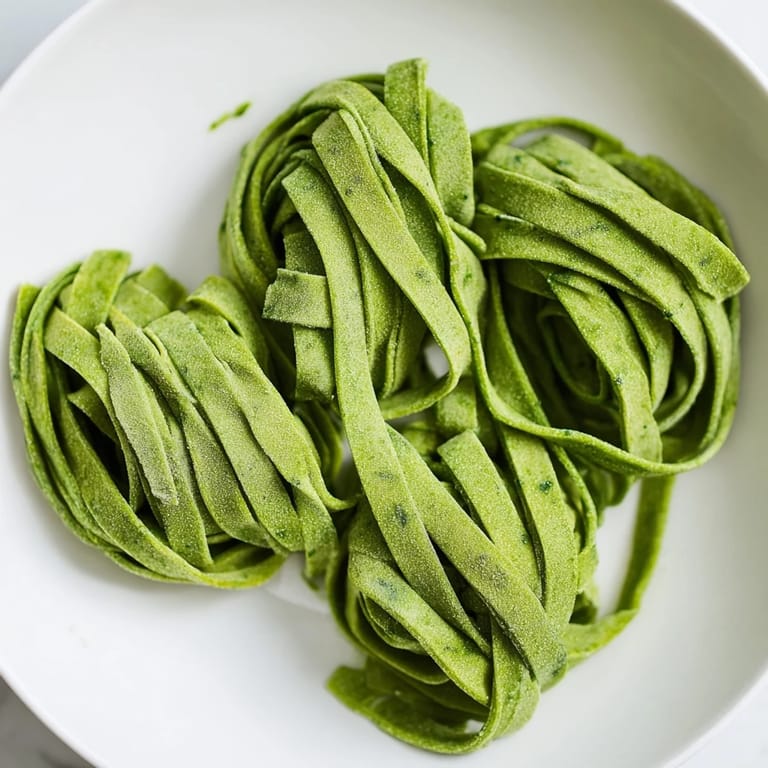
Save There was a moment when I first made this pasta for a dinner party where everything suddenly made sense—the soft give of the dough under my hands, the way it rolled to paper-thin sheets, the impossible speed at which it cooked. That's when I stopped thinking of pasta-making as something intimidating and started seeing it as just flour, eggs, and a little time. It became something I looked forward to, not something I dreaded.
The Magic of Fresh Pasta
Fresh pasta is a completely different creature from dried pasta—it's tender, silky, and ready in moments rather than ten minutes of boiling. The spinach doesn't just look beautiful; it brings an earthy sweetness that subtle enough to let your sauce shine but distinct enough to change the entire experience. Once you understand the basic technique, you realize you can make this with almost any tender green: nettles, arugula, even herbs.
Timing and Temperature Matter
Room temperature eggs and spinach that's been thoroughly drained are quieter details that add up to success. I've learned through small disasters that cold ingredients make the dough fight you, requiring more water than you'd expect and resulting in something that tears too easily. Letting the dough rest isn't just waiting around—it genuinely transforms how the gluten behaves, making everything smoother.
What You Can Make With This Dough
This dough is versatile enough to become fettuccine, pappardelle, ravioli filled with ricotta and herbs, or thin sheets for lasagna. The beautiful color means you can layer it with white sauce and actually see the contrast. I once made little tortellini from this dough and tucked a single sage leaf into each one before sealing—small enough that most people didn't notice, but the ones who did understood the care that went into it.
- For ravioli, keep the sheets slightly thicker than you would for fettuccine so they hold their shape when sealed.
- If you make this ahead, refrigerate it wrapped tightly and bring it to room temperature for 15 minutes before rolling.
- Freeze extra dough for up to three months, and cook from frozen without thawing—just add an extra 30 seconds to the cooking time.
 Save
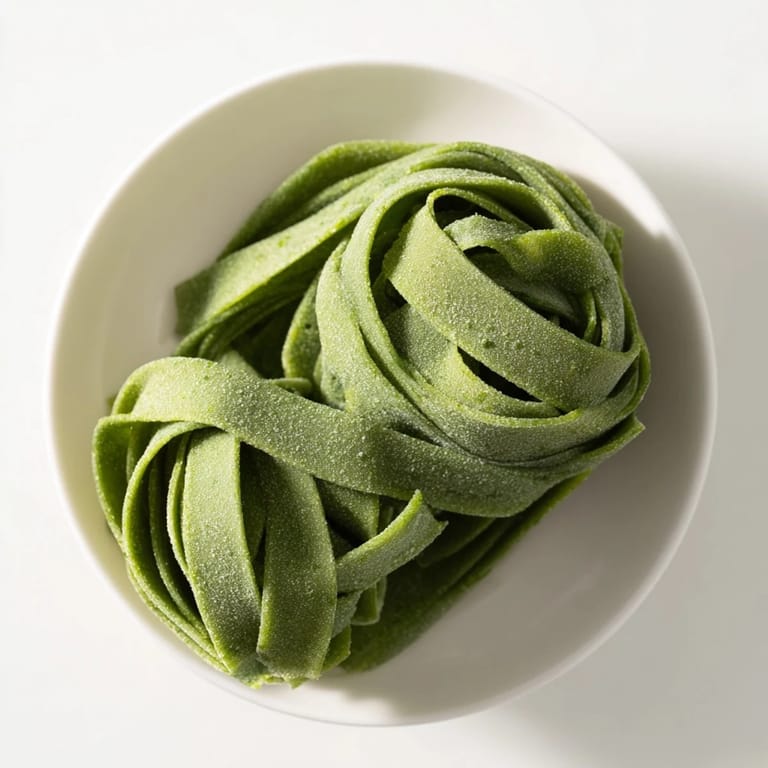
Save Making fresh spinach pasta teaches you something simple but profound: good food doesn't require shortcuts or complicated methods, just attention and care. The first time you boil it and watch it cook through in seconds, you'll understand why people spend their lives learning to make pasta.
Common Questions
- → How do I prepare the spinach for the dough?
Blanch the fresh spinach leaves in boiling water for 30 seconds, then drain and squeeze out excess moisture before pureeing to a smooth consistency.
- → Can I use other flours besides Italian 00 flour?
Yes, you can substitute part of the 00 flour with whole wheat flour for a nuttier flavor, or add semolina flour to improve texture.
- → What is the resting time for the dough?
Wrap the dough tightly and let it rest at room temperature for about 30 minutes before rolling out.
- → How should I cook the pasta made from this dough?
Boil fresh pasta in salted water for 1 to 2 minutes until al dente, depending on thickness.
- → Can the dough be prepared in advance?
Yes, the dough can be refrigerated for up to 24 hours if wrapped tightly in plastic wrap.