 Save
Save My grandmother's kitchen on Sunday afternoons smelled like caramelizing onions and butter hitting hot cast iron, and somehow that combination meant family was coming. She'd move around that stove with the kind of grace that came from making this dish a hundred times, never rushing, never stressed, just letting the chicken and gravy find their own rhythm together. The first time I watched her make smothered chicken with onion gravy, I realized it wasn't about fancy technique—it was about patience and knowing when to let things brown, when to pour in the broth, and when to simply cover it and let time do the work. That lesson stuck with me more than any recipe ever could.
I made this for a potluck once and arrived nervous, carrying my Dutch oven like it might tip over at any second. By the time I lifted the lid, the smell had already announced itself—everyone gathered around before I even got the serving spoon in. An older woman who grew up in Georgia took one bite and got quiet, the kind of quiet that means you've hit something true. She asked for my recipe right there, and I had to admit I'd learned it by watching, not by following a card, which made the whole moment feel less like cooking and more like passing something down.
Ingredients
- Bone-in, skin-on chicken thighs and drumsticks: The skin crisps up beautifully while the bones keep the meat juicy and flavorful, and honestly, there's no substitute here.
- All-purpose flour for breading: This creates that golden, slightly crispy exterior that makes the first bite satisfying.
- Paprika, garlic powder, and onion powder: These three together build a seasoning base that tastes warm and familiar without being spicy.
- Vegetable oil for frying: It needs a high smoke point so you can get that golden-brown color without the oil breaking down.
- Yellow onions: They soften into almost creamy sweetness as they caramelize, which is what makes the gravy taste so deeply savory.
- Low-sodium chicken broth: I learned this the hard way—use too much salt in the broth and your gravy becomes a lesson in regret.
- Unsalted butter: This ties the whole gravy together at the end, adding richness without competing with the other flavors.
- Dried thyme: Optional, but it whispers into the background and makes people ask what that subtle something is.
Tired of Takeout? 🥡
Get 10 meals you can make faster than delivery arrives. Seriously.
One email. No spam. Unsubscribe anytime.
Instructions
- Prep and season the chicken:
- Pat each piece completely dry with paper towels—this is how you get that crispy skin later. Season every surface generously with salt, pepper, paprika, garlic powder, and onion powder, getting into the crevices where the skin meets the meat.
- Bread the chicken:
- Mix flour, salt, and pepper in a shallow bowl, then coat each piece thoroughly, shaking off excess flour so it doesn't clump. Save that remaining flour mixture because it becomes part of your gravy.
- Pan-fry until golden:
- Heat oil in a large skillet over medium heat, then add chicken skin-side down, listening for that immediate sizzle that tells you the temperature is right. Fry 6 to 8 minutes per side until the skin is golden and crispy—it won't be fully cooked yet, and that's exactly what you want.
- Build the gravy base:
- Pour off most of the oil, leaving about 2 tablespoons, then add sliced onions to that flavorful fond and cook them down over medium heat, stirring occasionally, until they're soft and deeply golden, roughly 8 to 10 minutes. The slower you let them cook, the sweeter they become.
- Create the roux:
- Sprinkle that reserved flour over the caramelized onions and stir constantly for a minute or two until it turns light brown and smells nutty. This is when you know you're moments away from gravy magic.
- Add liquid and seasonings:
- Pour in the chicken broth while whisking continuously, scraping up all those browned bits stuck to the bottom of the pan because they're flavor. Season with thyme, paprika, salt, pepper, and butter, then let it simmer for 2 or 3 minutes until it thickens just slightly.
- Braise the chicken:
- Nestle the browned chicken pieces back into the gravy, spoon some over the top, then cover and reduce heat to low for 25 to 30 minutes, just until the meat is fork-tender and the internal temperature hits 165°F. Resist the urge to peek too often—the cover keeps everything steaming gently.
- Serve with generosity:
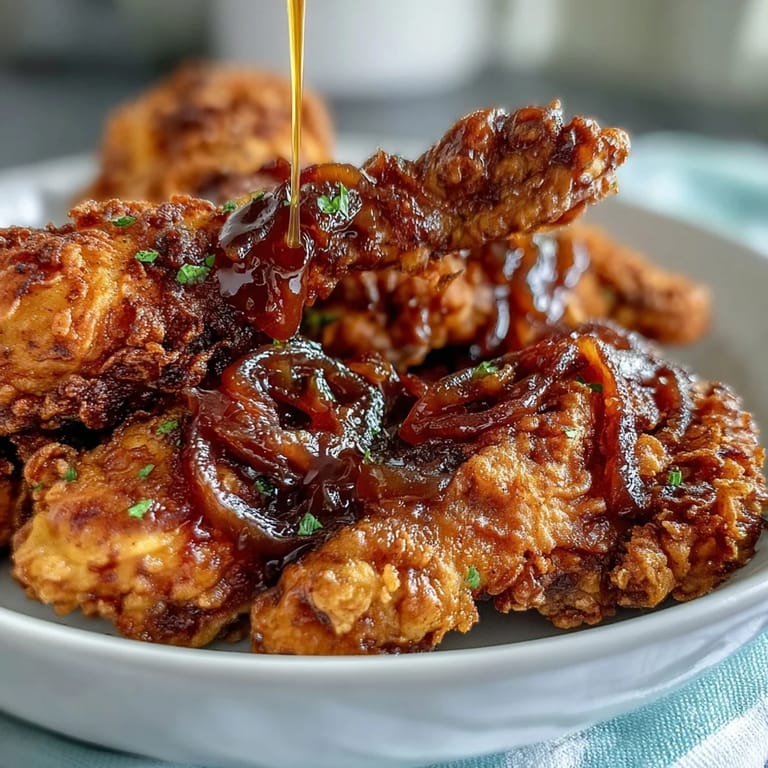
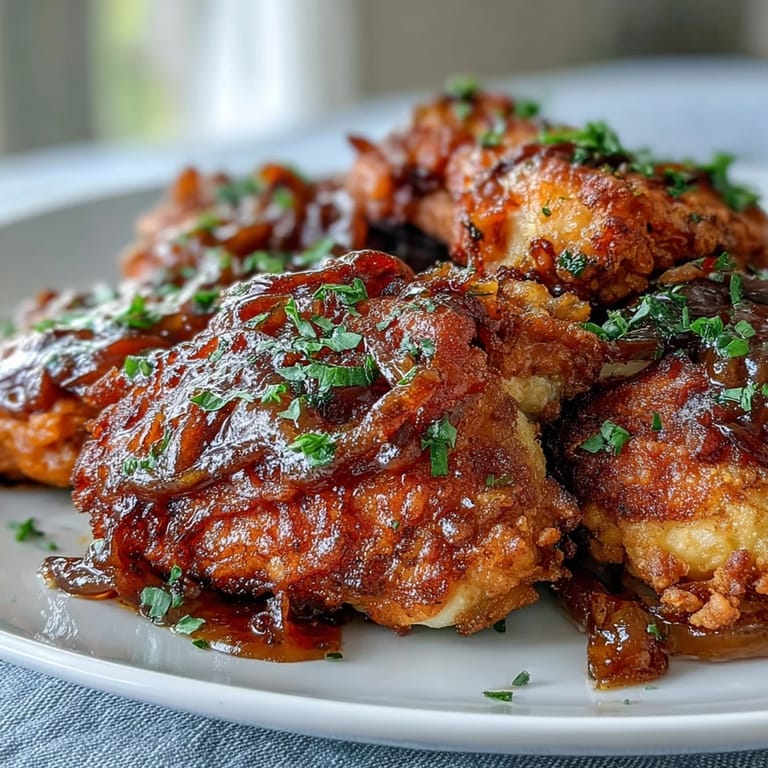
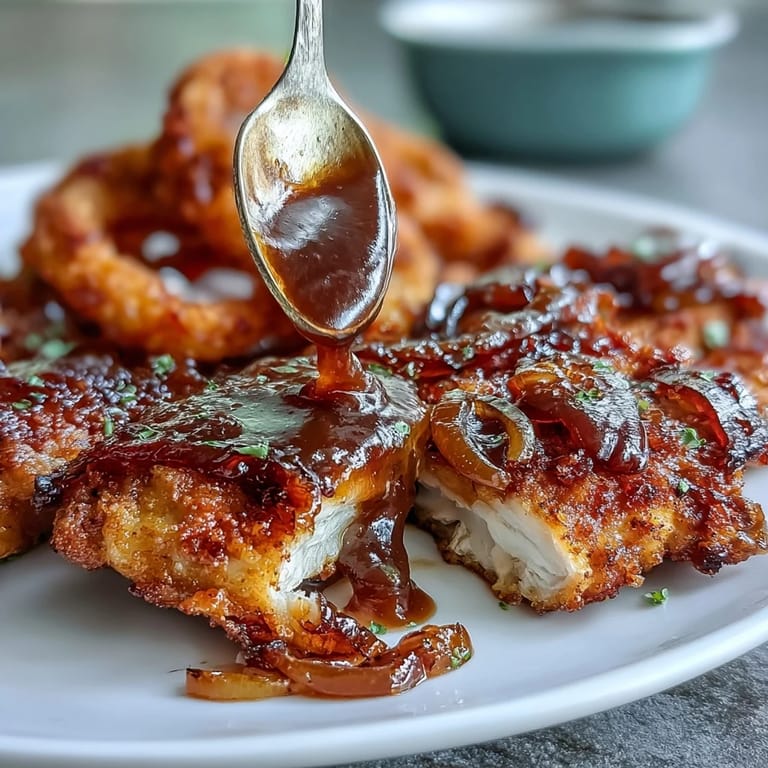
- Spoon that chicken onto a plate and ladle the onion gravy over everything, letting it pool around mashed potatoes or rice or collard greens.
 Save
Save Years later, I made this for someone I was trying to impress, and halfway through dinner, they stopped and asked if I'd trained as a chef. I laughed because the truth was I'd just paid attention to someone who cared, and sometimes that's the best education you can get. That's when food stops being about technique and starts being about connection.
The Secret to Crispy Skin
The skin needs to be completely dry before it hits the oil, so don't skip that paper towel step—I've learned this painful lesson multiple times. Get your oil hot enough that it sizzles immediately when the chicken touches it, but not so hot that the outside burns before the inside cooks. The sweet spot is when you hear that aggressive sizzle and smell that beautiful fried-chicken aroma filling your kitchen within seconds.
Why Caramelized Onions Matter
Onions are mostly water and natural sugars, and when you let them cook low and slow, that water evaporates and the sugars caramelize into something almost jammy and deep. This is what makes the gravy taste rich and complex instead of just tasting like broth with bits of onion floating in it. Don't be tempted to crank up the heat and rush this part—the deeper the color, the better the flavor.
Making It Your Own
My neighbor makes this with a splash of bourbon in the gravy, and another friend swears by a pinch of smoked paprika for extra depth. The beauty of this dish is that it's forgiving enough to welcome your own adjustments and strong enough to still taste incredible no matter what you add. Start with this foundation and see where your instincts take you.
- If you prefer boneless chicken, reduce the simmering time to 15 or 20 minutes since there's no bone to cook around.
- For extra savory depth, use homemade stock instead of broth—it makes a noticeable difference in the final gravy.
- A tiny pinch of cayenne pepper can add warmth without obvious heat if you want a subtle kick.
 Save
Save This is the kind of dish that tastes like Sunday dinner and makes your kitchen smell like home, whether your home is in the South or somewhere completely different. Once you master it, you'll find yourself making it because the moment calls for comfort, not because you're following a recipe.
Common Questions
- → What type of chicken is best for this dish?
Bone-in, skin-on chicken thighs and drumsticks offer the best flavor and texture, remaining juicy during the slow simmer in the gravy.
- → Can I make the onion gravy thicker?
Yes, simmer the gravy a bit longer to reduce it or add a small amount of extra flour mixed with cold water to thicken it gently.
- → Is it necessary to fry the chicken before simmering?
Pan-frying creates a golden crust that adds flavor and texture, helping the chicken hold together during simmering in the gravy.
- → What side dishes complement this dish well?
Classic sides include mashed potatoes, steamed greens like collards, or fluffy rice that catch the savory gravy well.
- → How can I add heat to this dish?
Incorporate a pinch of cayenne or hot paprika into the flour mixture for a subtle spicy kick without overpowering the savory balance.