 Save
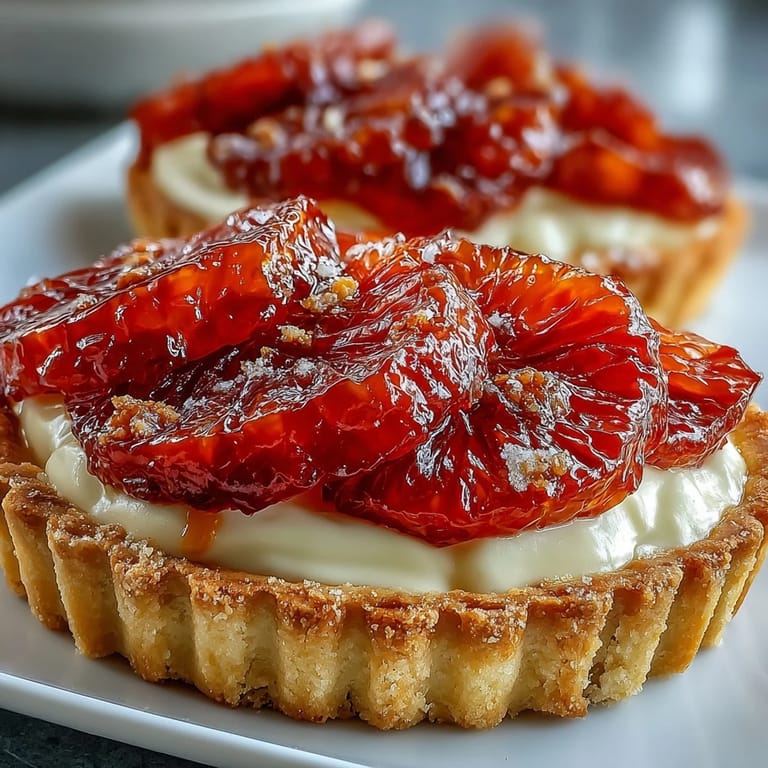
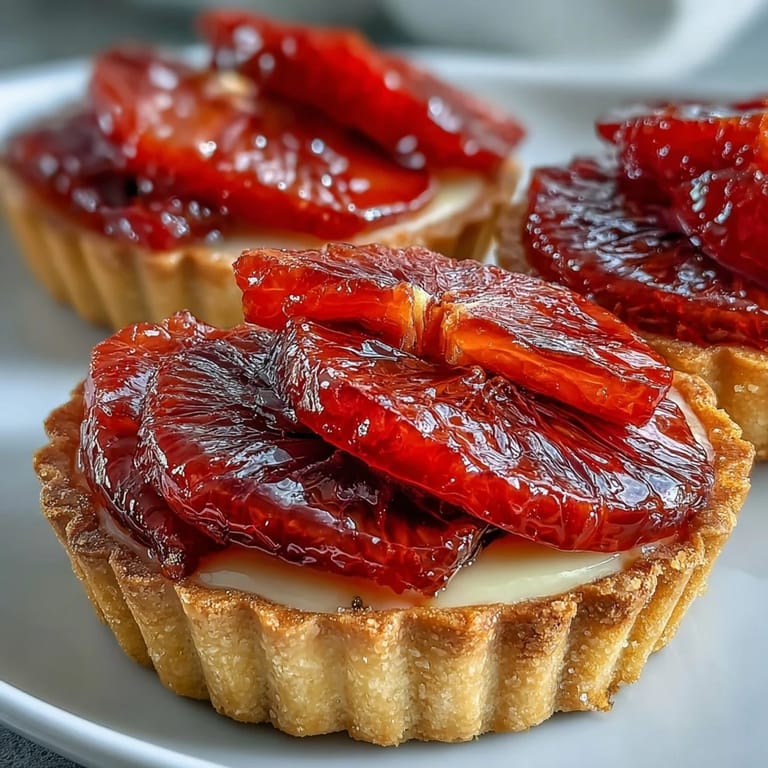
Save There's something almost magical about blood oranges—the way their deep crimson flesh catches the light, how they taste like regular oranges decided to become something more interesting. I discovered these tarts by accident, really, when a friend brought a bag of them to my kitchen one winter afternoon and I suddenly had to figure out what to do with their jewel-like beauty. The answer came together naturally: a buttery, crisp shell, silky vanilla custard, and those scarlet slices arranged on top like edible stained glass. It's become my go-to dessert for moments when I want to impress without spending all day in the kitchen.
I made these for my sister's engagement dinner last spring, and I'll never forget how she cut into hers and the custard held its shape perfectly, the orange slices gleaming on top. My nephew asked for seconds before anyone else even finished their first one, which felt like the highest compliment a cook could receive. That dinner reminded me why I love making food that tastes as beautiful as it looks.
Ingredients
- All-purpose flour (1 1/4 cups): This is your tart shell foundation—use it cold from the pantry and don't skip the sifting step, it makes the dough easier to work with.
- Powdered sugar (1/4 cup): It dissolves into the dough more smoothly than granulated sugar and gives the shells a tender, delicate crumb.
- Unsalted butter, cold and cubed (1/2 cup): Cold butter is non-negotiable here—it creates those flaky layers everyone falls for, so keep it in the freezer until the last second.
- Egg yolk (1 large): This binds everything together and adds richness that makes people wonder if you used some secret ingredient.
- Ice water (1–2 tbsp): Add it a teaspoon at a time, you want the dough just barely coming together, not wet or sticky.
- Salt (pinch): Don't skip this—it wakes up all the buttery flavors in the shell.
- Whole milk (1 1/4 cups): Use whole milk for the custard, the fat content makes it silky in a way lower-fat milk can't match.
- Granulated sugar (1/3 cup): This sweetens the custard without any grittiness, whisked properly it dissolves completely into the yolks.
- Egg yolks (3 large): These are what make the custard rich and luxurious, don't use whole eggs or it'll be too thin.
- Cornstarch (2 tbsp): This prevents the custard from breaking when heated and gives it that perfect wobble, not-quite-set texture.
- Pure vanilla extract (1 tsp): Real vanilla tastes completely different from imitation, it's worth seeking out the real thing.
- Unsalted butter (1 tbsp): This goes in at the end to finish the custard with shine and flavor.
- Blood oranges (3–4): Choose ones that feel heavy for their size, they'll be juicier and more flavorful.
- Honey (1 tbsp, optional): A honey glaze makes the oranges look glossy and keeps them from drying out if sitting a while.
- Water (1 tsp, optional): This thins the honey so it brushes on smoothly without tearing the orange slices.
Tired of Takeout? 🥡
Get 10 meals you can make faster than delivery arrives. Seriously.
One email. No spam. Unsubscribe anytime.
Instructions
- Make your dough base:
- Pulse flour, powdered sugar, and salt in a food processor until combined, then add cold butter cubes and pulse until the mixture looks like coarse breadcrumbs with some pea-sized pieces still visible. Add the egg yolk and pulse, then sprinkle in ice water a tablespoon at a time, pulsing gently after each addition until the dough just barely holds together when you squeeze a small handful.
- Chill and rest:
- Shape the dough into a disk, wrap it in plastic wrap, and let it sit in the fridge for at least an hour—this relaxes the gluten so it won't shrink when you bake it. If you forget and it gets really cold, let it sit at room temperature for 10 minutes before rolling.
- Line your tart pans:
- Roll the dough out on a lightly floured surface to about 1/8-inch thick, then cut and fit it into six 4-inch tart pans, pressing it gently into the corners and letting the excess hang over the edges. Trim the excess with a sharp knife or by rolling the pin over the top, then chill for 20 minutes while you preheat the oven.
- Blind bake the shells:
- Preheat your oven to 350°F, line each tart shell with parchment paper, and fill with pie weights or dried beans to keep the shells from puffing up. Bake for 15 minutes, then carefully remove the weights and parchment and bake for 5 minutes more until the shells are golden and crisp, then set them aside to cool completely.
- Build your custard:
- Heat the milk in a saucepan until it's steaming but not boiling, while in a separate bowl you whisk together egg yolks, sugar, and cornstarch until the mixture turns pale and thick. Slowly pour the hot milk into the yolk mixture while whisking constantly to temper the eggs, then pour everything back into the saucepan and cook over medium heat, whisking constantly, until it thickens and bubbles gently, about 2 to 3 minutes.
- Cool and chill the custard:
- Remove the pan from heat, stir in the vanilla extract and butter, then transfer the custard to a bowl and press plastic wrap directly onto the surface so a skin doesn't form. Let it cool to room temperature, then chill for at least an hour until it's cold and set but still spoonable.
- Assemble with care:
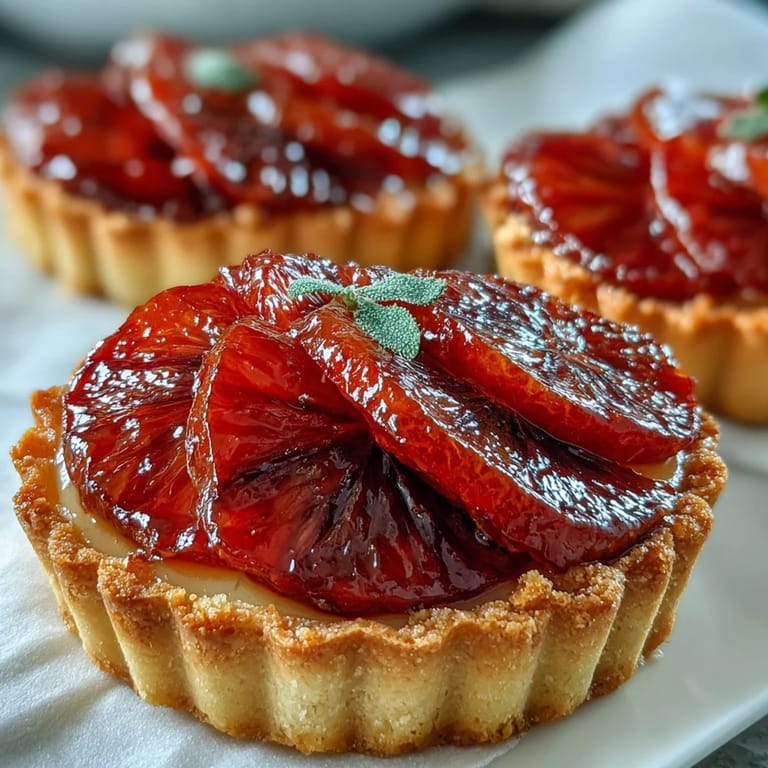
- Spoon the chilled custard evenly into each cooled tart shell, then arrange thin slices of blood orange on top in overlapping circles, starting from the outside and working toward the center in whatever pattern feels right to you. If you want that glossy, jeweled look, warm a tablespoon of honey with a teaspoon of water in a small pan and carefully brush it over the oranges with a pastry brush.
- Final chill:
- Pop the assembled tarts back in the fridge until you're ready to serve them, they actually taste better when they've had time to rest together.
 Save
Save There was this one time I made these tarts for a dinner where I thought I'd messed everything up—the custard looked thin, the shells had a small crack, and I was convinced the whole thing would be a disaster. But when my guests took their first bites, the room went quiet in that special way where you know something just worked. That's when I realized that food isn't really about perfection, it's about the care you put into it and the moment you create when you set it in front of someone.
Why Blood Oranges Matter
Blood oranges have this deep, almost wine-like flavor that regular oranges just can't replicate—they're tart and sweet at the same time, with a complexity that makes people pause mid-bite to figure out what they're tasting. Their color is the real magic though, that crimson-to-ruby gradient that makes each slice look like it belongs in a painting. When they're in season from December through March, grab them whenever you see them because this dessert becomes something truly special.
The Custard Sweet Spot
The custard is really the heart of this tart, and getting it right comes down to temperature and attention—you need the heat high enough to thicken it but low enough that you're not scrambling eggs. The cornstarch is your friend here, it stabilizes everything and means you can make this custard hours ahead without it separating or weeping. I've started adding a tiny pinch of salt to mine too, just barely enough that you can't taste salt but enough to make the vanilla sing.
Assembly and Timing
The best time to assemble these tarts is actually within a few hours of serving them, not the day before—the custard stays creamy and the shells stay crisp when you don't let them sit too long together. If you're feeding a crowd and need to get ahead, bake the shells and make the custard the day before, then do the final assembly an hour or two before everyone arrives. The honey glaze isn't just for looks, it actually protects the orange slices from oxidizing and turning brown, which matters if your tarts need to sit out for a bit.
- Arrange the orange slices while the custard is still cold so they hold their shape better.
- If blood oranges aren't available, regular navel oranges work beautifully and taste great, just use a mix of orange and lemon zest in the custard for extra flavor.
- These tarts pair wonderfully with sparkling rosé or a dessert wine if you're serving them at a dinner party.
 Save
Save These blood orange tarts have become the dessert I reach for when I want to feel like I'm showing someone I care, without the stress of a full day of cooking. They're elegant enough for a dinner party but simple enough that you can actually enjoy the evening instead of being stuck in the kitchen.
Common Questions
- → Can I make these tarts in advance?
Yes, the tart shells and custard can be prepared up to a day ahead. Store shells at room temperature in an airtight container and keep custard refrigerated. Assemble with fresh blood orange slices within a few hours of serving for best texture.
- → What can I substitute for blood oranges?
Regular navel oranges, cara cara oranges, or even grapefruit work beautifully. You can also use a mix of citrus varieties for visual interest and complex flavor profiles.
- → How do I prevent the tart shells from shrinking?
Ensure the dough is properly chilled before rolling and after fitting into the pans. The 20-minute rest in the refrigerator allows the gluten to relax, minimizing shrinkage during baking.
- → Can I use a different custard flavor?
Absolutely. Try adding citrus zest, almond extract, or even a splash of liqueur like Grand Marnier to the custard for variation. Adjust sweetness if using particularly tart citrus toppings.
- → How should I store leftover tarts?
Cover loosely and refrigerate for up to 2 days. Note that the pastry may soften slightly over time due to moisture from the custard and fruit.
- → Do I need special tart pans?
Individual 4-inch tart pans with removable bottoms work best for easy unmolding and elegant presentation. Alternatively, use one 9-inch tart pan and adjust baking time accordingly.