 Save
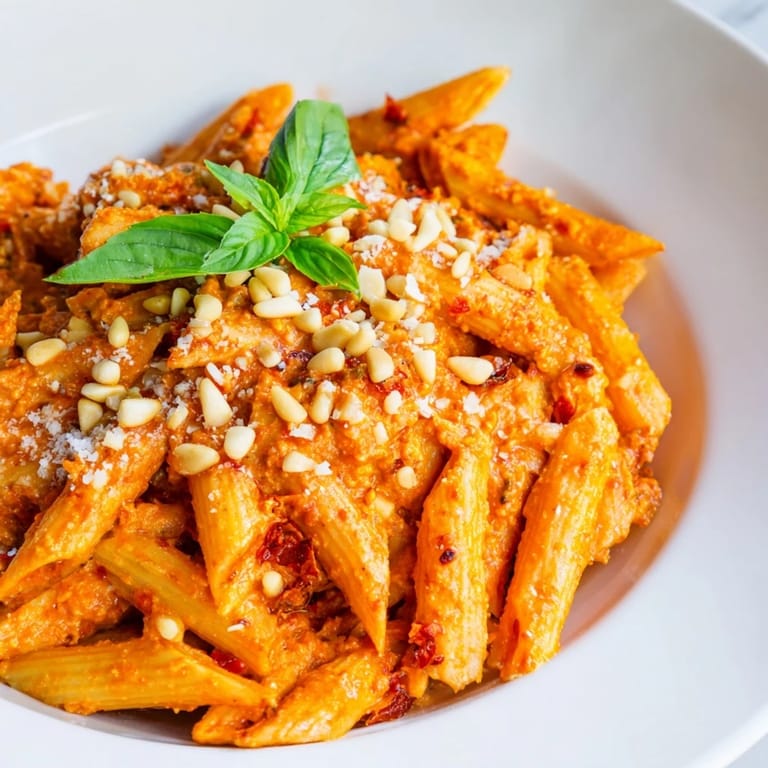
Save There's something about the smell of sun-dried tomatoes hitting hot oil that stops me mid-kitchen conversation every time. I discovered this pesto years ago when a friend brought a jar of expensive Italian sun-dried tomatoes to a dinner party, and instead of saving them for something fancy, I threw together whatever pasta was in the cupboard and made magic happen. The deep, concentrated sweetness of those tomatoes transforms into something almost unrecognizable—less tangy, more like sunshine reduced down to its essence. That night, people asked for the recipe before dessert even arrived, and I realized I'd stumbled onto something worth repeating.
I made this for my sister during one of those rare afternoons when she had time to sit down for a proper lunch. She took one bite, closed her eyes, and didn't say anything for a moment—which with her usually means something is deeply right. We ended up talking for three hours with the bowls empty in front of us, and she's been making it ever since. Sometimes a recipe becomes a quiet language between people.
Ingredients
- Dried pasta (400 g): Penne catches the pesto beautifully in its tubes, but fusilli and spaghetti work just as well; the key is buying good-quality pasta that won't turn mushy.
- Sun-dried tomatoes (120 g): Buy them packed in oil and never drain away that oil carelessly—it's liquid gold and does half the heavy lifting in your sauce.
- Parmesan cheese (50 g): Freshly grated makes a real difference in both texture and flavor, though it's easy to convince yourself pre-grated will do.
- Pine nuts (40 g): Toast them yourself if you can; the warmth brings out a nuttiness that raw nuts simply don't have, and it takes barely two minutes.
- Fresh basil (30 g): Pick leaves that smell bright and peppery, avoiding any that look tired or bruised at the edges.
- Garlic cloves (2): Two is usually right, but taste as you go because garlic's personality changes depending on how fresh it is.
- Lemon juice (1/2 lemon's worth): This small acid burst keeps the pesto from feeling too heavy, so don't skip it even if it seems unnecessary.
- Extra-virgin olive oil (2 tbsp): Use one you'd actually eat on bread, because it matters here in ways it doesn't in other cooking.
- Salt and black pepper: Season boldly—this sauce needs confidence.
Tired of Takeout? 🥡
Get 10 meals you can make faster than delivery arrives. Seriously.
One email. No spam. Unsubscribe anytime.
Instructions
- Get your water boiling:
- Fill a large pot with water, salt it generously until it tastes like the sea, and let it come to a rolling boil—this is the only seasoning your pasta gets, so don't be timid here.
- Cook the pasta right:
- Add your pasta and stir it once or twice in the first minute so nothing sticks, then cook until you can bite a piece and feel just the slightest resistance. Before draining, scoop out a mug of that starchy cooking water and set it beside your bowl—you'll need it later.
- Build the pesto base:
- While the pasta is going, combine your sun-dried tomatoes, Parmesan, pine nuts, garlic, and basil in the food processor. Pulse until everything looks like coarse sand with some texture still visible—you're not making a baby food here.
- Add the liquids and blend:
- Pour in the reserved sun-dried tomato oil, the olive oil, and lemon juice, then blend until the whole thing comes together into a thick, glossy paste. If it looks more like concrete than sauce, add a tablespoon of pasta water and blend again, tasting as you go.
- Marry pasta and sauce:
- Dump the drained pasta into a large bowl, add the pesto, and toss with a wooden spoon or tongs, adding pasta water a splash at a time until the sauce silks out and coats every strand. The pasta should shine, not glisten with a pool of oil at the bottom.
- Plate and garnish:
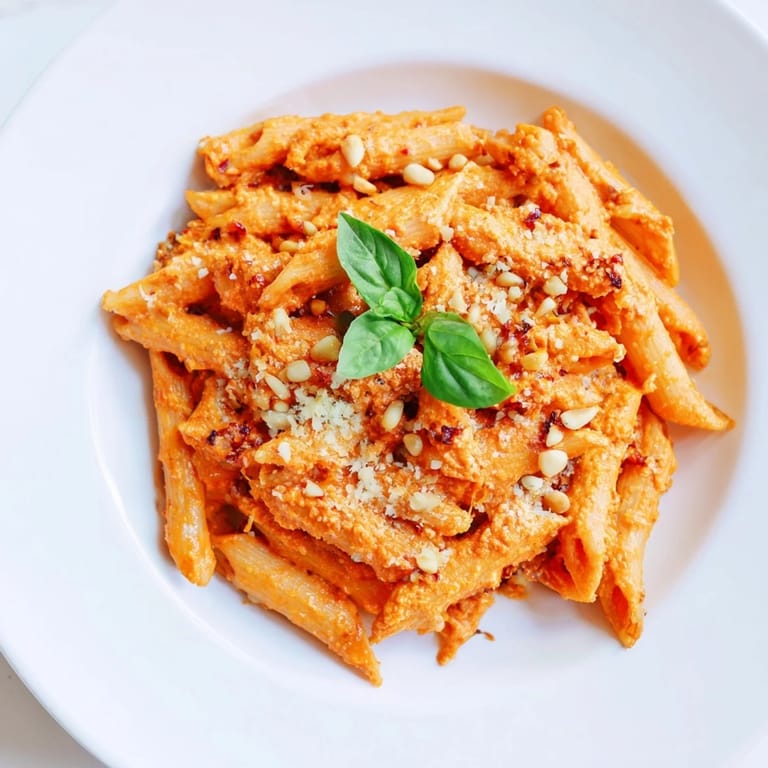
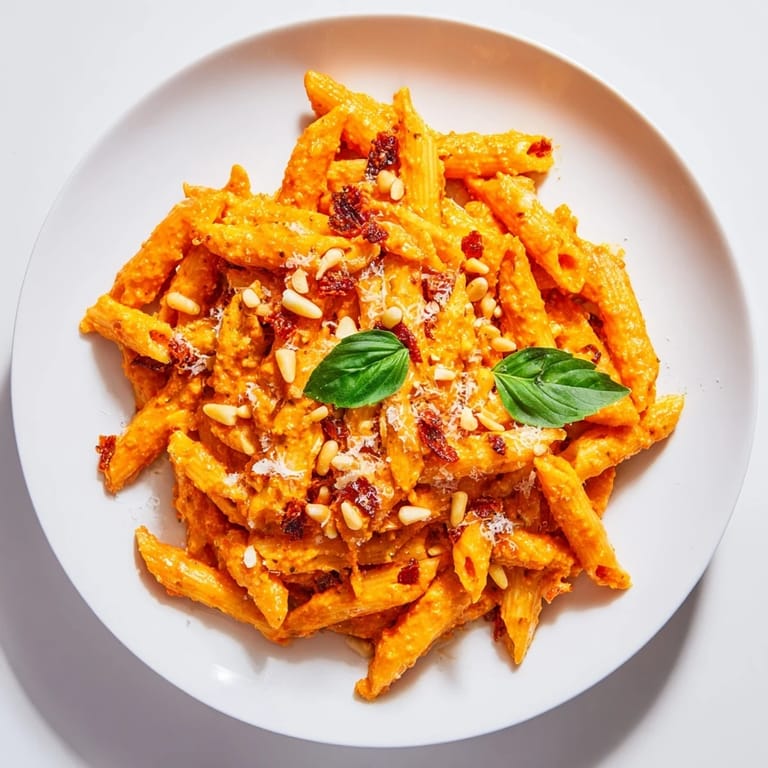
- Serve immediately while everything is still warm, scattering fresh basil leaves on top and a generous handful of grated Parmesan—this final cheese is not optional, it's an essential character in the dish.
 Save
Save The first time I served this to unexpected guests, I felt oddly nervous about a fifteen-minute pasta dish as if it might somehow feel too casual. It was the opposite—there's something about food made quickly but with real ingredients that feels more genuine than anything fussy. They talked about this meal more than elaborate dinners I've sweated over for hours.
Why This Combination Works
Sun-dried tomatoes are intensely concentrated flavor—all the sweetness and umami of a tomato with the water removed—so you need only a handful to completely transform a dish. When you blend them with basil, garlic, and cheese, you're not creating something new; you're making a variation on pesto that feels both familiar and surprising. The lemon juice is crucial because it keeps everything from becoming too heavy and reminds your palate that you're eating something Mediterranean and bright.
Making It Your Own
This is genuinely one of those recipes that invites your own thinking. If pine nuts feel like too much expense or you simply prefer walnuts, the dish will still sing—walnuts bring an earthier note that some people find even better. If you're cooking for vegans, nutritional yeast does a surprising job of standing in for Parmesan, providing that salty, savory depth without the dairy. The bones of the recipe are strong enough to accommodate these kinds of swaps without falling apart.
- Roasted red peppers stirred in at the end add a gentle sweetness that plays beautifully against the tomato intensity.
- A handful of spinach or arugula tossed in while everything is still hot wilts into the warm pasta and adds volume without changing the character of the dish.
- If you want protein, grilled chicken or roasted chickpeas turn this from a side into something more substantive.
Pairing and Serving
This pasta is naturally vegetarian and doesn't need much beyond a crisp white wine and maybe a simple green salad to feel complete. A Pinot Grigio cuts through the richness in exactly the right way, or even a younger Vermentino if you can find it. The meal feels most itself when served right away, steaming and glossy, so time your cooking so people are gathered when the pasta hits the table—this is the kind of dish that deserves attention in the moment.
 Save
Save This recipe has become one of those dishes I make without thinking, the way some people order the same thing at restaurants. It's proof that simple food made with actual attention tastes better than complicated food made on autopilot.
Common Questions
- → What type of pasta works best?
Penne, fusilli, or spaghetti work well, holding the pesto sauce nicely for each bite.
- → Can I substitute pine nuts in the pesto?
Yes, walnuts are a great alternative offering a similar texture and flavor depth.
- → How can I adjust the pesto’s consistency?
Add reserved pasta cooking water in small amounts to loosen the pesto for a silky sauce.
- → What is the best way to store leftovers?
Keep in an airtight container refrigerated for up to 2 days; reheat gently to preserve flavor.
- → How can I make this dish vegan?
Replace Parmesan cheese with nutritional yeast to maintain a savory, cheesy note without dairy.
- → Is it important to reserve pasta water?
Yes, the starchy pasta water helps adjust the sauce’s texture and helps the pesto adhere better.