 Save
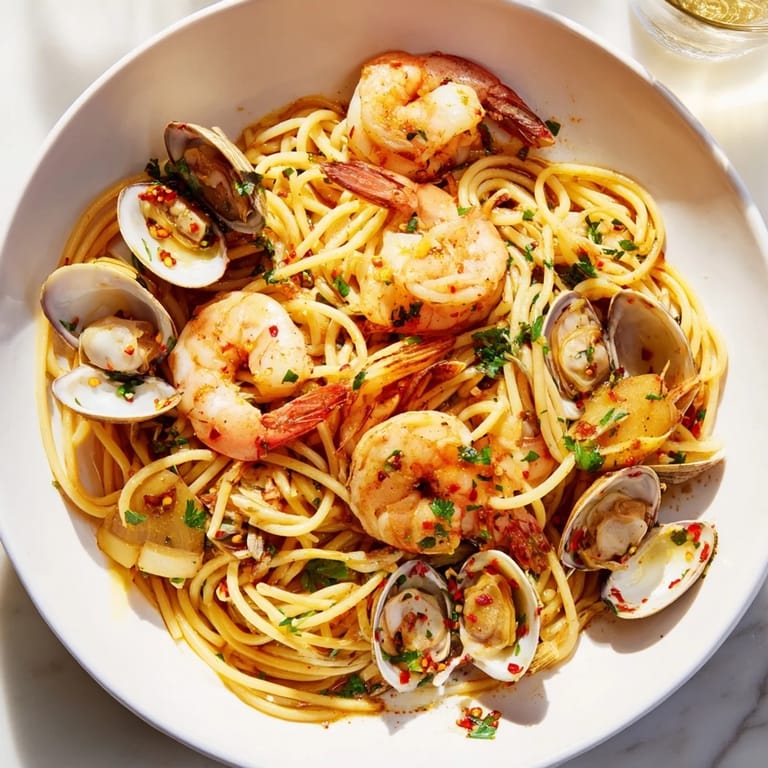
Save There's something magical about the smell of garlic hitting hot olive oil—it fills the kitchen in seconds, that golden-brown fragrance that says dinner is about to be something special. I discovered this seafood pasta aglio e olio on a quiet weeknight when I had shrimp and clams in the fridge and wanted something that felt more like a restaurant than a weeknight scramble. The beauty of this dish is its simplicity: just garlic, olive oil, pasta, and the briny sweetness of fresh seafood. No cream, no heavy sauce, just the ingredients speaking for themselves.
I made this for my neighbor one summer evening when she'd had a rough day at work, and watching her face light up after the first bite reminded me why simple, honest food matters most. She kept asking what the secret ingredient was, and I had to laugh—there wasn't one, just good olive oil and the patience to not rush the garlic. That night taught me that the best meals aren't always the most complicated; sometimes they're just the ones made with attention and care.
Ingredients
- Large shrimp (250 g): Look for wild-caught if you can; they have more flavor than farm-raised, and buying them peeled saves you time without losing any taste.
- Fresh clams (500 g): Buy them the day you plan to cook; they stay alive on ice and taste infinitely better than frozen ones.
- Spaghetti (400 g): Go for bronze-cut (al bronzo) if you find it—the rough texture holds the oil better than smooth pasta.
- Extra virgin olive oil (6 tbsp): This is where quality matters; use something you'd actually drink, not the sad bottle in the back of the cabinet.
- Garlic cloves (5, thinly sliced): Slice them yourself and thin—when they're uniform, they cook evenly and won't burn.
- Red chili flakes (1/2–1 tsp): Start with less; you can always add more heat, but you can't take it out.
- Dry white wine (1/2 cup): Pinot Grigio or Sauvignon Blanc work beautifully and add a clean acidity to the broth.
- Lemon (1): Use fresh lemon, never bottled juice—the zest brings brightness that bottled can't match.
- Fresh flat-leaf parsley (1/4 cup, chopped): Add it at the very end so it stays green and vibrant, not wilted.
Tired of Takeout? 🥡
Get 10 meals you can make faster than delivery arrives. Seriously.
One email. No spam. Unsubscribe anytime.
Instructions
- Get your water boiling and pasta going:
- Fill a large pot with water, salt it generously (it should taste like the sea), and let it come to a rolling boil before adding spaghetti. While the pasta cooks, measure out that half cup of pasta water—you'll need it later, and it's easy to forget once things get busy.
- Toast the garlic and chili in golden oil:
- Pour olive oil into a large skillet over medium heat and add your thinly sliced garlic. Watch it carefully; you want it just golden and fragrant, about a minute—if it turns brown, it'll taste bitter, so don't step away. Add the chili flakes and stir for a few seconds until the whole kitchen smells like you're cooking in Italy.
- Sear the shrimp briefly and set aside:
- Slide the shrimp into the hot oil and let them sear for about 2 minutes—they'll go from gray to pink, and that's your cue to pull them out onto a clean plate.
- Open the clams in wine:
- Pour the white wine into the same skillet (it'll sizzle beautifully) and add your clams, then cover the pan. Shake it occasionally and listen for the gentle clicks as shells open—this takes 3 to 5 minutes. Discard any clams that stubbornly refuse to open; they weren't good to begin with.
- Bring everything together:
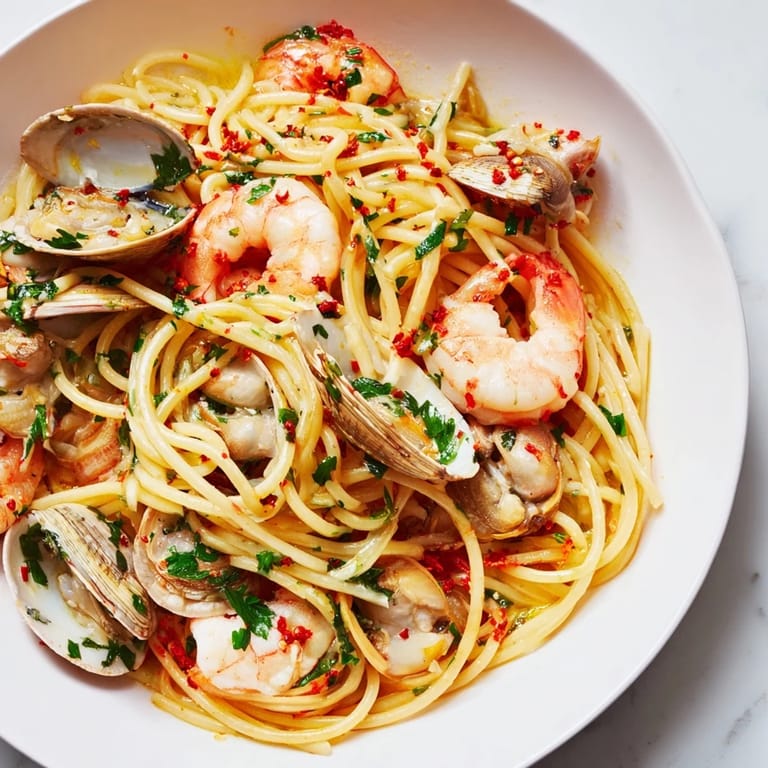
- Return the shrimp to the pan, add the drained pasta, lemon zest, and lemon juice, then scatter in most of the parsley. Toss everything gently, adding that reserved pasta water a splash at a time until the whole dish looks silky and coats the pasta like a light embrace.
- Taste, season, and serve immediately:
- Add salt and fresh black pepper to your liking, then plate it up right away while it's hot, with extra parsley and lemon wedges on the side.
 Save
Save There was one evening when I made this for myself after a long day, just needing something that didn't require thinking, and I found myself eating straight from the skillet without bothering with a plate. That's when I knew this recipe had become more than just dinner—it was comfort, speed, and elegance all wrapped together in something that took less time than a phone call.
Why This Dish Works
Aglio e olio is one of the oldest pasta recipes, born from Italian peasant kitchens where garlic, oil, and bread were the holy trinity of poverty turned into art. When you add seafood, you're honoring that tradition while elevating it—the briny sweetness of clams and shrimp plays perfectly against the sharp garlic and clean lemon. The wine adds depth without heaviness, and the pasta water becomes a glossy, delicate sauce that clings to every strand.
Timing and Preparation
The secret to nailing this dish is understanding that everything cooks at different speeds and needs to finish at the same moment. Start your pasta first since it takes the longest, then build your seafood sauce in the skillet while the water boils—this way, when your pasta hits the colander, your clams are just opening and your shrimp is resting nearby. The whole dish comes together in the last minute, which sounds chaotic but actually feels like a smooth dance once you've done it once.
Variations and Flexibility
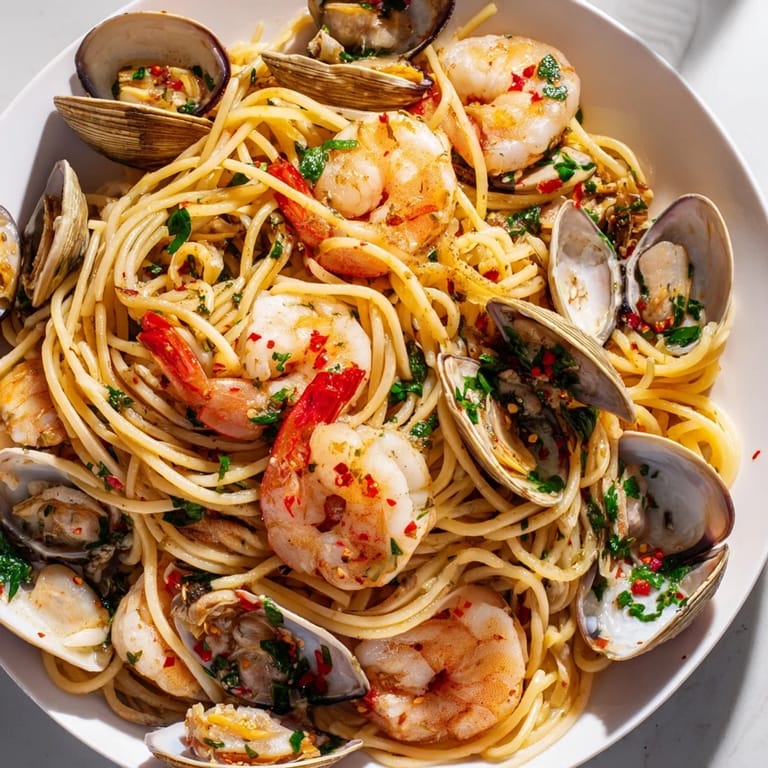
I've made this with mussels on nights when the fishmonger had run out of clams, and it's just as beautiful. Calamari works too, though it needs less time—add it with the shrimp and you're golden. Some nights I skip the white wine and add a splash of dry vermouth instead, which leans into something slightly different but equally delicious.
- Swap clams for mussels or add thinly sliced calamari for variety without changing the method.
- If you prefer no heat, skip the chili flakes entirely—the garlic and lemon are flavorful enough to stand alone.
- A touch of anchovy paste stirred into the oil adds savory depth, but use just a teaspoon so it whispers rather than shouts.
 Save
Save This dish reminds me that some of the most memorable meals come from simplicity and presence, not from long ingredient lists or complicated techniques. Make it for someone you care about, or make it for yourself after a day that deserves something beautiful.
Common Questions
- → What type of seafood works best for this dish?
Large shrimp and fresh clams provide a perfect balance of textures and flavors, but mussels or calamari can also be used as delicious substitutes.
- → How do you prevent garlic from burning during sautéing?
Cook the sliced garlic over medium heat and watch closely, sautéing only until it turns golden and fragrant, about one minute.
- → What is the purpose of reserving pasta water?
Reserving pasta water helps create a silky sauce by blending the pasta's starch with olive oil and lemon juice, enhancing texture and flavor.
- → Can this dish be made gluten-free?
Yes, simply replace regular spaghetti with gluten-free pasta to accommodate gluten sensitivities without sacrificing taste.
- → What wine pairs well with this seafood pasta?
A crisp Italian white wine like Pinot Grigio complements the bright, garlicky flavors and seafood elements beautifully.
- → How should clams that do not open during cooking be handled?
Any clams that remain closed after cooking should be discarded as they may not be safe to eat.