 Save
Save The first time I actually made haggis, I was standing in a Scottish kitchen on a grey November morning, my hands hovering uncertainly over a sheep's stomach that had arrived in the mail. My Scottish friend Margaret watched with an amused smile as I questioned every step, convinced I was about to ruin centuries of tradition. But something shifted as I toasted those oats, as the spices filled the air, as the whole mixture came together with a rustic honesty that felt less intimidating than I'd imagined. By the time we sat down to eat, with creamy tatties and sweet neeps on the side, I understood why this dish has survived for generations—it's not fussy or pretentious, just deeply, unapologetically good.
I remember serving haggis to my brother-in-law, who'd always been suspicious of offal, and watching his face shift from doubt to genuine delight as he took that first bite. He asked for seconds without saying a word, just kept eating with quiet satisfaction. That's when I realized haggis isn't about being adventurous or proving anything—it's just honest food that happens to be delicious.
Ingredients
- Sheep's heart, liver, and lungs (500g): The soul of haggis—if you can't find them, quality lamb or beef mince works, though you'll lose some of that distinctive depth. Ask your butcher in advance; most can source organ meats with a day or two's notice.
- Beef or lamb suet (200g): This is what keeps the haggis moist and gives it that rich texture; don't skip it or substitute with oil, as the flavor won't translate.
- Steel-cut oats (150g): Toast them yourself if possible—it unlocks a nutty depth that makes the whole dish taste more rounded and developed.
- Medium onions (2): Finely chopped and cooked down slightly before mixing improves the flavor, though raw works in a pinch.
- Beef stock (250ml): Use good stock; it's one of the few liquid elements, so it matters more than you'd think.
- Ground spices (black pepper, coriander, nutmeg, allspice): These warm spices are the heart of the flavor profile—don't measure them timidly, but also don't double them unless you like very assertive seasoning.
- Sheep's stomach or large sausage casing: The traditional vessel adds authenticity, but a pudding basin covered in foil works beautifully if you prefer something less adventurous.
- Potatoes and turnips (500g each): Waxy potatoes hold up better than floury ones; turnips (swede/rutabaga) have a natural sweetness that balances the savory haggis perfectly.
Tired of Takeout? 🥡
Get 10 meals you can make faster than delivery arrives. Seriously.
One email. No spam. Unsubscribe anytime.
Instructions
- Prepare the offal:
- Rinse the sheep's organs thoroughly under cold water—this step feels important and calming, more ritual than anything else. Place them in a large pot, cover with cold water, bring to a boil, then turn down the heat and let them simmer gently for 1 to 2 hours until they're completely tender.
- Cool and mince:
- Once cooked, fish the offal out and set aside to cool just enough to handle, then mince it finely by hand or in a food processor. Save about 250ml of the cooking liquid if you like—it adds an extra savory note, though it's optional.
- Build the mixture:
- In a large bowl, combine your minced offal with the finely chopped suet, toasted oats, onions, and any optional minced meat. Stir in the beef stock, reserved cooking liquid if using, and all your spices—pepper, coriander, nutmeg, and allspice. Mix until everything is thoroughly combined and the texture is moist but not wet; it should feel substantial when you hold a spoonful.
- Fill the casing or basin:
- If using a sheep's stomach, rinse it well inside and out, then carefully fill it with the mixture, leaving some room at the top for expansion (about an inch). Tie the openings securely with kitchen twine. If using a pudding basin, simply spoon the mixture in and cover tightly with foil.
- Poach gently:
- Place your filled casing or basin in a large pot of simmering water—the water should come halfway up the sides but never cover the top. Let it simmer gently for 2 hours, checking the water level every 30 minutes or so to make sure it hasn't evaporated too much. The gentle heat keeps everything tender and allows the flavors to marry beautifully.
- Prepare neeps and tatties:
- While the haggis cooks, boil your peeled and cubed potatoes and turnips separately (they cook at slightly different rates) until both are fork-tender, around 20 to 25 minutes. Drain them well, then mash each separately with a good knob of butter and a pinch of salt and pepper.
- Finish and serve:
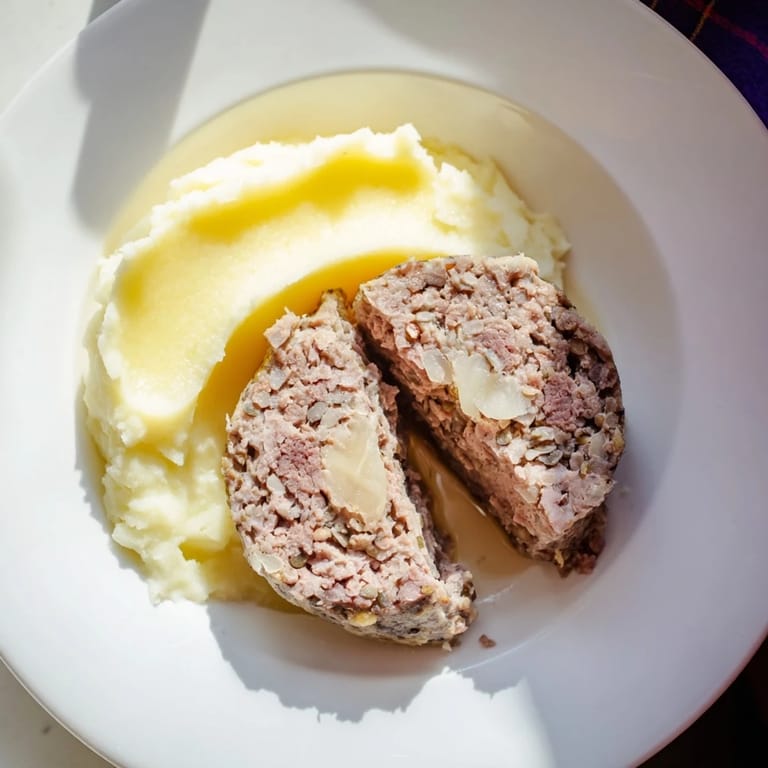
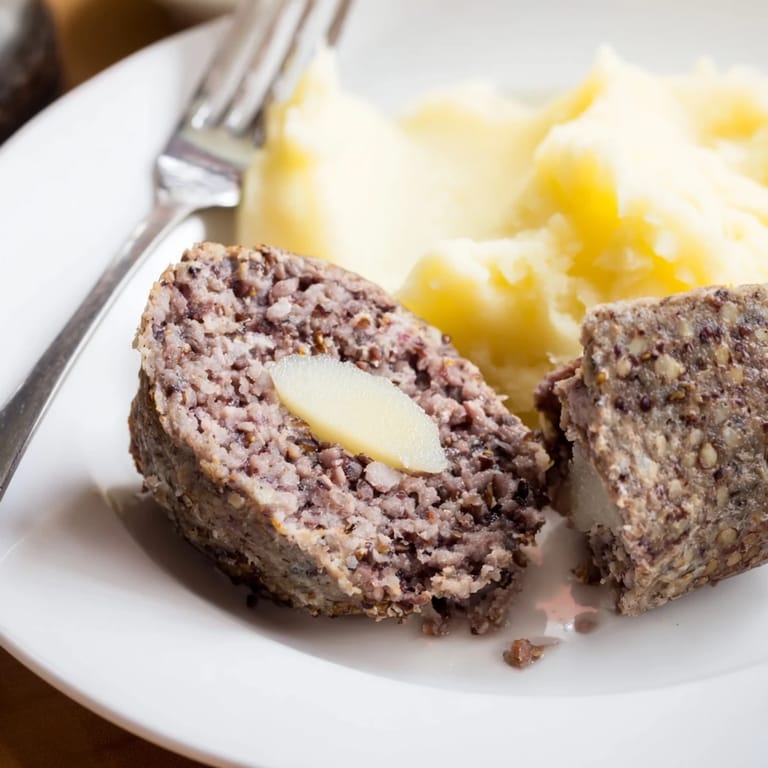
- Carefully remove the haggis from the hot water and let it rest for a few minutes—this makes it easier to handle. If you've used a casing, slice it open carefully to reveal the steaming mixture inside. Serve hot alongside your buttery neeps and tatties, and watch people's faces light up.
 Save
Save There's something oddly moving about haggis, once you get past the unfamiliar ingredients. It represents centuries of resourcefulness, of making something extraordinary from everything available, of community gathered around a table. Making it yourself connects you to that story in a way that eating it out never quite does.
Finding Your Ingredients
The biggest hurdle most people face is sourcing the offal, but it's less dramatic than it sounds. Call your local butcher shop a day or two ahead and ask for sheep's heart, liver, and lungs—most quality butchers are happy to order them and often have interesting suggestions about sourcing. If that feels too intimidating, a mix of good-quality beef and lamb mince creates a lovely version that trades some authenticity for accessibility, and honestly, a well-made haggis with mince is still worth celebrating. As for the sheep's stomach casing, if your butcher can't provide one, they're increasingly available online or you can absolutely use a pudding basin, which produces essentially the same result with less drama.
The Spice Question
I've noticed that haggis seasoning divides people—some prefer it mild and subtle, others want the spices singing. There's no wrong answer here, but I'd encourage you to taste the raw mixture before cooking and adjust to your preference. The spices mellow slightly during the 2-hour poach, so if you like boldness, this is the moment to be generous. Ground coriander adds brightness, nutmeg brings warmth, and allspice ties everything together with an almost mysterious depth that people rarely identify but always feel.
Sides and Serving
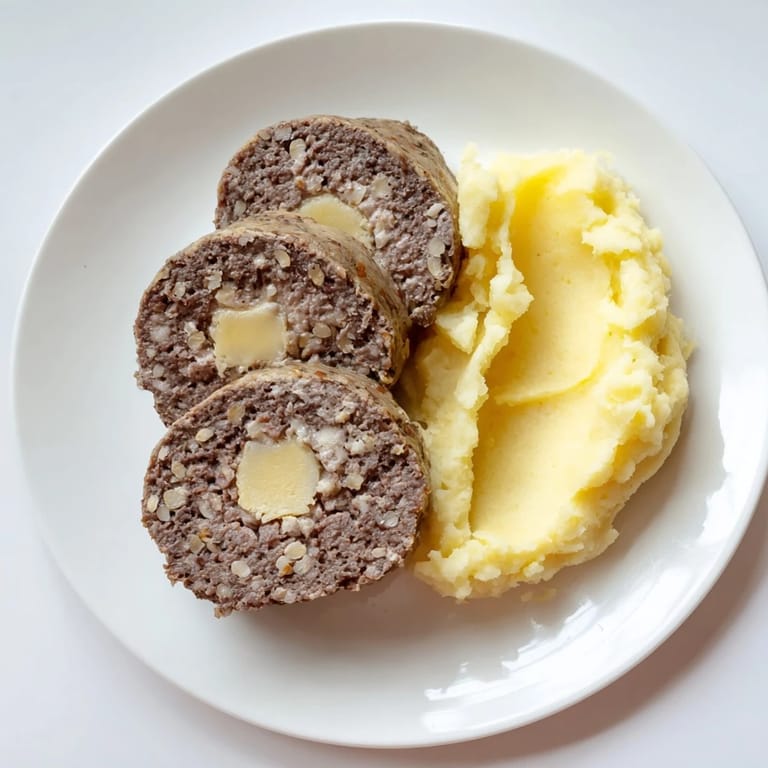
Neeps and tatties are non-negotiable—their sweet, buttery creaminess is exactly what balances the savory intensity of the haggis. Many people add a whisky cream sauce, and if you're inclined, a splash of good single malt stirred into heavy cream with a touch of mustard creates something truly memorable. Alternatively, keep it simple with just the vegetables, letting the haggis speak for itself—sometimes that's the most satisfying approach.
- A sharp, acidic pickle or chutney on the side cuts through the richness beautifully.
- If you're making this for Burns Night or any celebration, a proper toast to the haggis beforehand feels right and sets the mood perfectly.
- Haggis keeps well refrigerated for several days and reheats gently in simmering water, making it excellent for advance cooking.
 Save
Save Haggis is the kind of dish that rewards courage and curiosity. Once you've made it, you'll understand why it's beloved, and you'll likely find yourself making it again.
Common Questions
- → What meats are traditionally used in Scottish haggis?
Scottish haggis traditionally includes sheeps heart, liver, and lungs, combined with suet and minced lamb or beef for texture.
- → How are neeps and tatties prepared to accompany this dish?
Turnips (neeps) and potatoes (tatties) are peeled, boiled until tender, then mashed with butter, salt, and pepper to complement the savory pudding.
- → Can the casing be substituted when unavailable?
Yes, an oven-proof pudding basin covered tightly with foil can be used as an alternative to traditional sheeps stomach casing.
- → What spices enhance the flavor of this dish?
Ground black pepper, coriander, nutmeg, allspice, and salt provide a warm and balanced seasoning profile.
- → Is there a simpler variation for milder taste?
Replacing offal with a mix of beef and lamb mince softens the flavor while maintaining a hearty texture.