 Save
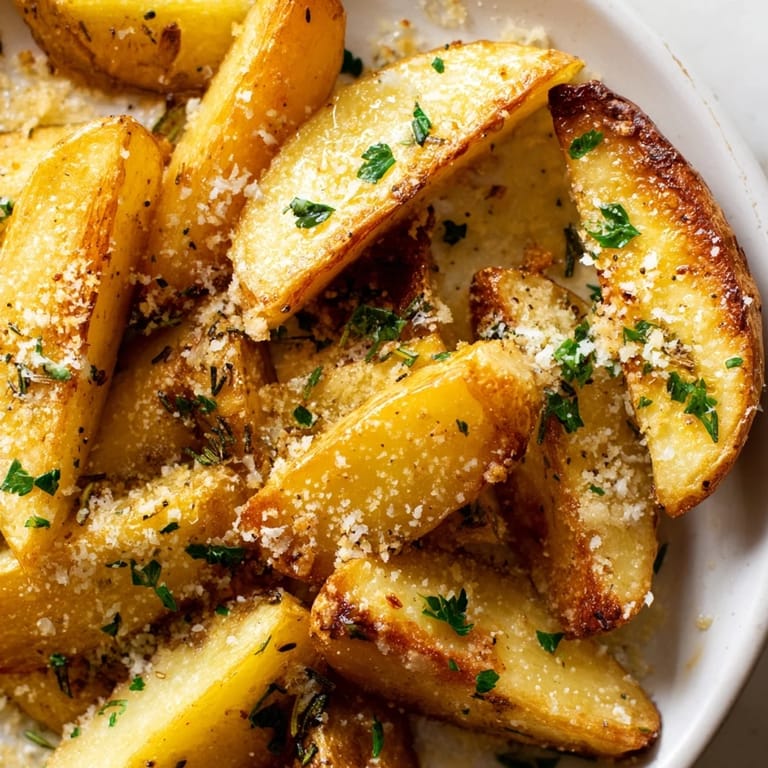
Save There's something about the smell of rosemary hitting hot oil that makes you pause mid-whatever-you're-doing. I discovered these wedges one Wednesday when I had leftover potatoes and an almost-empty jar of fresh rosemary sitting on my counter, and I decided to stop pretending I needed a fancy excuse to make something golden and crispy. The Parmesan goes on while they're still steaming, which is the whole secret—it melts into all those crevices and becomes something you can't stop reaching for.
I remember serving these at a casual dinner party where someone brought a new girlfriend, and honestly, I was nervous about the food. But watching her eat a second wedge before even trying anything else—that quiet moment of pure enjoyment—told me everything. These aren't fancy, but they're unforgettable in their simplicity.
Ingredients
- Russet potatoes: Medium ones are your friend here; they have the starch you need for that crispy exterior and fluffy inside. Scrub them well under cold water before cutting so you keep the skin, which adds texture and prevents them from falling apart.
- Olive oil: Two tablespoons might seem modest, but this isn't a deep-fry situation—you want them kissed with oil, not drowned in it, so they crisp up instead of getting greasy.
- Kosher salt and black pepper: Freshly ground pepper makes a real difference; pre-ground pepper tastes like dust in comparison, I learned this the hard way.
- Fresh rosemary: If you can get it fresh, do—dried works in a pinch, but fresh gives this brightness that dried herbs can't match. Chop it fine so it distributes evenly and doesn't overpower.
- Garlic powder: Just enough to add another layer of savory without making anyone ask what that flavor is.
- Parmesan cheese: Freshly grated is non-negotiable; the pre-shredded stuff has anti-caking agents that keep it from melting properly into those wedges.
Tired of Takeout? 🥡
Get 10 meals you can make faster than delivery arrives. Seriously.
One email. No spam. Unsubscribe anytime.
Instructions
- Heat your oven first:
- Set it to 425°F and let it preheat while you prep—this matters more than you'd think. Line your baking sheet with parchment paper so nothing sticks and cleanup is painless.
- Cut and coat the potatoes:
- Wedges should be roughly the same size so they bake evenly. Toss them in the oil, salt, pepper, rosemary, and garlic powder in a large bowl until every piece is lightly glossed and you can smell the rosemary dancing with the garlic.
- Arrange them cut-side down:
- This is where the crispiness lives—the flat surface against the hot pan creates that golden, crunchy edge you're after. Don't crowd the pan; give them breathing room.
- Bake and flip:
- After about fifteen minutes, flip them so the other side gets golden too. You're looking for edges that are deep brown and slightly caramelized, not burned but definitely not shy.
- The Parmesan moment:
- The second they come out of the oven while they're still steaming hot, toss them with freshly grated Parmesan. The heat melts it into every crevice and corner, creating this savory, tangy coating that's impossible to resist.
- Finish and serve:
- A sprinkle of fresh parsley adds color and a tiny hint of green freshness. Serve hot, because cold potato wedges are a different recipe entirely.
 Save
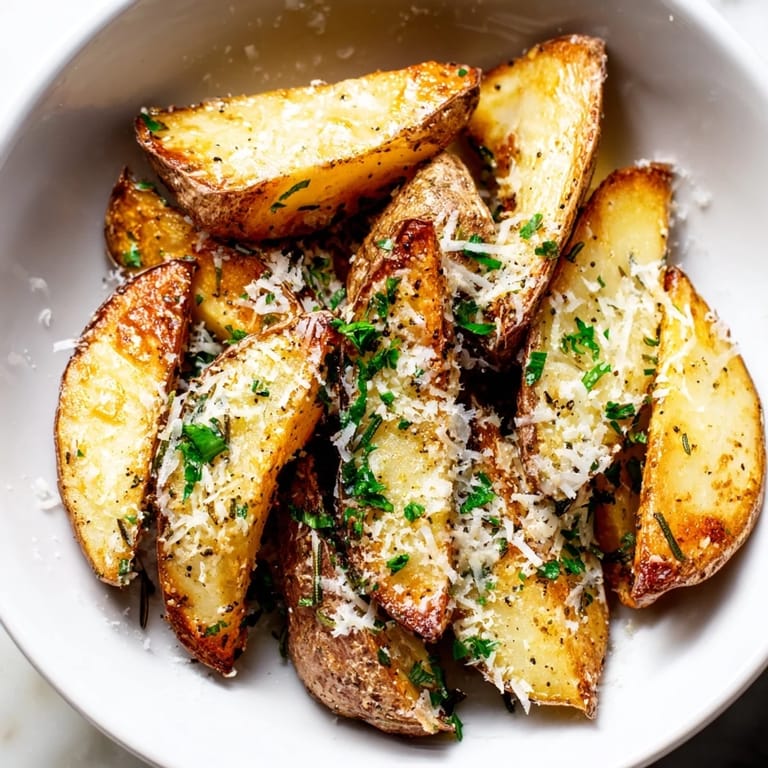
Save One autumn afternoon, my neighbor came over and I served these still-warm from the oven with homemade garlic aioli. We ended up sitting outside longer than planned, just eating wedges and talking about nothing important. That's when I realized this recipe wasn't about impressing anyone—it was about creating a moment worth lingering in.
Seasoning Variations That Work
The rosemary-Parmesan combo is classic for a reason, but I've had fun experimenting. Smoked paprika adds this subtle depth that hints at something slightly smoky without overpowering the potato, and a pinch of chili flakes brings heat that surprises in the best way. Sometimes I'll add a tiny bit of lemon zest to the oil before tossing, which brightens everything up. The baseline recipe is forgiving enough to let you play around without breaking anything.
The Dipping Sauce Question
Honestly, these are good enough to eat plain, but a creamy garlic aioli takes them somewhere special—something about the cool, garlicky sauce against the hot, crispy wedge is just right. Ketchup works too if that's your thing, and I've seen people make a parsley-lemon mayo that's incredible. The wedges become a vehicle for whatever you want to pair them with, and that flexibility is part of why they work so well as a side.
Timing and Storage Tips
These are best eaten within a few minutes of coming out of the oven, when they're at their crispiest and most glorious. You can make the wedges ahead of time and store them in the fridge for up to a day before baking, which is a lifesaver if you're planning a dinner party. Leftovers reheat reasonably well in a 375°F oven for about ten minutes if you have them, though they'll never be quite as crispy as fresh.
- Prepping the potatoes hours ahead? Keep them in cold water in the fridge to prevent browning and to help them crisp better when you bake them.
- Soaking for thirty minutes before baking removes excess starch and is the secret to extra-crispy edges if you have the time.
- Don't store cooked wedges in a sealed container while they're still warm, or steam will soften them—let them cool slightly on the baking sheet first.
 Save
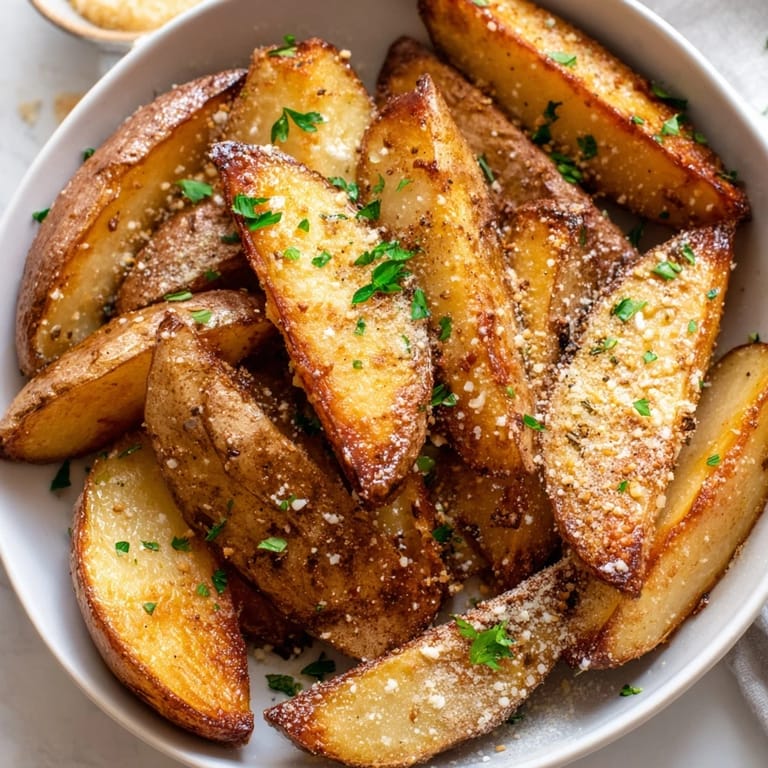
Save These wedges have become my go-to when I want something that feels homemade and tastes indulgent but doesn't require any special skills or fancy ingredients. They're proof that simple, honest food—potatoes, herbs, cheese, and time in the oven—can be exactly what you needed.
Common Questions
- → How can I make potato wedges extra crispy?
Soaking the cut wedges in cold water for about 30 minutes before baking removes excess starch, resulting in crispier edges once baked.
- → Can I use dried rosemary instead of fresh?
Yes, dried rosemary works well. Use about half the amount of dried compared to fresh to avoid an overpowering flavor.
- → What is the best way to evenly coat the wedges with seasoning?
Tossing the potato wedges in a large bowl with olive oil and seasonings ensures even coverage and helps the flavors adhere during baking.
- → At what temperature should I bake the potato wedges?
Baking at 425°F (220°C) allows the wedges to become golden and crispy while cooking through evenly.
- → Can I add other spices to customize the flavor?
Absolutely! Smoked paprika, chili flakes, or garlic powder can enhance the flavor profile according to your preference.