 Save
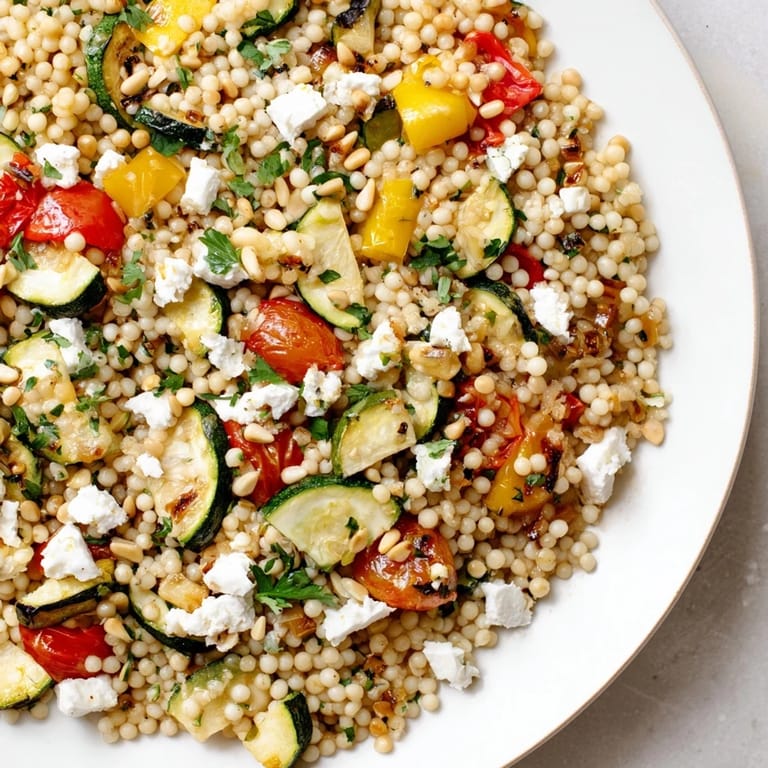
Save My neighbor handed me a bowl of this over the fence one July evening, still warm from her kitchen. She shrugged and said it was just what she had in the fridge, but every bite tasted like sunshine trapped in grain. The roasted peppers were sweet and soft, the lemon dressing sharp enough to wake up my tired palate after a long day. I asked for the recipe the next morning, and she laughed because there wasn't really one—just instinct and a hot oven. That's when I realized the best meals don't need much fuss, just good timing and vegetables that actually taste like something.
I made this for a small birthday dinner once, doubling the batch because I wasn't sure what else to serve. By the end of the night, the bowl was scraped clean and two people asked if I'd teach them how to roast vegetables properly. One friend admitted she'd always bought pre-cut frozen peppers because she thought fresh ones were too much work. Watching her taste the caramelized edges changed her mind on the spot. It wasn't just about the food—it was about showing someone that cooking from scratch doesn't have to be complicated or stressful.
Ingredients
- Zucchini: Dice it into even pieces so it roasts at the same rate as the peppers, and don't worry if the edges get a little dark—that's where the flavor hides.
- Red and yellow bell peppers: The mix of colors isn't just pretty, it adds layers of sweetness that make the whole salad feel more alive.
- Red onion: Cut into wedges instead of thin slices so they hold their shape in the oven and turn jammy instead of burnt.
- Cherry tomatoes: Halve them so they burst and blister, releasing their juices to mingle with the olive oil on the pan.
- Couscous: Use vegetable broth instead of plain water to give it a deeper, richer base that stands up to all the bold flavors.
- Lemon juice and zest: The zest is essential—it brings a bright, floral note that juice alone can't match.
- Dijon mustard: This emulsifies the dressing and adds a subtle tangy backbone that ties everything together.
- Garlic: Mince it finely so it melts into the dressing without leaving sharp, raw bites.
- Honey or maple syrup: Just a touch balances the acidity and makes the dressing taste rounded instead of harsh.
- Fresh parsley and mint: Chop them right before tossing so they stay vibrant and fragrant, not wilted or bruised.
- Feta cheese: Crumble it coarsely and add at the end so it stays creamy and doesn't melt into the warm couscous.
- Toasted pine nuts or almonds: Toast them in a dry skillet until golden and fragrant, then let them cool before sprinkling on top for crunch.
Tired of Takeout? 🥡
Get 10 meals you can make faster than delivery arrives. Seriously.
One email. No spam. Unsubscribe anytime.
Instructions
- Get the oven ready:
- Preheat to 425°F and line your baking sheet with parchment so the vegetables don't stick or burn on the edges. This high heat is key to getting those caramelized, sweet spots.
- Toss and roast the vegetables:
- Combine zucchini, bell peppers, red onion, and cherry tomatoes with olive oil, salt, and pepper, spreading them in a single layer. Roast for 20 to 25 minutes, stirring halfway through so everything browns evenly and the tomatoes start to collapse.
- Prepare the couscous:
- Bring vegetable broth to a rolling boil, then stir in couscous, olive oil, and salt before removing from heat. Cover tightly and let it steam for 5 minutes, then fluff gently with a fork to separate every grain.
- Whisk the lemon dressing:
- In a small bowl, combine lemon juice, zest, olive oil, Dijon mustard, minced garlic, honey, salt, and pepper until smooth and emulsified. Taste and adjust the balance—it should be bright, tangy, and just barely sweet.
- Combine everything:
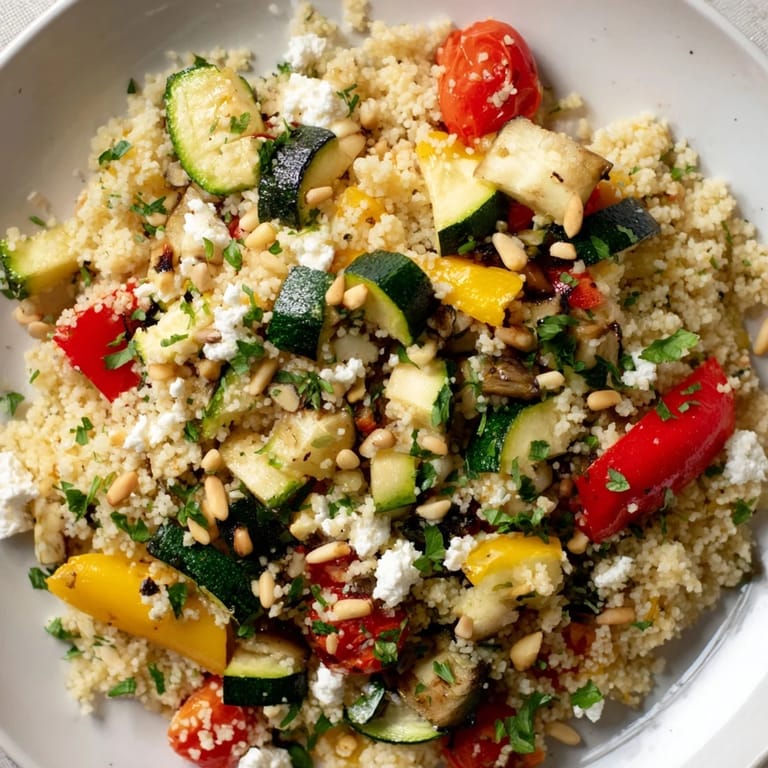
- In a large bowl, toss the fluffy couscous with the roasted vegetables, chopped parsley, and mint. Pour the dressing over and mix gently until every spoonful is coated and glistening.
- Finish and serve:
- Scatter crumbled feta and toasted nuts on top just before bringing it to the table. Serve warm or let it sit at room temperature for the flavors to meld even more.
 Save
Save There was a quiet afternoon when I made this for myself, no one else around, and I ate it straight from the bowl on the back porch. The mint was fresh from the garden, the feta was salty and cool, and I realized I didn't need a reason or an occasion to make something this good. Sometimes the best meals are the ones you make just because you want to feel taken care of, even if you're the one doing the cooking. That day, this salad felt like a small act of kindness I gave myself, and it's stuck with me ever since.
How to Store and Reheat
This salad keeps well in the fridge for up to two days in an airtight container, though the vegetables will soften a bit as they sit. If you plan to make it ahead, hold off on adding the feta and nuts until just before serving so they stay fresh and crunchy. You can eat it cold straight from the fridge, or let it come to room temperature for about 20 minutes to bring the flavors back to life. I've even warmed it gently in a skillet for a minute, which makes the couscous fluffy again and the dressing more fragrant.
Ways to Make It Your Own
I've swapped in roasted eggplant when I had it on hand, and it soaked up the dressing like a sponge. Adding a can of drained chickpeas turns this into a more filling main dish without much extra effort. If you want it vegan, skip the feta or use a cashew-based substitute—it won't be the same, but it's still bright and satisfying. A handful of arugula tossed in at the end adds a peppery bite that plays nicely with the sweetness of the roasted vegetables.
What to Serve Alongside
This salad is hearty enough to stand alone, but it shines next to grilled chicken, lamb kebabs, or a piece of seared fish. I've served it with warm pita bread and hummus for a casual lunch that felt more special than it had any right to be. It also works beautifully as part of a mezze spread, sitting next to olives, stuffed grape leaves, and yogurt dip.
- Grilled halloumi adds a salty, squeaky richness that complements the roasted vegetables perfectly.
- A simple green salad with olive oil and lemon keeps the meal light and fresh.
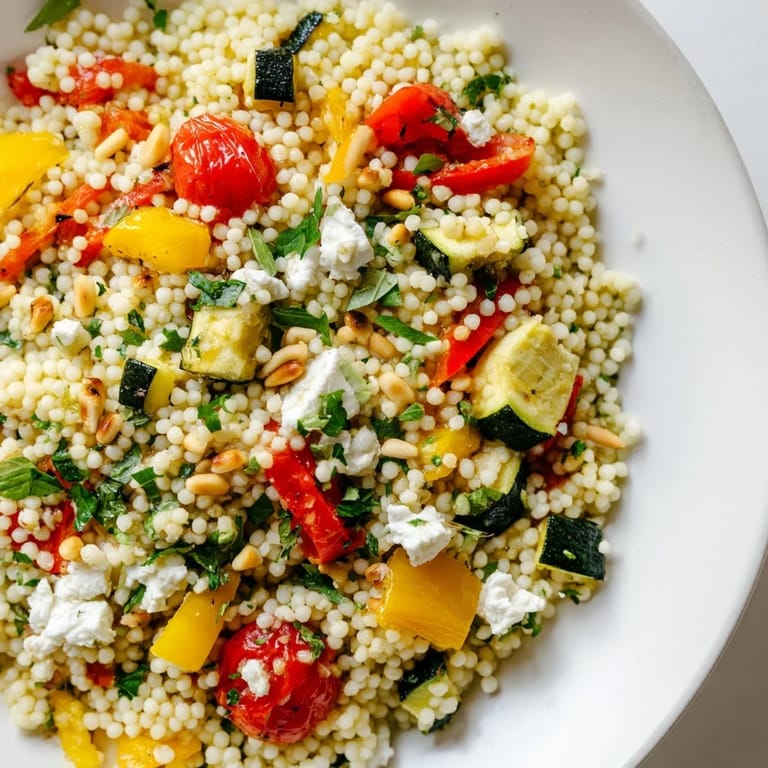
- If you're feeding a crowd, double the batch and serve it in a big, shallow platter so everyone can see the colors.
 Save
Save This is the kind of dish that makes you feel capable in the kitchen, even on days when nothing else goes right. Keep it in your rotation, and you'll always have something bright and nourishing to fall back on.
Common Questions
- → Can I prepare this salad ahead of time?
Yes, you can prepare the components separately. Roast the vegetables and cook the couscous up to 2 days in advance, then assemble and dress just before serving. Store leftovers in an airtight container in the refrigerator for up to 2 days.
- → What vegetables work best for roasting?
Zucchini, bell peppers, red onion, and cherry tomatoes work wonderfully. Other great options include eggplant, asparagus, mushrooms, or carrots. Choose vegetables that have similar cooking times for even caramelization.
- → How do I make this salad vegan?
Omit the feta cheese or substitute it with a plant-based alternative like cashew cream or nutritional yeast. Also use maple syrup instead of honey in the dressing and ensure your vegetable broth is vegan-certified.
- → Can I add protein to this salad?
Absolutely. Stir in cooked chickpeas, white beans, or lentils for plant-based protein. You can also serve it alongside grilled chicken, fish, or toasted halloumi for extra protein.
- → What's the best way to store leftovers?
Store in an airtight container in the refrigerator for up to 2 days. The salad can be served cold or reheated gently. If the couscous dries out, refresh it with a splash of vegetable broth or water.
- → Can I substitute the lemon dressing?
Yes, try a balsamic vinaigrette, tahini-based dressing, or herb-infused olive oil. The key is balancing acidity and richness to complement the roasted vegetables and couscous.