 Save
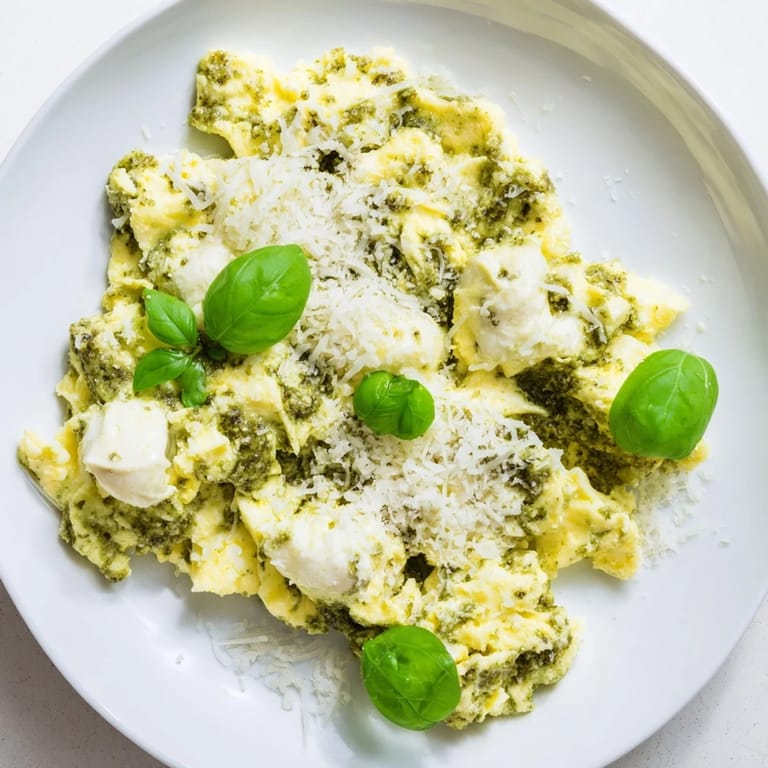
Save The morning I discovered pesto and cottage cheese together was purely accidental. I'd meant to make my usual scrambled eggs but found a half-empty container of cottage cheese staring back from the fridge, and somehow that jar of pesto ended up on the counter too. What happened in the pan wasn't planned—it became this incredibly creamy, vibrant breakfast that I now make at least twice a week.
My sister was visiting when I first served this, expecting my standard breakfast fare. She took one bite, fork paused mid-air, and asked what I'd done differently. Watching someone realize that cottage cheese belongs in scrambled eggs might be one of my favorite kitchen moments ever.
Ingredients
- Eggs: Large eggs give you the best structure and fluffiness—farm fresh if you can find them
- Milk or cream: Totally optional but adds that extra luxurious texture if you're feeling indulgent
- Cottage cheese: Full-fat creates the creamiest result but low-fat works surprisingly well too
- Basil pesto: Homemade is incredible but a good quality store-bought version works perfectly fine
- Salt and pepper: Freshly ground black pepper makes a noticeable difference here
- Garnishes: Fresh basil, extra pesto, or Parmesan take it over the top
Tired of Takeout? 🥡
Get 10 meals you can make faster than delivery arrives. Seriously.
One email. No spam. Unsubscribe anytime.
Instructions
- Whisk your base:
- Beat eggs with milk, salt, and pepper until uniform—tiny bubbles will help create fluffiness
- Wake up the pesto:
- Warm it briefly in the skillet over medium-low heat to release those aromatic oils before adding eggs
- Gentle scrambling:
- Let eggs sit briefly, then fold from edges toward center—slow and steady prevents rubbery texture
- Add the cheese:
- Fold in cottage cheese when eggs are just set but still creamy, so it warms through without breaking down completely
- Remove promptly:
- Take the pan off heat while eggs still look slightly underdone—they'll continue cooking on the plate
 Save
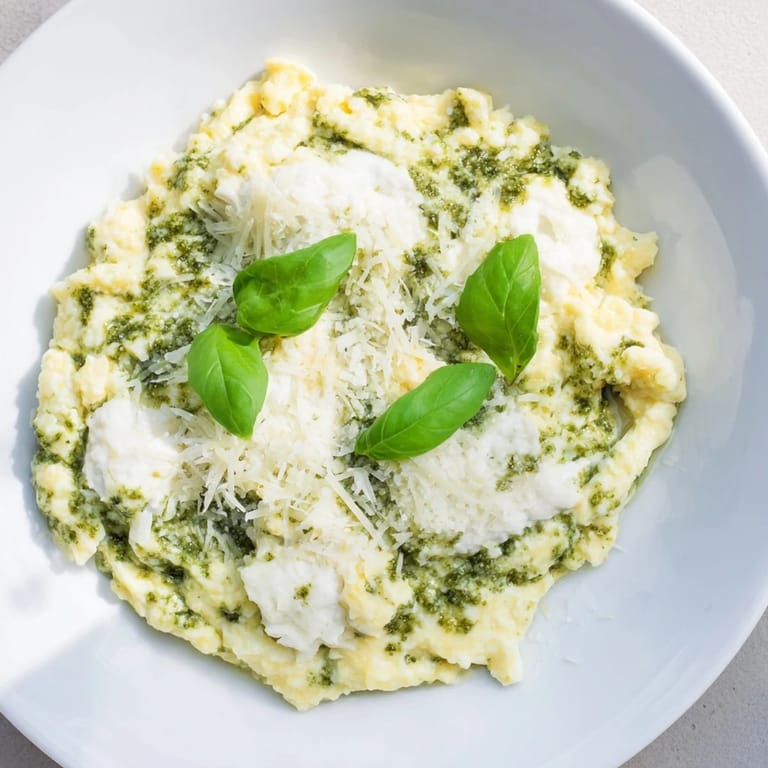
Save This recipe became my go-to when friends stay over because it feels special without requiring any actual skill. There's something about placing that plate down—creamy, green-flecked, smelling like basil—that makes people feel cared for.
Making It Your Own
Sun-dried tomato pesto creates this gorgeous red-orange hue and adds a sweetness that plays beautifully with the savory cottage cheese. I've also played around with adding spinach near the end just to wilt it, which makes it feel more like a complete meal.
Texture Secrets
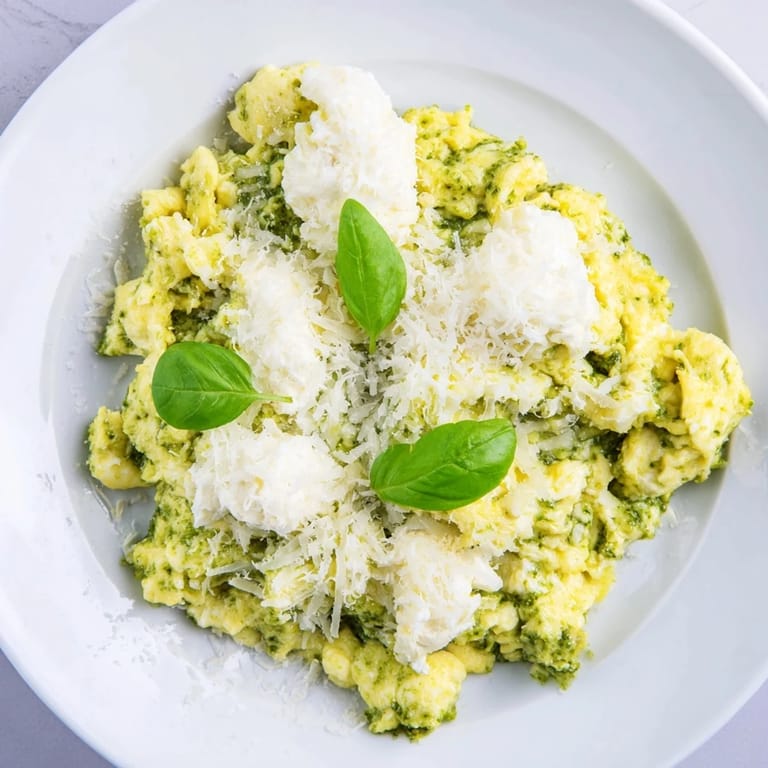
The cottage cheese should still have some structure when you serve it—those little curds become these creamy pockets throughout the eggs. Overcooking breaks them down too much, and you lose that incredible contrast between fluffy egg and creamy cheese.
Serving Ideas
A slice of crusty sourdough or focaccia is practically mandatory for soaking up any creamy bits left on the plate. Sometimes I'll serve this alongside roasted tomatoes or a simple arugula salad if I want it to feel more like brunch.
- Leftover cottage cheese keeps well in the fridge for quick weekday breakfasts
- Double the pesto quantity if you're serving pesto-lovers
- The finished eggs reheat surprisingly well if you need to make ahead
 Save
Save What I love most about this dish is how it transformed my relationship with cottage cheese—something I used to dismiss as diet food is now the ingredient I reach for when I want breakfast to feel special.
Common Questions
- → Can I use low-fat cottage cheese?
Yes, low-fat cottage cheese works well and reduces fat content while maintaining creaminess.
- → What type of pesto is best for this dish?
Basil pesto is traditional, but sun-dried tomato pesto adds a tangy twist for variety.
- → How do I avoid overcooking the eggs?
Cook eggs on medium-low heat and remove from heat when softly set to keep them creamy and tender.
- → Can I substitute ricotta for cottage cheese?
Ricotta can be used for a smoother, milder texture and slightly different mouthfeel.
- → What breads pair well with this dish?
Crusty bread or toasted slices complement the creamy eggs and pesto flavors perfectly.