 Save
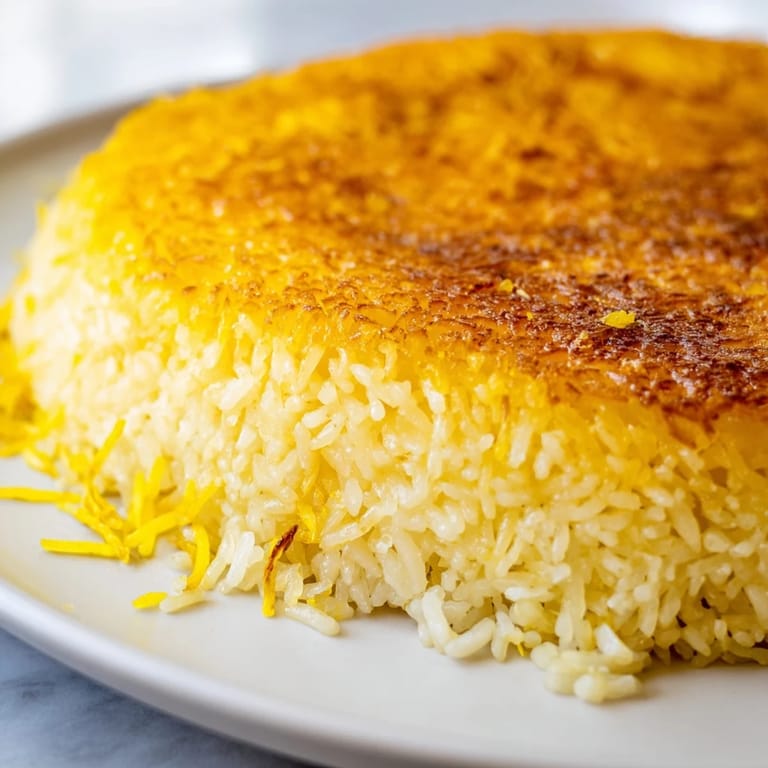
Save The first time I understood tahdig, I was standing in my neighbor's kitchen watching her mother work with rice like it was something sacred. She moved with such certainty, layering yogurt and rice into a waiting pot, and I remember thinking this couldn't possibly be just a side dish. Twenty minutes later, when she inverted that pot and revealed a burnished, crackling golden crust, I finally got it—tahdig isn't about technique alone, it's about that moment when ordinary rice transforms into something worth the wait.
I made this for a dinner party when someone asked what I was bringing, and instead of saying dessert or salad, I blurted out tahdig without thinking it through. The rice soaked, the saffron steeped while I nervously chopped herbs, and somehow by the time everyone arrived, I had this stunning golden-crusted rice that became the real star of the table—the kind of side dish people ask about before they ask about the main course.
Ingredients
- Basmati rice (2 cups): The long grains stay separate and don't get mushy, which is non-negotiable for tahdig—short grain rice will turn to paste and ruin the whole thing.
- Salt (1 tablespoon for soaking): This seasons the rice from the inside out and helps the grains absorb water evenly, making them tender without being fragile.
- Saffron threads (1/4 teaspoon): Even this tiny amount transforms everything with a honeyed, almost floral warmth that you'll taste in every bite if you use good quality saffron.
- Greek yogurt (4 tablespoons): This is what creates the crispy tahdig crust—the yogurt's acidity and fat content brown beautifully and add a subtle tang that balances the richness.
- Vegetable oil and butter (2 tablespoons each): The combination of oil and butter gets you a higher smoke point while keeping that luxurious flavor, and the mix creates the perfect golden-brown crust.
- Turmeric (1/2 teaspoon, optional): If you add it, the rice takes on a warm, subtle earthiness that makes the dish feel complete, though it's equally beautiful without it.
- Black pepper (1/2 teaspoon): Just enough to whisper through each bite and prevent the dish from feeling one-dimensional.
Tired of Takeout? 🥡
Get 10 meals you can make faster than delivery arrives. Seriously.
One email. No spam. Unsubscribe anytime.
Instructions
- Rinse and soak the rice:
- Run the rice under cold water, swirling it gently with your fingers until the water stops looking milky—this removes the starch that would make everything gummy. Soak it in salted water for at least 30 minutes, which lets each grain hydrate evenly.
- Parboil the rice:
- Bring a big pot of water to a rolling boil, add the drained rice, and cook for just 5 to 6 minutes until the grains are tender on the outside but still have a slight firmness in the center. This is crucial because the rice will finish cooking in the pot, and you don't want it mushy.
- Prepare the saffron:
- Grind the saffron threads into a fine powder using a mortar and pestle (or even the back of a spoon against a bowl), then steep them in hot water for 10 minutes to coax out all that golden color and flavor.
- Make the tahdig mixture:
- In a bowl, combine the yogurt with a tablespoon of the saffron water, turmeric if you're using it, and about 1 cup of the parboiled rice, stirring until it's evenly mixed. This becomes your golden crust.
- Heat the pot:
- Pour the oil and melted butter into your 10-inch nonstick or heavy-bottomed pot over medium heat and let it shimmer for a minute or two until the butter is foaming. You want everything hot enough that when you add the yogurt-rice mixture, it sizzles immediately.
- Layer and build:
- Spread the yogurt-rice mixture evenly across the bottom of the pot—this is where the tahdig forms. Gently spoon the remaining rice over the top in a mound toward the center, then drizzle the rest of the saffron water over everything.
- Create steam vents:
- Poke 4 or 5 small holes into the rice using the handle of a wooden spoon, which lets steam escape and prevents the rice from getting dense.
- Cook low and slow:
- Wrap your lid in a clean kitchen towel to trap steam, cover the pot tightly, and cook over medium heat for 10 minutes (you should hear gentle crackling), then reduce to low and cook for 35 to 40 minutes undisturbed. The towel absorbs condensation so the tahdig stays crispy instead of getting soggy.
- Rest and invert:
- Turn off the heat and let everything sit for 5 minutes so the rice can settle and the tahdig can set. Then place your serving platter upside-down over the pot, take a breath, and flip it decisively so the golden crust lands on top.
 Save
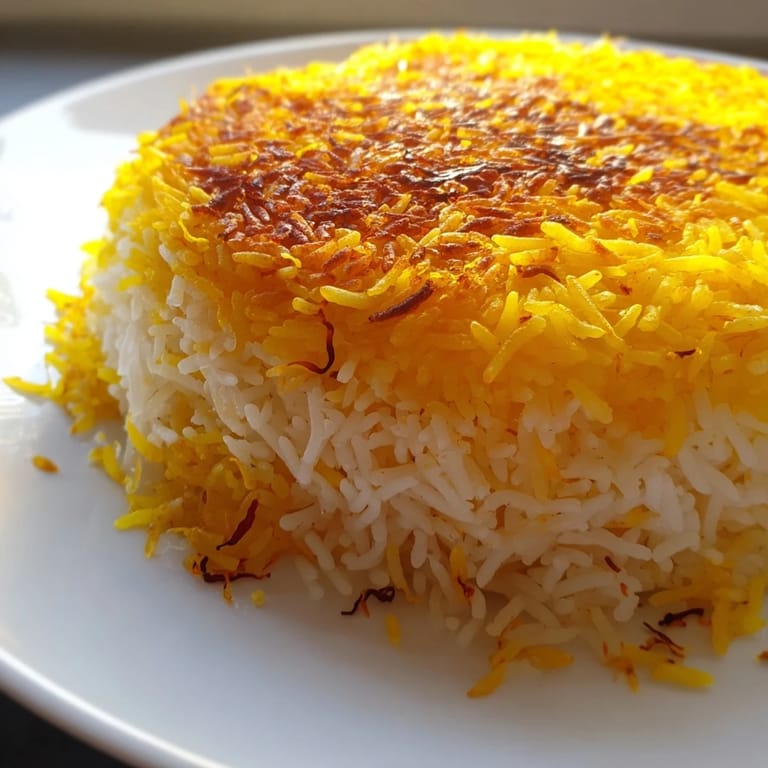
Save The moment of inversion is always a little prayer—you never know if you'll get a perfect golden disk or if some of the crust will stick to the bottom. But the few times I've nailed it, when that tahdig slides onto the platter intact and catches the light, it feels like you've created something special, not just cooked dinner.
Why Saffron Matters Here
Saffron is expensive, and I used to skip it to save money, but once I learned that just a pinch transforms the entire dish from nice to ethereal, I stopped being stubborn about it. The saffron gives the rice a subtle sweetness and warmth that makes people pause and ask what you did differently, and it's worth the splurge because you're only using a quarter teaspoon, which lasts forever.
The Secret to a Perfect Crust
I learned this by accident when I stopped worrying about having a perfectly nonstick pan and just focused on medium heat and patience. The yogurt-rice mixture on the bottom of the pot needs to make contact with hot oil and butter, and it needs about 10 minutes on medium before you lower the heat—that initial high-heat phase is what causes the caramelization that makes tahdig taste like caramel without any sugar.
Storage and Serving Ideas
Tahdig is best eaten immediately when the crust is still crackling, but leftovers actually keep for three days in an airtight container and can be reheated gently over low heat to restore some of that textural contrast. I've also learned that this dish pairs beautifully with almost any protein—it becomes the side that people actually talk about because it's so much more interesting than regular rice.
- Serve it alongside a rich stew or grilled meat so the crispy contrast against something saucy makes both elements shine.
- Garnish with fresh herbs like cilantro or parsley, and a scatter of barberries if you can find them, which add a tart brightness.
- If you're feeling adventurous, the tahdig crust is sturdy enough to break into pieces and serve as a crispy snack on its own while the rice comes with everything else.
 Save
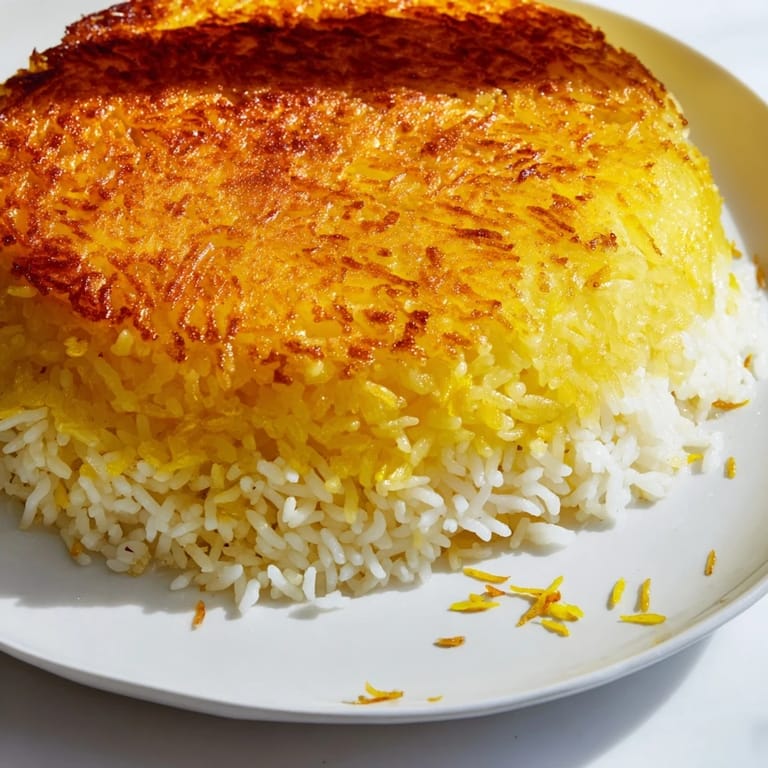
Save There's something deeply satisfying about making tahdig, like you're in on a secret that connects you to kitchens across Persian families and centuries of careful rice cooking. Once you master it, you'll find yourself making it whenever you want to impress someone or just want to remind yourself why you love cooking.
Common Questions
- → What is tahdig and how is the crispy crust formed?
Tahdig is the golden, crunchy layer at the bottom of the pot, created by cooking a saffron and yogurt-infused rice mixture over low heat until it caramelizes.
- → Can I use different ingredients for the tahdig layer?
Yes, alternatives like thinly sliced potatoes or flatbread can replace the yogurt-rice layer to create varied crispy bases.
- → How do you ensure the rice is perfectly tender while keeping the crust crisp?
Parboiling the rice until just tender and then layering it over the tahdig mixture allows for fluffy rice above while the bottom crisps slowly over low heat.
- → What role does saffron play in this dish?
Saffron infuses the rice with its distinctive aroma and a vibrant golden hue, enhancing both flavor and visual appeal.
- → Are there any tips to prevent the tahdig from sticking or burning?
Using a heavy-bottomed nonstick pot, adequate oil or butter, and cooking over moderate to low heat with a wrapped lid helps develop the crust evenly without burning.