 Save
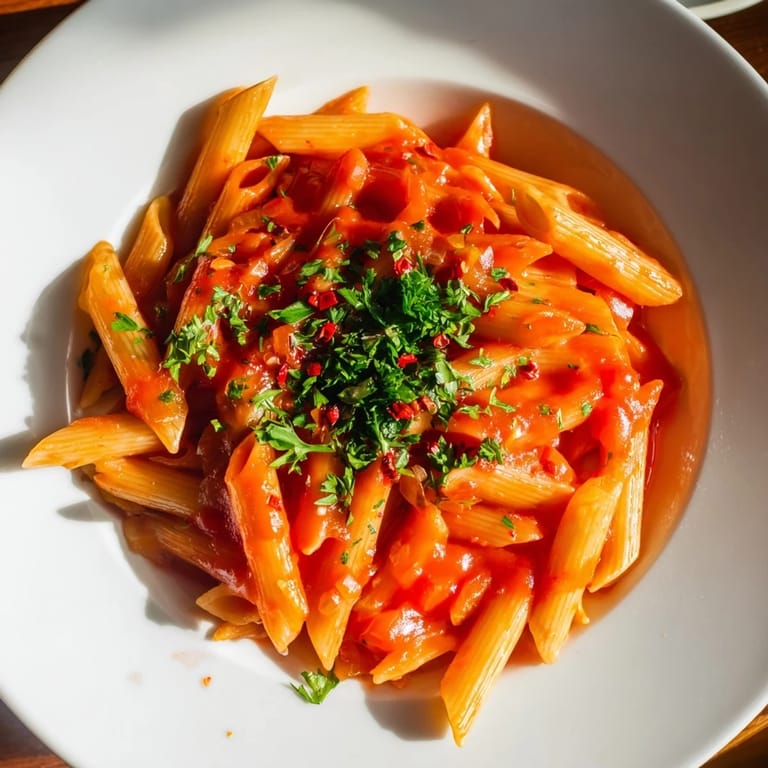
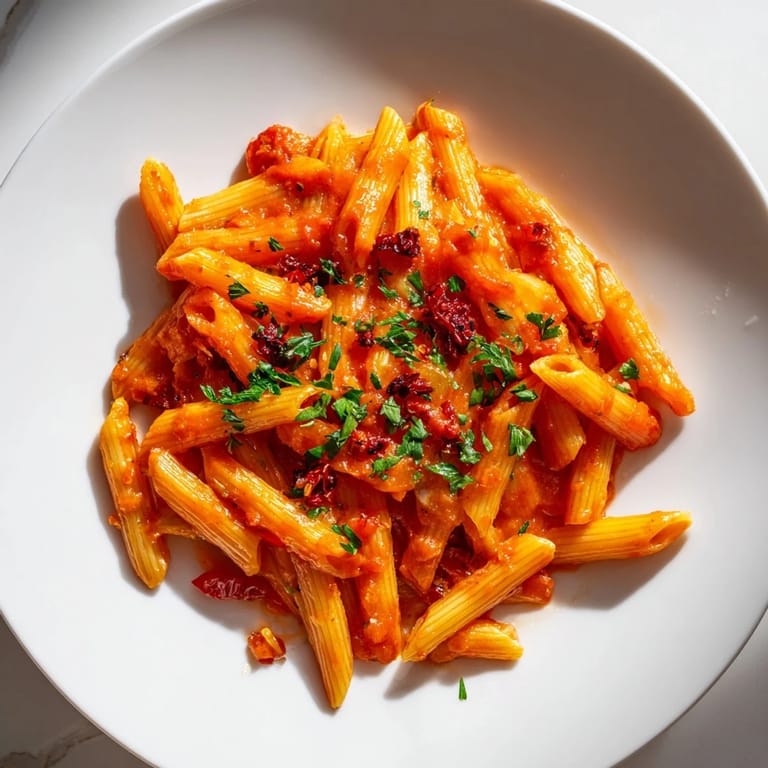
Save There's a particular magic to the moment when garlic hits hot oil and the kitchen fills with that unmistakable Roman perfume. I discovered penne all'arrabbiata during a chaotic weeknight when I had nothing in the pantry but pasta, canned tomatoes, and a handful of garlic cloves that had been sitting in a bowl longer than I'd like to admit. What emerged was so vibrant and alive that I've made it dozens of times since, each time marveling at how something so simple could taste so insistent, so unapologetically bold.
I remember cooking this for friends who'd just moved into a tiny apartment with barely any kitchenware, and we crowded around their small stove like it was a gathering place. Someone had brought wine, someone else brought bread, and by the time we sat down to eat, the whole evening had shifted into something unhurried and intimate. That's when I understood that this dish isn't just food—it's permission to slow down, even when you're cooking fast.
Ingredients
- Penne rigate (400 g / 14 oz): The ridges catch and hold the sauce in pockets, which is everything—smooth pasta would let all that lovely heat slide right off.
- Extra virgin olive oil (3 tbsp): This is your fat and your flavor, so don't reach for the bargain bottle; the quality here makes an actual difference.
- Garlic cloves, thinly sliced (4 large): Slicing instead of mincing gives you those tender, almost sweet bits that soften into the oil and become part of the sauce's body.
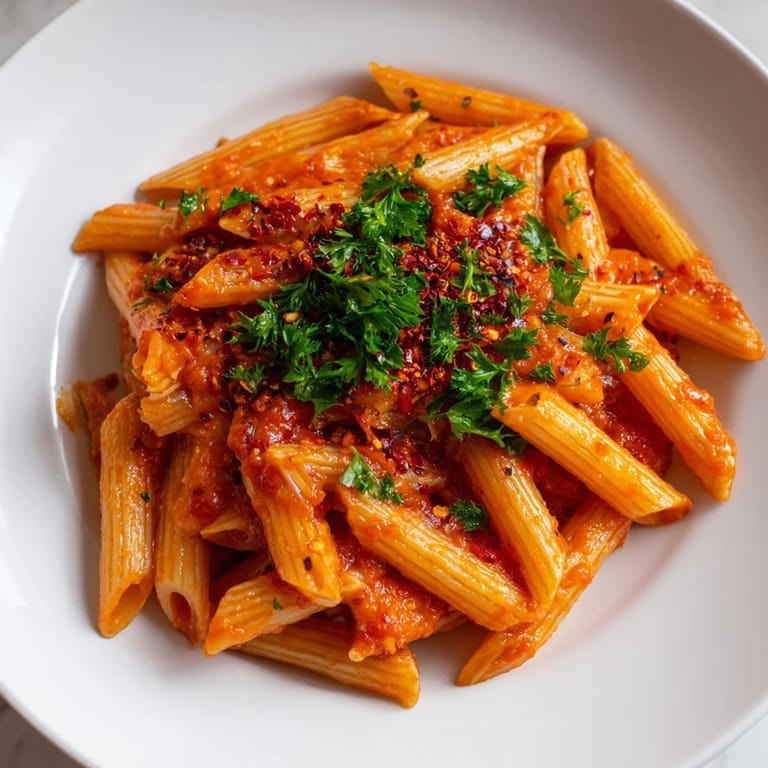
- Red chili flakes (1–2 tsp): Start with less and taste as you go; there's a difference between pleasantly warm and regrettable.
- Peeled whole tomatoes (800 g / 2 cans): Crushed by hand, these should feel alive in the pan, breaking down into a sauce that's both silky and textured.
- Sea salt (1 tsp) and freshly ground black pepper (1/2 tsp): These wake up the tomatoes and make everything taste more like itself.
- Fresh flat-leaf parsley, finely chopped (2 tbsp): This isn't garnish in the way that feels obligatory; it's brightness at the end that lifts the whole dish.
- Extra virgin olive oil for drizzling: A final thread of this at the end is where you taste the olive oil most clearly, so pour generously.
Tired of Takeout? 🥡
Get 10 meals you can make faster than delivery arrives. Seriously.
One email. No spam. Unsubscribe anytime.
Instructions
- Get Your Water Ready:
- Fill a large pot with salted water and bring it to a rolling boil, the kind where the steam rises up and fogs your glasses. Add the penne and cook it according to package instructions, tasting a minute before the time is up to find that sweet spot where it's tender but still has a whisper of resistance.
- Begin the Sauce While Pasta Cooks:
- Pour olive oil into a large skillet over medium heat and wait for it to shimmer, then add your sliced garlic and chili flakes. You're listening here as much as watching—when the garlic starts to smell sweet and intense but hasn't turned golden, you've got about 1 minute, and then you move forward.
- Add the Tomatoes and Let Them Soften:
- Pour in your crushed tomatoes along with salt and pepper, and immediately feel the sauce calm down and deepen. Let it bubble gently for 12–15 minutes, stirring now and then, until it's lost that raw edge and looks a bit more velvety.
- Bring It All Together:
- Drain your pasta but keep that reserved water close—it's liquid gold, starchy and precious. Toss the hot pasta into the sauce and stir until every piece is coated, adding splashes of pasta water if the sauce feels too thick or clings rather than coats.
- Finish with Intention:
- Take the pan off the heat, fold in the fresh parsley, and drizzle generously with olive oil. Taste it, adjust the salt and heat if needed, and serve immediately while it's still steaming.
 Save
Save There was an evening when I made this for someone who'd said they didn't really like spicy food, and after one bite they looked up with surprise in their eyes and asked for seconds. That's the moment I fell in love with how arrabbiata works—it's not trying to punish anyone with heat; it's just insisting that you pay attention, that you taste it, that you slow down and feel something.
The Art of Restraint
This dish teaches you something important about cooking with less. There are no hidden layers here, no cream to smooth things over, no cheese to make it richer than it needs to be. What you learn is that simplicity doesn't mean boring—it means every single element has to be real and true. The olive oil has to be good, the tomatoes have to be good, the garlic has to be treated with respect. It's a dish that rewrites your instincts about what makes food satisfying.
Heat as a Choice, Not an Accident
The beautiful thing about cooking with chili flakes is that you get to decide the story. Some nights you want the dish to sing quietly, a gentle warmth that builds as you eat. Other nights you want it to announce itself, to make you reach for water and bread in equal measure. I've learned that the same recipe can taste completely different depending on whether I use one teaspoon or two, and that knowledge is genuinely empowering in the kitchen.
Why This Works as Weeknight Magic
When you're standing in front of the stove with 30 minutes and a hunger that feels urgent, this is the dish that saves you. It asks almost nothing of you except presence and attention, and what it gives back is something that tastes like you spent hours coaxing flavors together. It's a small daily miracle, the kind that reminds you why you cook at all, and it works every single time.
- Buy good tomatoes—canned San Marzano if you can find them, because the difference is real and worth noticing.
- Keep your chili flakes in a cool, dark place so they stay vibrant and don't fade into papery whispers.
- If you're feeding vegetarians or vegans, this is already there for them, no substitutions needed.
 Save
Save This recipe has become my answer to the question of what to make when nothing feels quite right but you still need to eat. It's warm in the bowl, honest on your tongue, and it reminds you that some of the best meals are the ones that ask the least and give the most.
Common Questions
- → How can I adjust the spice level?
Simply reduce or increase the amount of red chili flakes according to your heat preference to make the sauce milder or spicier.
- → What type of pasta works best?
Penne rigate is preferred as its ridges hold the sauce well, but other tubular pastas can be used as alternatives.
- → Can I make this dish gluten-free?
Use gluten-free penne pasta to accommodate gluten sensitivities without compromising the dish’s flavor.
- → Why is reserved pasta water added?
A splash of reserved pasta cooking water helps loosen the sauce and allows it to cling better to the pasta for a smooth texture.
- → What wine pairs well with this dish?
A crisp Italian white like Verdicchio or a light red such as Chianti complement the spicy tomato sauce nicely.