 Save
Save I discovered olive tapenade pasta on a Tuesday afternoon when my fridge held little more than a can of olives and some dried pasta. What started as improvisation became something I crave now, a dish that tastes like someone who knows their way around a Mediterranean kitchen. The beauty of it is how little you actually need—just patience with a food processor and the courage to let bold flavors do the talking.
The first time I served this to friends, I was nervous about how simple it was. One of them took a bite and immediately asked for the recipe, and I realized the complexity comes not from labor but from letting each ingredient shine. That moment taught me that good cooking isn't always about doing more—it's about choosing the right things and respecting their flavors.
Ingredients
- Mixed pitted olives (Kalamata and green): Use equal parts of both for a tapenade with personality; Kalamatas bring earthiness while green olives add brightness.
- Capers, drained: These tiny flavor bombs need rinsing to remove excess brine, which can oversalt everything.
- Garlic: Two cloves is about right, but taste as you go because raw garlic intensity varies wildly.
- Fresh parsley: Don't skip this; it lifts the whole paste and keeps it from tasting flat or one-dimensional.
- Fresh lemon juice: Squeeze it yourself if you can; bottled changes the flavor profile in ways you'll notice.
- Extra-virgin olive oil: This is not the time to reach for regular olive oil—the quality here matters tremendously.
- Spaghetti or linguine: Long, thin shapes work best because they catch and hold the chunky tapenade throughout each bite.
- Pasta water: That starchy liquid is liquid gold; it emulsifies the olive oil and creates a sauce that clings properly.
Tired of Takeout? 🥡
Get 10 meals you can make faster than delivery arrives. Seriously.
One email. No spam. Unsubscribe anytime.
Instructions
- Boil the pasta with intention:
- Generously salt your water—it should taste like the sea. Cook your pasta until it's tender but still has resistance when you bite it, usually a minute or two under the package time. This is when you'll notice the smell shifting from starchy to savory, a signal things are moving in the right direction.
- Build the tapenade:
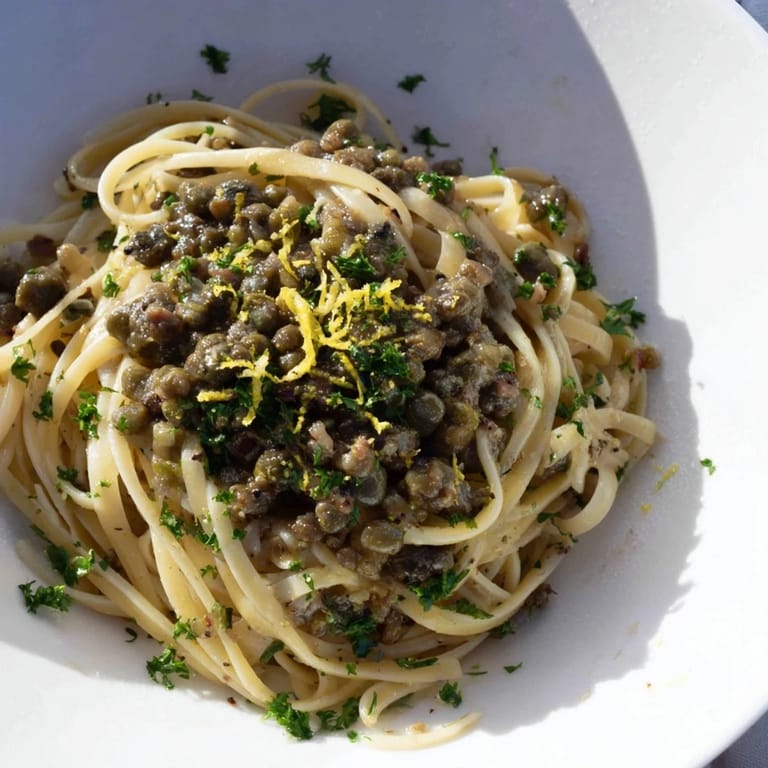
- Pulse the olives, capers, and garlic until you see chunks forming, then drizzle olive oil while the food processor runs. You're aiming for a chunky paste, not a smooth spread—texture matters here and creates those satisfying pockets of flavor.
- Combine and adjust:
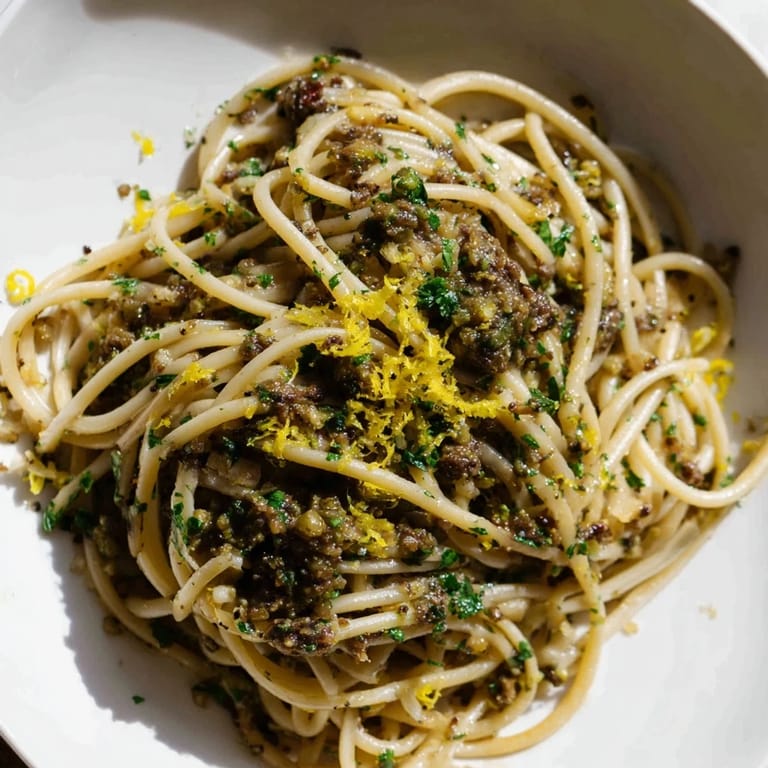
- Toss the warm pasta with tapenade, then add pasta water slowly while stirring, watching how it transforms from clumpy to silky. You want a loose, glossy coating that hugs every strand.
- Finish and serve:
- Taste before plating and adjust salt and pepper if needed. Garnish generously and serve immediately while the pasta is still warm.
 Save
Save There's a moment right after tossing everything together when the pasta water emulsifies with the olive oil and you see the transformation happen in real time. That's when you know you've done it right, when a simple combination of ingredients suddenly feels like something with intention and soul.
Flavor Building
This dish lives or dies by the quality of your olives and olive oil—these are the stars, so choose them with care. I've learned to taste the tapenade before it hits the pasta because raw garlic can be unpredictable, and sometimes a dish needs a squeeze more lemon or a pinch less pepper. Think of yourself as conducting a flavor conversation rather than following instructions.
Make It Your Own
The foundation is solid, but this recipe welcomes experimentation. I've added anchovy paste for umami depth, sun-dried tomatoes for sweetness, and sometimes a scatter of toasted pine nuts for texture. The red pepper flakes in the notes aren't just for heat—they add complexity that makes people pause and ask what they're tasting.
Serving and Pairing
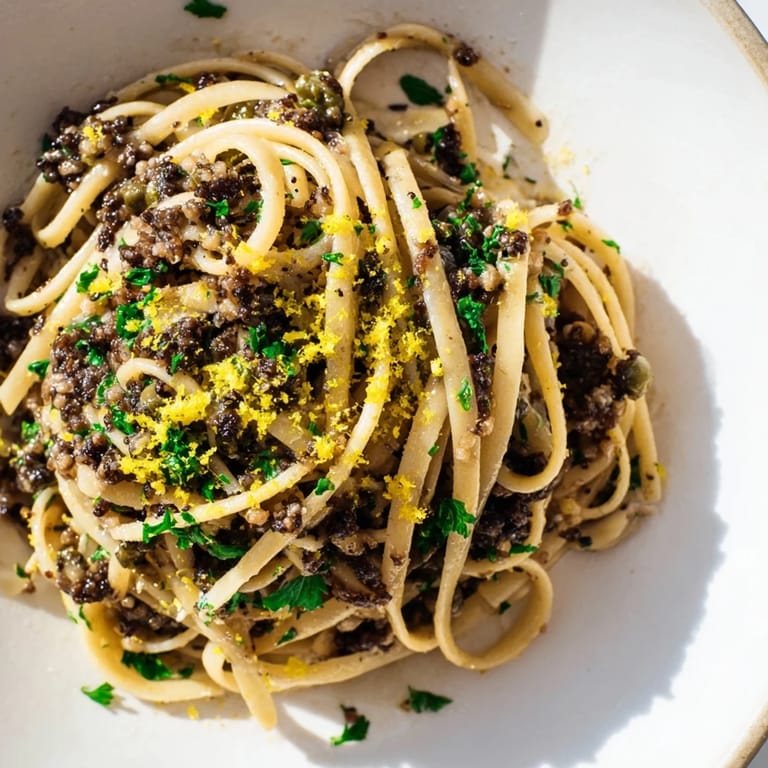
This pasta stands alone beautifully, but I often serve it alongside a simple arugula salad with lemon vinaigrette to cut through the richness. A crusty bread becomes essential for soaking up every bit of sauce left on the plate. Consider finishing with fresh lemon zest and a quality Parmesan, or keep it vegan with a sprinkle of nutritional yeast for umami.
- Pair with a crisp white wine like Pinot Grigio or Sauvignon Blanc to echo the bright Mediterranean flavors.
- Make extra tapenade and store it in the fridge for spreading on bread or tossing with roasted vegetables.
- Leftovers taste different the next day—the flavors mellow slightly, so refresh them with a little more lemon juice and olive oil before serving.
 Save
Save This recipe reminds me why I fell in love with cooking in the first place: how a handful of good ingredients, treated with respect, can create something memorable. Make it for yourself on a quiet evening, or for people who deserve a meal made with care.
Common Questions
- → What types of olives work best in the tapenade?
Kalamata and green olives combine well to provide a balanced, savory flavor and texture in the tapenade.
- → Can I use gluten-free pasta in this dish?
Yes, gluten-free pasta can be substituted to accommodate dietary needs without compromising taste.
- → How do I achieve a silky texture in the pasta sauce?
Reserve some pasta cooking water and add it while tossing to help loosen the tapenade and create a smooth coating on the pasta.
- → Are there suggestions to add extra flavor or heat?
Adding a pinch of red pepper flakes to the tapenade introduces a gentle spicy kick without overpowering the dish.
- → What garnishes enhance this dish?
Fresh parsley, lemon zest, and a sprinkle of grated Parmesan or vegan cheese complement the flavors and add visual appeal.
- → Is this dish suitable for vegan diets?
Yes, using vegan pasta and skipping Parmesan or replacing it with a vegan alternative keeps the dish vegan-friendly.