 Save
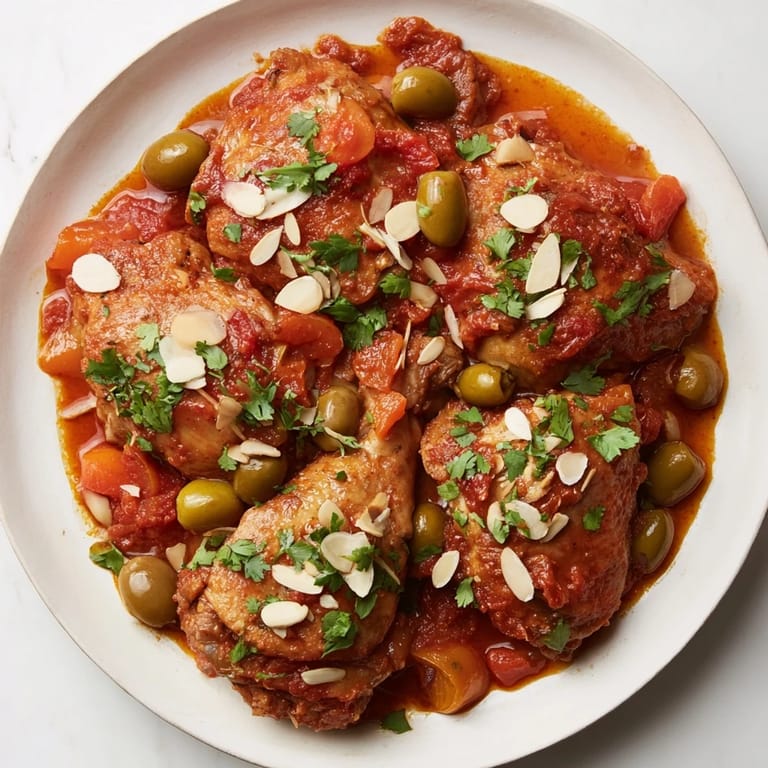
Save Years ago, a Moroccan friend invited me over for dinner and served this golden-hued tagine, steam rising from the earthenware pot like something from a fairy tale. The first spoonful hit me differently than any chicken dish I'd made before—there was this unexpected sweetness from the apricots playing against briny olives, warmth from cinnamon and ginger weaving through everything. I remember asking for the recipe three times before she finally wrote it down, laughing at how obsessed I'd become. Since then, I've made it countless times, and it never fails to turn an ordinary Thursday night into something that feels special.
I made this for my sister's first dinner party as a new homeowner, and I watched her face light up as her guests started asking questions about where the flavors were coming from. She'd been nervous about cooking for others, but this dish did the heavy lifting—it's the kind of food that makes people feel taken care of. That night, I realized this recipe is as much about building confidence in the kitchen as it is about the finished dish.
Ingredients
- Bone-in, skin-on chicken thighs (1.5 lbs): Use thighs instead of breasts—they stay tender and juicy during the long braise, and the skin crisps up beautifully when you brown them first.
- Fresh ginger (1-inch piece, grated): This is what gives the dish its warm, almost peppery undertone; don't skip it or use powdered.
- Dried apricots (1 cup, halved): They soften into the sauce and provide natural sweetness that balances the spices perfectly.
- Preserved lemon (1, optional): If you can find it, it's the secret ingredient that makes this taste authentically Moroccan; the rind adds a unique fermented tang.
- Spice blend (cumin, coriander, cinnamon, paprika, turmeric): Toast these mentally in your mind as you're adding them—they'll bloom in the hot oil and fill your kitchen with an aroma that's absolutely intoxicating.
- Green olives (½ cup, pitted): These add a briny punch that's essential; don't use black olives, which are too mild.
- Slivered almonds (¼ cup, toasted): The final garnish that adds a subtle crunch and nutty richness.
Tired of Takeout? 🥡
Get 10 meals you can make faster than delivery arrives. Seriously.
One email. No spam. Unsubscribe anytime.
Instructions
- Prepare and sear the chicken:
- Pat your chicken thighs completely dry with paper towels—this is the move that gets you golden-brown skin instead of steamed chicken. Heat olive oil until it shimmers, then lay the thighs skin-side down and resist the urge to move them around for the first 3 minutes.
- Build your flavor base:
- Once the chicken's out of the pan, soften your onions and carrots low and slow, then add the garlic and ginger and let them wake up in the heat for just a minute. Add all your spices at once and stir constantly—you'll smell the moment they transform from dusty powder to something aromatic and alive.
- Deglaze and layer:
- Pour in your tomatoes and scrape that beautiful brown crust off the bottom of the pan; this is pure flavor you don't want to waste. Then add the broth and nestle your chicken back in alongside the apricots and preserved lemon.
- Low and slow simmer:
- Cover and let everything braise gently for 45 minutes—the kitchen will smell incredible, and you'll feel like you've unlocked something ancient and wise. Stir occasionally so nothing sticks, and the chicken gets equally coated in that gorgeous sauce.
- Finish with olives and reduce:
- Scatter the olives across the top, uncover, and simmer for another 10 minutes so the sauce tightens up and coats the back of a spoon. Taste and adjust salt and spice at the very end.
 Save
Save The real magic of this dish happened one evening when my partner took a bite and immediately stopped mid-conversation to just sit with the flavors for a moment. That pause—where food makes you forget to talk—that's when I knew I'd finally nailed it. It's become our go-to celebration meal, the one we make when we want to feel like we're traveling without leaving our kitchen.
Serving and Pairing
This tagine is inherently generous and works beautifully with a bed of fluffy couscous that soaks up every drop of sauce, or with warm flatbread to tear and drag through the pan juices. I've also served it over rice when that's what I had on hand, and it never disappointed. The key is having something to cradle all those incredible flavors—this dish doesn't want to be served alone on bare china.
Customizing Your Tagine
This recipe is flexible enough to bend without breaking. I've made it with lamb when chicken wasn't in the house, and I've swapped dried apricots for dates, or added a handful of raisins for extra sweetness. Some nights I'll throw in a pinch of harissa at the end if I'm feeling bold, or leave out the cayenne entirely for a milder version. The bones-and-skin chicken are important, but the spirit of the dish—warm spices, fruit, olives, and patience—is what really matters.
Why This Dish Keeps Coming Back to My Table
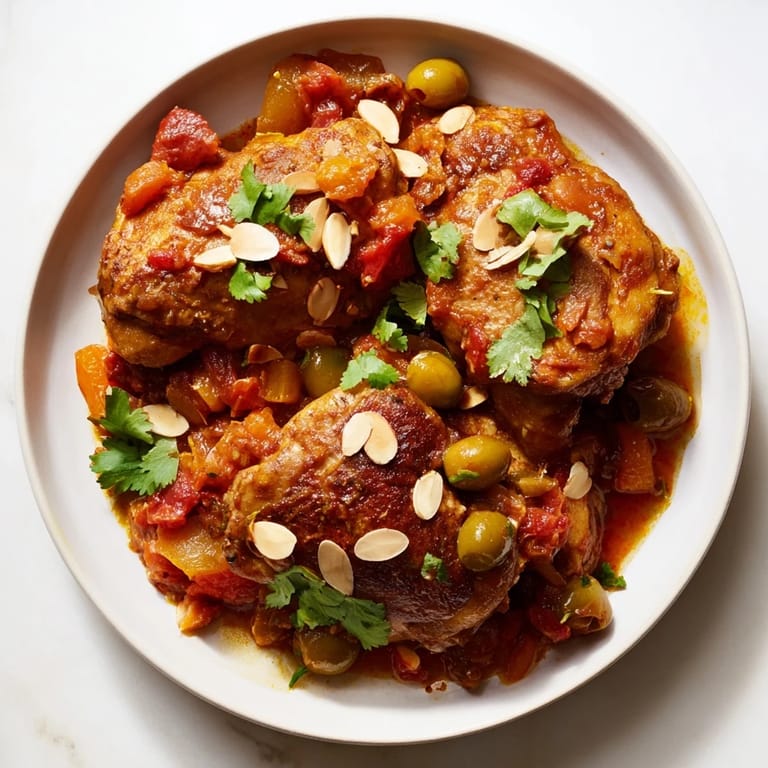
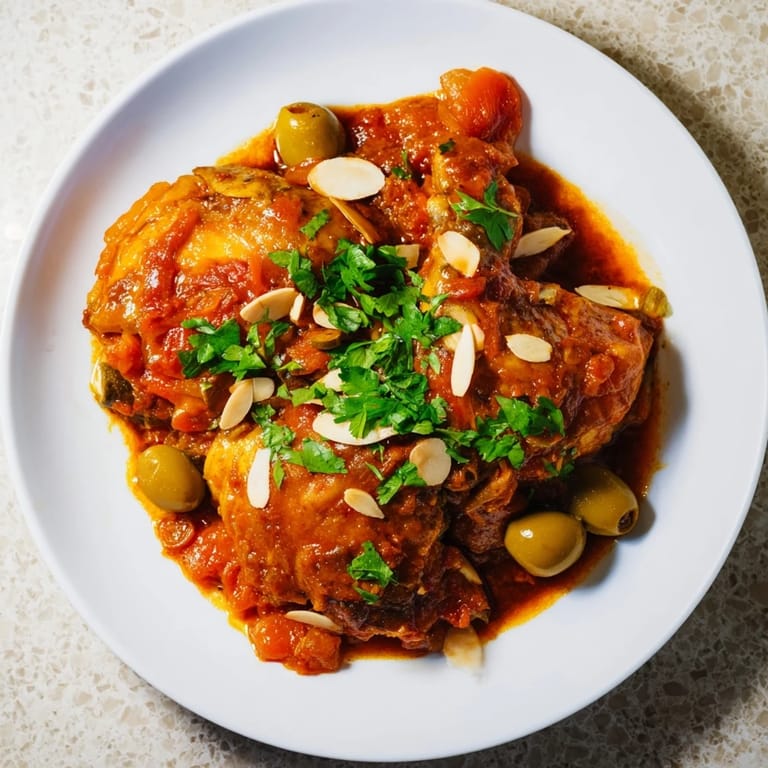
There's something about a tagine that invites people to slow down and notice what they're eating. The colors alone—the golden apricots, jewel-toned olives, that caramel-brown sauce—make the table look like it's been thoughtfully set. What I love most is that it bridges something between a weeknight dinner and a meal worth celebrating, and it asks nothing from you except time and a little attention.
- Make it the day before and reheat gently—the flavors actually deepen and meld together overnight.
- Double the recipe and freeze half in a sealed container for up to three months.
- Serve with a simple green salad dressed in lemon and olive oil to cut through the richness.
 Save
Save This Moroccan tagine has taught me that some of the most memorable meals come from somewhere outside our usual cooking patterns. It's a gentle reminder that walking into the kitchen with curiosity and a willingness to try something unfamiliar often leads to the best outcomes.
Common Questions
- → What cuts of chicken work best for this dish?
Bone-in, skin-on chicken thighs are ideal as they remain tender and flavorful through slow cooking.
- → Can I make this dish vegetarian?
Yes, chickpeas and root vegetables can replace chicken for a hearty vegetarian version.
- → What role do apricots play in this dish?
Dried apricots add natural sweetness that balances the savory spices and briny olives.
- → Is preserved lemon essential?
Preserved lemon contributes authentic tang and depth but can be omitted if unavailable.
- → How should the tagine be served?
Traditionally served with steamed couscous, rice, or warm flatbread to soak up the rich sauce.
- → Can I add heat to the dish?
Harissa or cayenne pepper can be added for an extra spicy kick.