 Save
Save I still remember the summer evening when my friend Maria invited me to her rooftop dinner in Athens, and she casually assembled the most magnificent platter of Mediterranean appetizers I'd ever seen. She moved with such ease around her kitchen, gathering dips from small bowls, arranging cheeses and vegetables with artistic precision, and suddenly I understood that the beauty of this platter wasn't in complexity—it was in the generosity of sharing good things, gathered thoughtfully and presented with love. That night, I learned that a Mediterranean mezza platter is less about following rules and more about inviting people to gather, taste, and linger at the table together.
I made this platter for my book club one Thursday evening, and what started as a casual appetizer became the entire event. Nobody wanted to leave the table, everyone was so busy discovering new flavor combinations—the cool tzatziki against warm pita, the salty olives with creamy hummus, feta crumbles mixed with fresh herbs. My friend turned to me halfway through and said, 'This is why we gather,' and I realized she was absolutely right.
Ingredients
- Classic hummus: This creamy base is your canvas—I learned to let it come to room temperature before serving so the flavors really bloom, and a tiny drizzle of good olive oil on top makes it look intentional and inviting.
- Baba ganoush: The smoky depth here balances all the bright flavors on the platter; if you've never tried making it yourself, the charred eggplant transforms into something almost velvety and sophisticated.
- Tzatziki: Cool, garlicky, herbaceous—this is the dip that converts skeptics, and I always add an extra squeeze of lemon juice because it brightens everything.
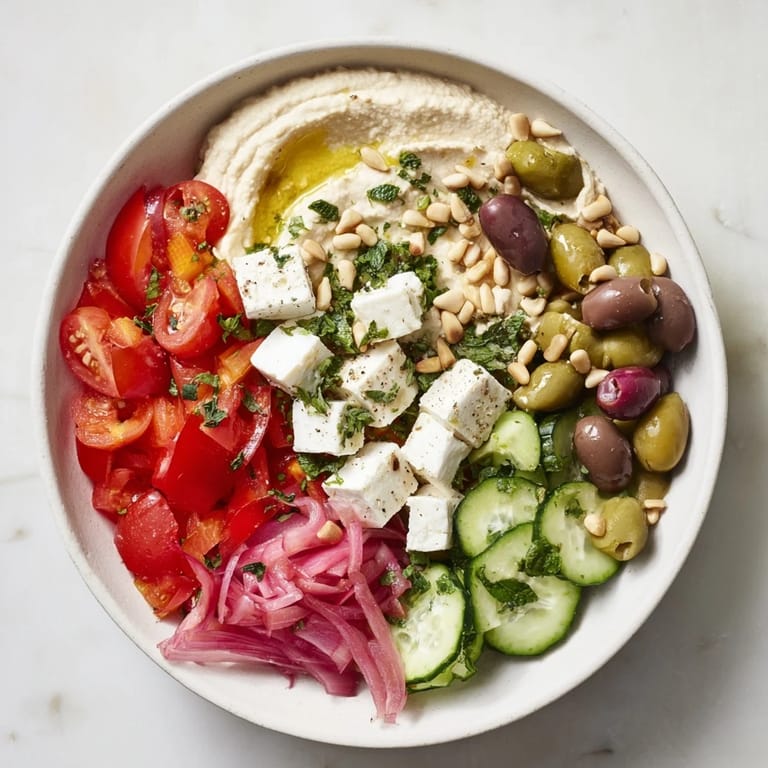
- Feta cheese: Don't crumble it; cut it into irregular cubes so guests can grab generous pieces and really taste its salty creaminess.
- Cherry tomatoes: Halve them just before assembling so they stay bright and juicy; the fresh acidity is essential to the whole experience.
- Cucumber: Slice thin enough to bend slightly, and consider leaving the skin on for visual interest and a little bitterness that balances the richness of the cheese.
- Assorted olives: The variety matters here—Kalamata for boldness, green for brightness, Castelvetrano for gentle sweetness; this combination teaches your palate something new with each bite.
- Roasted red bell pepper: If you're roasting your own, let the charred skin cool before peeling; that slightly smoky flavor is what makes the whole platter feel authentic.
- Red onion: Slice paper-thin and don't skip it—the sharpness cuts through the richness and adds a little romance to every bite.
- Pita bread: Toast it lightly just before serving if you have time; it becomes toastier and more intentional, ready to scoop up dips and cheese.
- Fresh parsley and mint: These final herbs are not decoration—they're flavor; I tear them with my hands to keep the leaves whole and fragrant.
- Extra-virgin olive oil: This is the signature finishing touch; use something you genuinely love because this is where quality matters most, and the fruity or peppery notes should feel like a small luxury.
- Sumac or zaatar: Optional but worth it—sumac adds a subtle tartness and zaatar brings warm spice and sesame; either one signals that you've thought about every detail.
Tired of Takeout? 🥡
Get 10 meals you can make faster than delivery arrives. Seriously.
One email. No spam. Unsubscribe anytime.
Instructions
- Gather your best platter and arrange your dips:
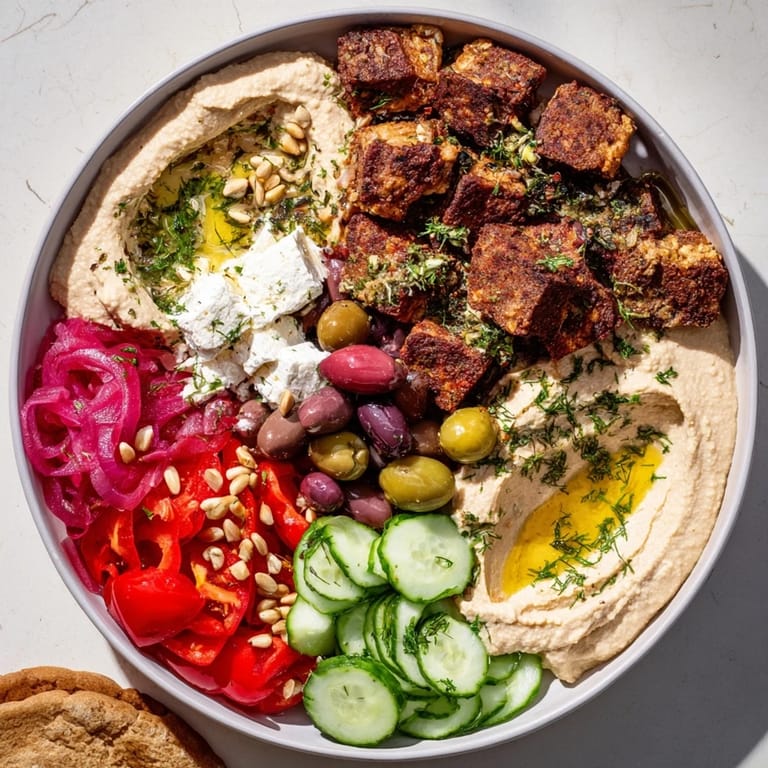
- Find a large serving board or platter that feels substantial—this platter wants room to breathe and look generous. Place three small spoonfuls of hummus, baba ganoush, and tzatziki in separate spots around the platter, leaving plenty of empty space between them; this makes each dip feel intentional and gives people clear paths to choose what calls to them.
- Create a feta cheese moment:
- Cluster your feta cubes together in a small pile—not scattered, but together—so they read as one element on the platter. The creamy white against the darker elements of olives and roasted peppers creates visual contrast that makes your platter feel balanced.
- Build your vegetable landscape:
- Now comes the fun part—arrange cherry tomatoes, cucumber, olives, roasted pepper, and red onion in loose, organic mounds around your dips and cheese. Think of it like you're creating little flavor neighborhoods where guests can explore; don't worry about symmetry, the beauty is in the casualness.
- Position your bread with intention:
- Arrange pita triangles in a separate pile or fan them gently around the edge of the platter; bread is the vehicle that carries everything, so give it a place of honor and make sure it's easy to grab.
- Add optional treasures if you have them:
- Scatter marinated artichoke hearts, dolmas, and toasted pine nuts in small clusters throughout the platter; these additions feel like secret discoveries and reward people who linger and explore.
- Dress the platter like you mean it:
- Pour a generous drizzle of your best olive oil over the dips, across some of the cheese, and around the vegetables—not timidly, but with confidence; this is where the platter goes from nice to memorable.
- Finish with ceremony:
- Sprinkle fresh parsley and torn mint leaves over everything, then dust with sumac or zaatar if you're using it. Finish with a pinch of sea salt and fresh black pepper; these final touches say 'someone cared about this'.
- Serve immediately and watch the magic:
- Bring the platter to the table while everything is still fresh and the herbs are fragrant, then step back and watch as people light up seeing all these colors and possibilities together.
 Save
Save What I've come to understand about a mezza platter is that it's not really about the ingredients—it's about the permission it gives people to slow down, to taste things they might not normally try, to build their own perfect bite. It's the meal that keeps people at the table longer than they planned, laughing and reaching for just one more combination.
The Art of Assembly
The platter works because of contrast—not just flavors, but textures and colors. Cool elements against warm bread, creamy spreads against crisp vegetables, salty cheese against fresh herbs. I've learned that the visual arrangement matters as much as the ingredients because we eat with our eyes first, and a platter that looks alive and abundant makes people feel generous and welcomed. Think in odd numbers when clustering items, leave breathing room between groups, and let some platter show through—emptiness is part of the design.
Making It Your Own
The beauty of this platter is that it's infinitely adaptable to what you have and what you love. Add grilled halloumi or warm falafel if you want something more substantial, use plant-based cheese alternatives if that's what your table needs, swap in roasted zucchini or grilled eggplant if you want to highlight vegetables from your garden. I've made this platter a dozen different ways and it's been perfect every time because the format is forgiving—it's about generosity and variety, not perfection.
Wine Pairing and Serving Moments
A crisp white wine or light rosé is the natural companion to this platter—the acidity cuts through the richness of cheese and dips while the fruit complements the fresh vegetables and herbs. Serve it cold, in good glasses that let people taste it properly, because when you've put this much care into the food, the wine deserves the same consideration. This platter is perfect for summer evenings on a terrace, for casual gatherings that turn into conversations, for the moments when you want to feed people without spending hours in the kitchen.
- Always taste your dips and adjust seasoning just before serving—a pinch more salt or squeeze of lemon can wake everything up.
- If you're worried about herbs wilting, keep them in a damp paper towel until the last possible moment before sprinkling.
- Remember that this platter gets better as it sits and flavors meld together, so don't stress about timing—people will still be happy an hour later.
 Save
Save This platter is my answer to 'what do I bring' and 'how do I feed people I love without overthinking it.' It's always the right choice.
Common Questions
- → What is a mezza platter?
A mezza platter is a selection of small Mediterranean appetizers and dips served together for sharing, highlighting fresh and vibrant ingredients.
- → Can I make this platter vegan?
Yes, omit the feta and tzatziki or substitute with plant-based alternatives to create a vegan-friendly spread.
- → How should the platter be served?
Arrange dips, cheeses, vegetables, and breads in distinct clusters on a large board, finishing with a drizzle of olive oil and fresh herbs before serving immediately.
- → Are there gluten-free options available?
Use gluten-free flatbreads instead of pita to accommodate gluten-free dietary needs without compromising flavor.
- → What wines pair well with this platter?
A crisp white wine or a light rosé complements the fresh and savory flavors of the platter beautifully.