 Save
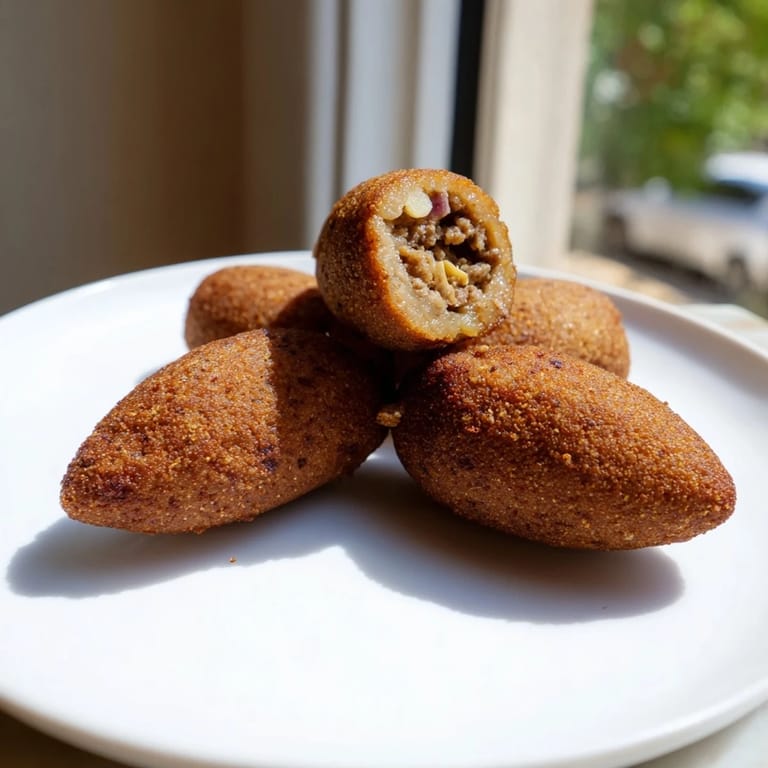
Save My first kibbeh came from my neighbor's kitchen on a Friday evening, the smell of spiced meat and pine nuts drifting through our apartment walls. She'd made it for years the way her mother taught her, and watching her hands move through the shaping process—wet, confident, impossibly fast—made me want to learn immediately. The crispy outside giving way to that savory, aromatic filling felt like tasting a secret passed down through generations.
I brought a platter to a potluck once, slightly nervous they'd be overshadowed by the trendy sides everyone else brought. Instead, they vanished in minutes, and someone's grandmother pulled me aside to ask about my technique—turns out she'd grown up eating them too, and we ended up talking for an hour about the tiny adjustments that make each family's version special.
Ingredients
- Fine bulgur wheat: This is the backbone of your dough, so don't substitute with coarse bulgur or you'll end up with a grainy texture instead of that smooth, almost pâté-like consistency.
- Lean ground beef or lamb: Lamb gives a more authentic, deeper flavor, but beef works beautifully too and is usually easier to find—the spices are what make it sing anyway.
- Allspice and cinnamon: These aren't sweet additions; they create this warm, slightly mysterious depth that makes people pause and wonder what they're tasting.
- Pine nuts: Yes, they're pricey, but they toast and golden in the filling and add a richness you honestly can't replicate with anything else.
- Onions: Both in the dough and filling, they're what bind everything together and add subtle sweetness that balances the spices.
- Cold water: Keep it nearby and add it gradually to the dough—too much and you'll have a sticky mess, too little and it won't hold together.
Tired of Takeout? 🥡
Get 10 meals you can make faster than delivery arrives. Seriously.
One email. No spam. Unsubscribe anytime.
Instructions
- Soften the bulgur:
- Rinse it under cold water until the water runs clear, then let it sit for 10 minutes. You're looking for it to become tender but not mushy—it should feel like cooked rice, not porridge.
- Make the dough:
- Combine the softened bulgur with ground meat, onion, and all the spices in a large bowl. Knead it like you're making bread, adding tiny splashes of cold water until it comes together into a smooth, cohesive mixture that holds its shape. This part takes patience, but you'll feel when it's right.
- Prepare the filling:
- Heat olive oil in a skillet and cook the onion until it's soft and starting to turn golden, about 3 minutes. Add the ground meat, breaking it into small pieces as it browns—you want texture here, not a paste.
- Toast the pine nuts:
- Once the meat is cooked through, stir in the pine nuts along with the spices and salt. Cook for another 3–4 minutes until the pine nuts are golden and fragrant, then remove from heat and let it cool slightly.
- Shape the kibbeh:
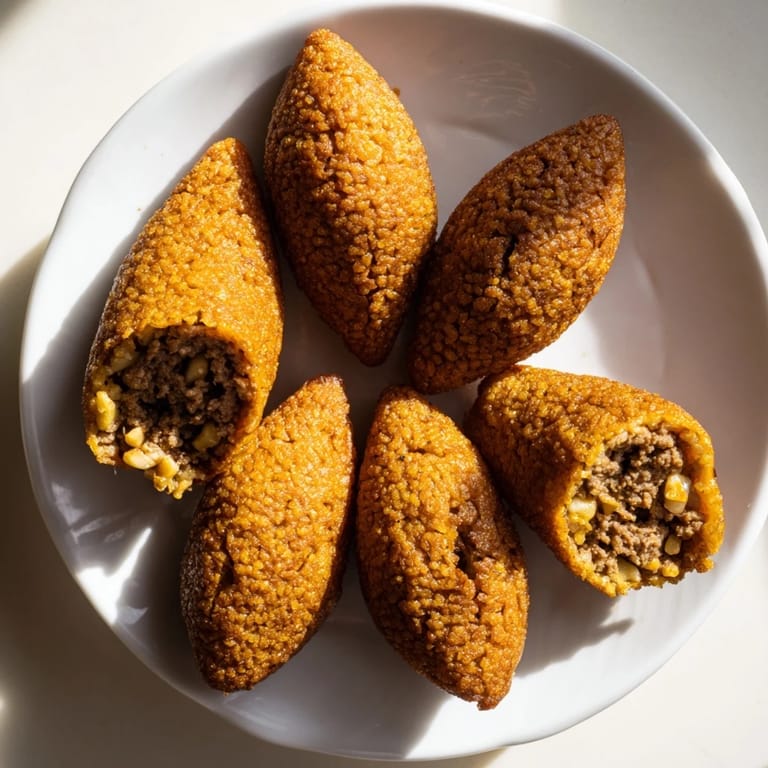
- Wet your hands with cold water—this is important, it keeps the dough from sticking. Take a golf ball–sized piece of dough and flatten it in your palm into a thin oval shell, like you're cradling something precious. Place 1–2 teaspoons of filling in the center, then pinch the edges together and shape it into a torpedo or football shape, sealing it completely so nothing leaks during cooking.
- Choose your cooking method:
- For frying: Heat vegetable oil to 180°C (350°F) and fry in batches for 4–5 minutes until they're deep golden brown, then drain on paper towels. For baking: Brush them with olive oil, arrange on a parchment-lined baking sheet, and bake at 200°C (390°F) for 25–30 minutes, turning halfway through, until crisp and golden.
 Save
Save The moment I really understood kibbeh was when my daughter, who picks at almost everything, sat there eating three in a row without saying a word. That's when I realized it wasn't just about getting the recipe right—it was about creating something that lands differently, something that tastes like care.
Serving and Storage
Serve kibbeh warm or at room temperature with something creamy—yogurt sauce or tahini are traditional, and they cut through the richness beautifully. A fresh salad alongside adds brightness and helps balance the warm spices. You can make these ahead and reheat them gently in the oven, which actually lets the flavors settle and deepen.
Making It Your Own
I've experimented with variations over the years, and the filling is where you can play. A vegetarian version using cooked lentils and sautéed mushrooms works surprisingly well—the texture is different but equally satisfying. Some families add a tiny pinch of cayenne for heat, or swap half the beef for ground lamb for a richer flavor. The spice ratio is flexible too; if you're not used to allspice and cinnamon in savory food, start with a little less and adjust to your taste.
Freezer Life and Make-Ahead Tips
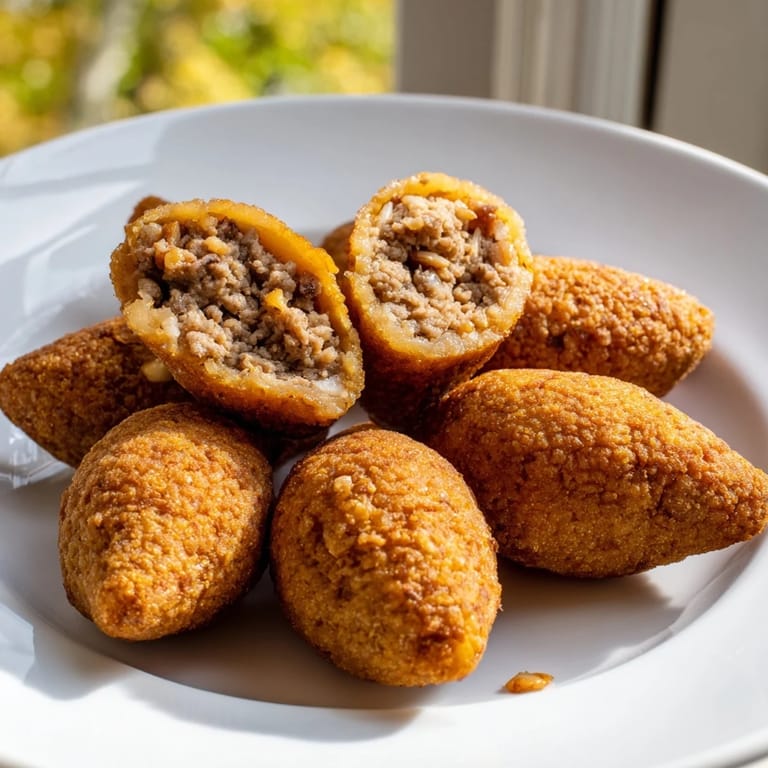
This is one of those magical dishes that actually benefits from being made in advance. You can shape the kibbeh, lay them on a baking sheet, freeze them uncovered for a few hours, then transfer them to a freezer container where they'll keep for up to 3 months. Cook them straight from frozen—just add a couple of extra minutes to the frying or baking time, and they cook evenly without drying out. I often make a double batch on a Sunday afternoon just so I have them ready for unexpected guests or those nights when I want something special without much effort.
- Freeze them on a baking sheet first, uncovered, so they don't stick together in a clump.
- They keep for up to 3 months frozen, and honestly taste just as good straight from the freezer.
- You don't need to thaw them—just add a couple of minutes to the cooking time.
 Save
Save Lebanese kibbeh has a way of becoming more than just a dish—it becomes a reason to gather people and feed them something made with intention. Once you've mastered it, you'll find yourself making it over and over, each batch a small act of hospitality.
Common Questions
- → What is the main grain used in Lebanese kibbeh?
Fine bulgur wheat is used to create the tender dough that forms the kibbeh shell.
- → Can kibbeh be baked instead of fried?
Yes, kibbeh can be baked at 200°C after brushing with olive oil for a crisp, golden finish without frying.
- → What spices are commonly used in kibbeh dough and filling?
Allspice, cinnamon, black pepper, and salt are traditional spices that add warmth and depth.
- → How do pine nuts contribute to the kibbeh filling?
Pine nuts add a subtle crunch and nutty richness that complements the spiced meat filling.
- → Is it possible to prepare a vegetarian version of kibbeh?
Yes, substituting cooked lentils and sautéed mushrooms for meat creates a flavorful vegetarian alternative.