 Save
Save I still remember the first time I truly understood French bistro culture—it wasn't in a fancy restaurant, but in a small apartment in the Marais, watching my host casually arrange a wooden board with the kind of intentional elegance that made everything look effortless. Sliced baguette, creamy Brie catching the afternoon light, the deep amber of good honey—it was a masterclass in restraint and quality. That moment taught me that sometimes the most sophisticated meals are the simplest ones, where every ingredient speaks for itself. That's what this platter celebrates.
I made this for my partner on a quiet Sunday afternoon, and something magical happened. We sat down planning to eat quickly, but instead we lingered over that board for nearly two hours, talking and tasting, building little combinations—a whisper of mustard with the goat cheese, honey dripping onto warm bread. That's when I realized this platter isn't really about the food; it's about the permission it gives you to slow down.
Ingredients
- 2 long fresh French baguettes: The foundation of everything here—buy them from a real bakery if you can, and slice them right before serving so they're still warm and the crust is crispy. A dull knife will only crush them into sadness.
- 150 g Brie cheese, sliced and fanned: Let it sit at room temperature for an hour before serving, so you actually get those buttery, mushroom notes. Cold Brie tastes like rubbery disappointment.
- 150 g Comté cheese, sliced and fanned: This is the sophisticated one—nutty, complex, worth the splurge. It's what elevates this from nice to genuinely memorable.
- 100 g Chèvre (goat cheese), sliced: The creamy contrast that keeps things interesting, with just a hint of tang.
- 12 fresh figs or grapes: Choose whatever's in season and looks beautiful—this is about celebrating what's at its peak, not following rules.
- 50 g unsalted butter, softened: Good butter is non-negotiable here. It's not an ingredient; it's a flavor statement.
- 2 tbsp high-quality honey: The kind that tastes like flowers and sunshine, not the refined stuff in plastic bears. It makes all the difference.
- 1 tbsp whole grain Dijon mustard: Adds sophistication and cuts through the richness—a secret weapon on any good board.
- Flaky sea salt, to taste: The finishing touch that makes everything taste more like itself.
- Freshly ground black pepper, to taste: Always grind it fresh; pre-ground is a betrayal to good cheese.
Tired of Takeout? 🥡
Get 10 meals you can make faster than delivery arrives. Seriously.
One email. No spam. Unsubscribe anytime.
Instructions
- Start with the foundation:
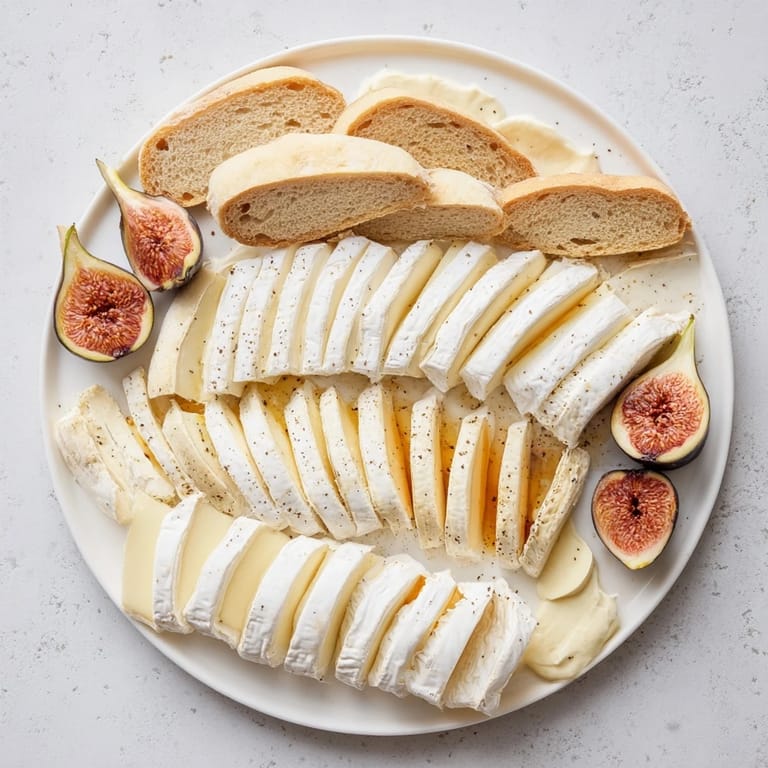
- Slice your baguettes diagonally into thin, even pieces—about the thickness of a pound coin. This isn't just technique; it changes how the bread cradles the cheese. Arrange them along the edge of your platter with intention, leaving breathing room between slices. Think museum display, not crowded picnic blanket.
- Create your cheese landscape:
- Fan each cheese variety in neat, overlapping rows, keeping them separate so each one gets to be the star. The Brie and Comté should look almost sculptural, like you've arranged them with care. This is the visual promise you're making to your guests.
- Add your flourishes:
- Scatter small clusters of figs or grapes in the negative space, creating pockets of sweetness and color. These aren't random—they're anchors that guide the eye and the hand.
- Place your condiments thoughtfully:
- Put your softened butter, honey, and mustard in small ramekins or create tiny artful dollops directly on the platter. This invitation to layer and build is what makes this interactive and fun.
- The final whisper:
- Lightly sprinkle flaky sea salt and freshly ground black pepper over the cheeses—this isn't about quantity, it's about presence. You're enhancing, not overwhelming.
- Serve with ceremony:
- Bring it to the table while the bread is still warm, encouraging your guests to build their own refined bites. The magic happens when people slow down and choose what goes into their mouth.
 Save
Save The first time someone told me this wasn't 'a real meal' because there was no cooking involved, something shifted in how I think about hospitality. This platter proved to me that feeding people isn't about complexity or hours at the stove—it's about respect. Respect for ingredients, for time, for the moment you're sharing. That's when food becomes memory.
The Art of the Cheese Board
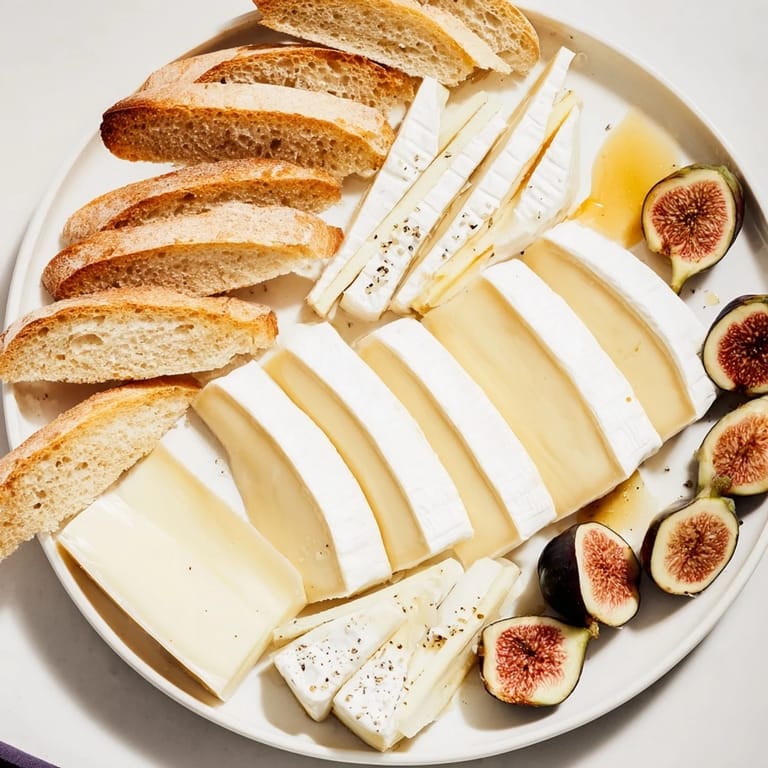
I've learned that a truly elegant board is an exercise in restraint. It's tempting to fill every inch, to add seventeen different cheeses and three types of jam, but that's not sophistication—that's anxiety. Real elegance is knowing exactly what to choose and trusting that those things are enough. The negative space on the platter is just as important as what's on it. It says 'I know what I'm doing, I have nothing to prove.' That's the bistro spirit right there.
Wine and Pairing Wisdom
A chilled glass of Sancerre is the traditional companion for a reason—the crisp acidity cuts through the richness of the cheese and cleanses your palate between bites. But honestly, anything you enjoy drinking is the right choice. I've had versions of this board with everything from Champagne to crisp white wine to a simple Perrier, and what mattered most was that everyone was present and unhurried. The wine is just a vehicle for slowing down.
Making It Yours
This is a template, not a rule book. Substitute the figs with sliced pears or apples if you want something crisper. Add a handful of nuts if you like texture. Garnish with fresh thyme or rosemary if you want earthiness. The point is to build something that makes sense for the people at your table and the season you're in.
- Keep ingredients cold until the last possible moment, then let them warm slightly—they'll taste more like themselves
- Use a sharp knife for everything, especially the bread and cheese; dull blades squeeze instead of cutting and compromise texture
- Trust your eye when arranging; imperfection is more beautiful than mathematical precision
 Save
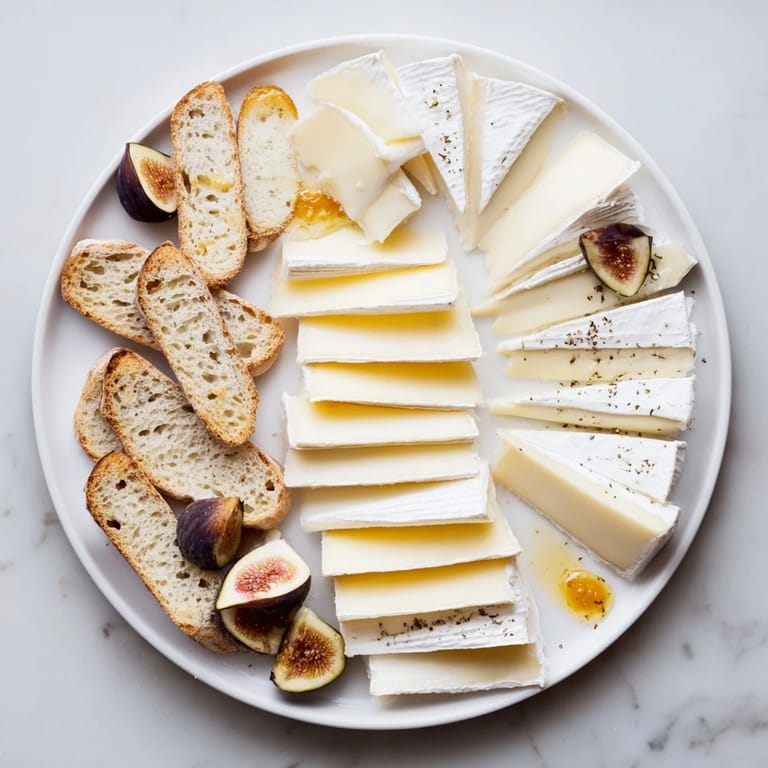
Save This platter is proof that you don't need hours in the kitchen to feel like a real host. Sometimes the most generous thing you can do is buy the best ingredients you can find and let them be themselves.
Common Questions
- → What cheeses are used to create authentic flavors in this platter?
The platter features Brie, Comté, and chèvre, each offering delicate, creamy, and nutty notes typical of French regionals.
- → How should the baguettes be prepared for optimal presentation?
Slicing the baguettes diagonally into thin, even pieces allows for an elegant display and easy serving.
- → What are good alternatives to figs if unavailable?
Sliced pears or apples provide a similar sweetness and texture that pairs well with the cheeses.
- → How can I enhance the platter’s flavor without overpowering the ingredients?
Adding small dollops of softened butter, high-quality honey, and whole grain Dijon mustard adds richness and subtle complexity.
- → Are there any garnishes recommended to elevate the presentation?
Fresh herbs like thyme or rosemary bring a fragrant touch and enhance the visual appeal without masking flavors.