 Save
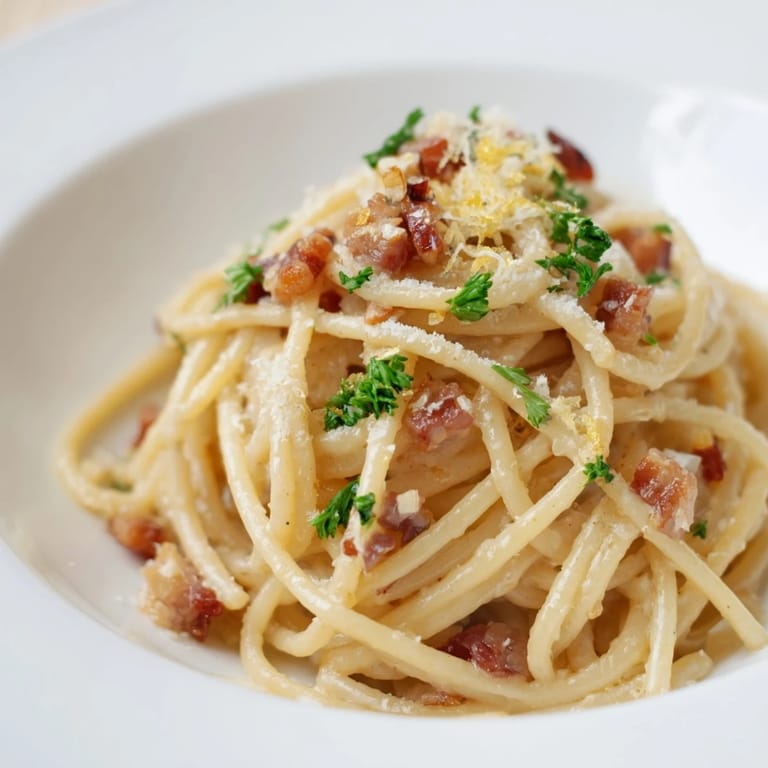
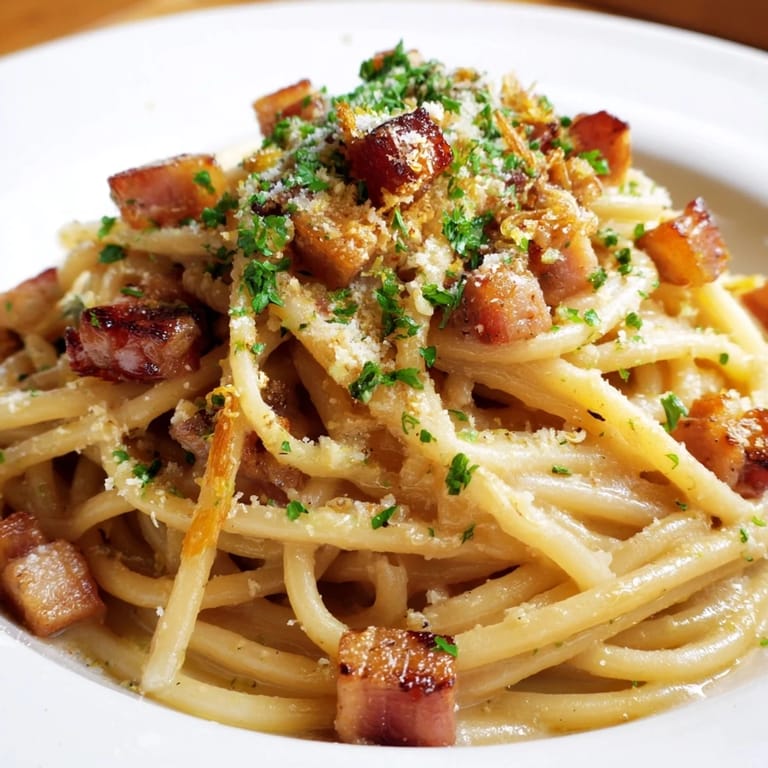
Save There's something almost magical about the moment bacon fat hits a hot pan—that sharp sizzle and rush of smoky aroma that fills your kitchen before anything else is truly ready. I discovered this pasta one tired weeknight when I had exactly three things on hand and zero energy for anything complicated. What emerged was this deceptively simple linguine that tastes far more luxurious than the fifteen minutes it demands, all because of a trick I'd learned years before: let the starchy pasta water do the heavy lifting, no cream required.
I made this for my neighbor one Sunday afternoon when she mentioned offhandedly that she'd been eating sad desk lunches all week. Twenty-five minutes later, watching her twirl those crispy bacon-studded strands onto her fork with genuine surprise at how good it was—that's when I knew this wasn't just a weeknight shortcut. It became the recipe I reach for when I want to feed someone something real without fuss.
Ingredients
- 400 g linguine: Choose the thinnest linguine you can find; it cooks faster and clings beautifully to the silky sauce.
- Salt, for pasta water: Don't skimp here—the water should taste almost like the sea.
- 200 g bacon, diced: Buy a block or slab if possible; pre-sliced bacon often cooks unevenly and leaves odd crispy bits.
- 2 tbsp olive oil: This works alongside the bacon fat to prevent the garlic from scorching.
- 3 cloves garlic, finely chopped: Slice it thin enough that you can almost see through it; large chunks turn bitter.
- 1/2 tsp freshly ground black pepper: Use the grinder, not the pre-ground tin—the difference is noticeable.
- 1/4 tsp red pepper flakes (optional): Add this only if you want a whisper of heat; it builds as it sits.
- 1/2 cup reserved pasta cooking water: This is your secret ingredient; the starch is what transforms bacon fat into sauce.
- 40 g grated Parmesan cheese: Freshly grate this yourself just before adding; pre-grated versions contain anti-caking agents that create a grainy texture.
- 2 tbsp chopped fresh parsley: The greenness cuts through the richness at the last moment.
- Lemon zest (optional): A microplane makes quick work of this; it adds brightness that prevents the dish from feeling heavy.
Tired of Takeout? 🥡
Get 10 meals you can make faster than delivery arrives. Seriously.
One email. No spam. Unsubscribe anytime.
Instructions
- Start the pasta:
- Fill a large pot with water—enough that it never boils over—and salt it generously once it reaches a rolling boil. Add linguine and cook according to package instructions until it's tender but still has a slight resistance when you bite into it. While it cooks, set aside 1/2 cup of the starchy cooking water before draining everything else.
- Render the bacon:
- Heat olive oil in a large skillet over medium heat, then add your diced bacon. Stir occasionally so it cooks evenly, and watch until the edges curl and brown, about 6–8 minutes; listen for the sizzle to quiet as the fat releases. The bacon should be golden and crisp, not charred black.
- Infuse with garlic:
- Lower the heat to medium-low and add your finely chopped garlic along with black pepper and red pepper flakes if you're using them. Sauté just for about a minute, stirring constantly—this is where timing matters because garlic burns faster than you'd expect. You want the kitchen to smell fragrant and sweet, not burnt and acrid.
- Build the sauce:
- Add your drained linguine directly to the skillet with the bacon and garlic. Pour in about 1/4 cup of the reserved pasta water and toss everything together over low heat, using tongs or a wooden spoon to coat every strand. Watch the sauce come together as the starch releases from the water; if it looks too dry, add more pasta water a splash at a time until the linguine looks glossy and clings together.
- Finish with cheese:
- Remove the skillet from heat—this is important because residual heat can make the Parmesan clump instead of melt smoothly. Add your freshly grated Parmesan and toss gently until it's fully incorporated and the sauce looks silky. Stir in the fresh parsley and a small amount of lemon zest if desired.
- Serve immediately:
- Plate the linguine right away while it's still hot, and top each serving with extra Parmesan and a generous crack of fresh black pepper. The window for peak temperature is small, so don't let it sit in the skillet.
 Save
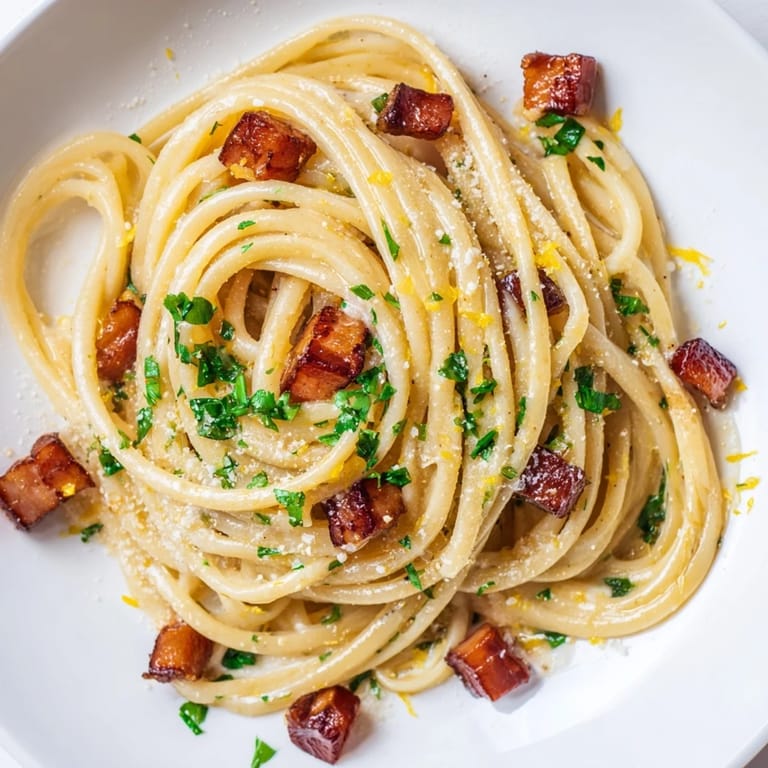
Save The first time someone told me this tasted better than a pasta carbonara they'd had in Rome, I laughed—until they insisted they were serious. That's when I realized this simple dish had quietly become something more than the sum of its parts, a reminder that the best meals aren't always the most complicated ones.
The Magic of Starchy Water
Pasta water is one of those kitchen secrets that changes everything once you understand it. The starch in the water acts like a natural emulsifier, allowing fat and liquid to combine into something silky without cream. I learned this the hard way after years of making heavy, cloying sauces, and it completely shifted how I approach quick pasta dishes. Now I reserve pasta water for almost everything, and this bacon linguine showcases exactly why that habit matters.
Timing and Temperature Matter
The entire process from bacon hitting the pan to plating should take no longer than fifteen minutes, but that speed only works if you stay attentive. The heat under the skillet needs to drop to low once the garlic goes in, otherwise the delicate aromatics turn acrid. I once made the mistake of keeping the heat too high throughout, and the dish tasted burnt despite having all the right ingredients—a lesson that taught me respecting temperature is as important as respecting technique.
Ways to Adapt and Evolve
This recipe is a canvas more than a strict formula, and I've played with it dozens of times depending on what's in the kitchen. Sometimes I add a handful of frozen peas right at the end, letting them warm through in the residual heat. Other times I sauté sliced mushrooms alongside the bacon for earthiness, or finish with a whisper of white wine instead of lemon zest for brightness.
- Stir in a handful of fresh peas or sautéed mushrooms just before finishing for added texture.
- Finish with a small splash of crisp white wine like Pinot Grigio instead of lemon zest for a different flavor profile.
- Use turkey bacon for a leaner version that crisps up just as well.
 Save
Save This pasta reminds me that sometimes the dishes we love most are the ones born from necessity rather than planning—a quick solution that turned into something worth repeating. Make it when you're tired, make it when you're hungry, make it because you deserve something good in fifteen minutes flat.
Common Questions
- → How do I keep bacon crispy in the pasta?
Cook bacon over medium heat until golden and crisp. Drain excess fat if needed and toss pasta immediately to retain texture.
- → What is the purpose of reserved pasta water?
Starchy pasta water helps create a silky sauce that clings to the linguine, enhancing flavor and texture without cream.
- → Can I substitute bacon with another protein?
Turkey bacon or pancetta works as alternatives, providing similar smoky richness with slight flavor variations.
- → How do garlic and spices contribute to the dish?
Garlic adds a fragrant depth, while black pepper and optional red flakes bring subtle heat and complexity.
- → What finishing touches elevate this dish?
Grated Parmesan and fresh parsley introduce savory and fresh notes; lemon zest adds a bright, subtle zing.