 Save
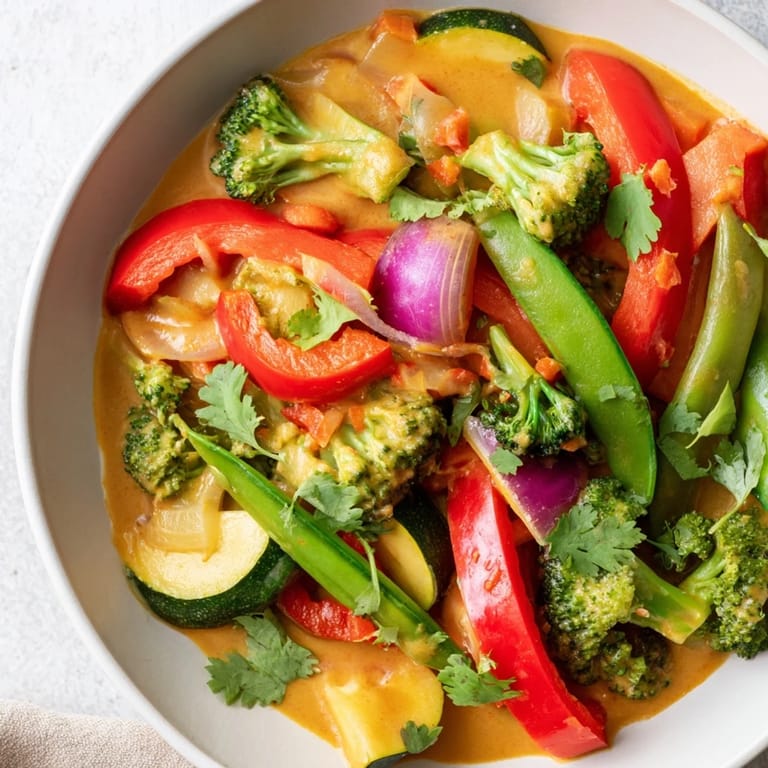
Save I first stumbled on this curry on a rainy Tuesday when my fridge was full of random vegetables I had no plan for. The smell of ginger and garlic hitting hot coconut oil changed everything. I threw in whatever looked good, poured in a can of coconut milk, and somehow ended up with the kind of dinner that made me forget I was winging it. It became my go-to whenever I need something warm, bright, and forgiving.
I made this for a friend who swore she didnt like curry. She had three bowls and asked for the recipe before she left. There was cilantro everywhere, lime wedges squeezed into every serving, and the kitchen smelled so good we just sat there talking long after we finished eating. That night taught me that the right dish can change someones mind about an entire flavor.
Ingredients
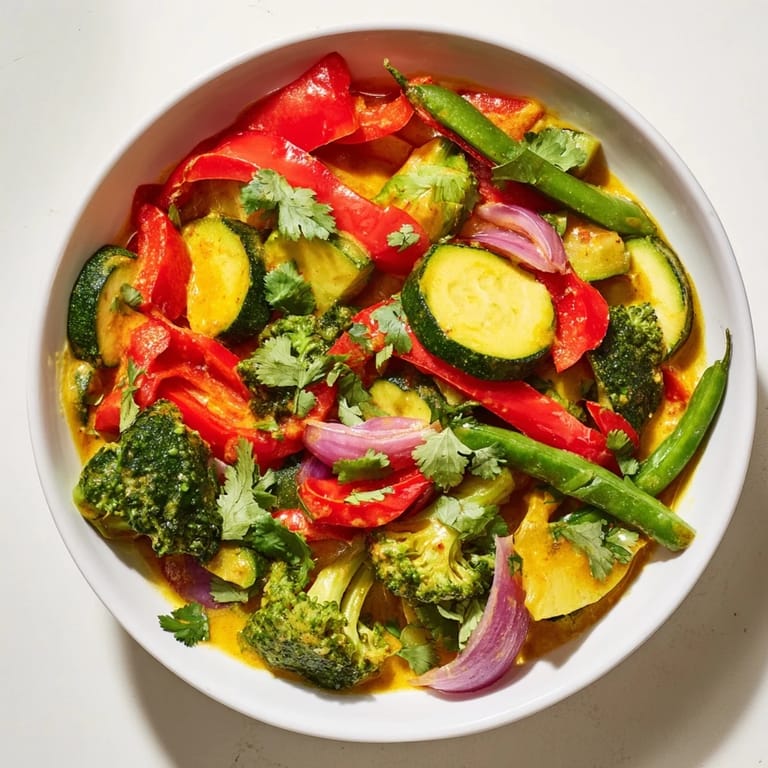
- Red bell pepper: Adds a sweet crunch that balances the heat from the curry paste, and it stays vibrant if you dont overcook it.
- Carrot: Brings a subtle sweetness and soaks up the coconut sauce beautifully, slice it thin so it cooks evenly.
- Zucchini: Tender and mild, it absorbs all the spices without falling apart if you add it at the right time.
- Broccoli: The florets catch little pockets of sauce, and they stay bright green if you simmer gently.
- Snap peas: I add these near the end so they stay crisp and sweet, they give the dish a fresh snap.
- Red onion: Softens into the base and adds a slight tang that deepens the whole flavor.
- Coconut oil: It enhances the coconut milk and handles high heat without burning, plus it smells amazing.
- Garlic: Freshly minced garlic is non-negotiable here, it turns fragrant in seconds and sets the tone for everything.
- Fresh ginger: Grating it releases oils that make the curry taste alive, jarred ginger just doesnt compare.
- Red curry paste: This is where the magic lives, check the label if youre vegan because some brands sneak in shrimp paste.
- Turmeric: Adds an earthy warmth and that golden color, but dont use too much or it gets bitter.
- Cumin and coriander: These ground spices add depth and a slight nuttiness that rounds out the curry paste.
- Coconut milk: Full fat is key, it makes the sauce rich and creamy and ties all the flavors together.
- Vegetable broth: Thins the sauce just enough so it coats the vegetables without being soupy.
- Soy sauce or tamari: A splash adds umami and saltiness, tamari keeps it gluten-free.
- Lime juice: Brightens everything at the end, squeeze it fresh right before serving.
- Cilantro and lime wedges: The cilantro adds a fresh herbal note, and extra lime wedges let everyone adjust to taste.
Tired of Takeout? 🥡
Get 10 meals you can make faster than delivery arrives. Seriously.
One email. No spam. Unsubscribe anytime.
Instructions
- Start with the aromatics:
- Heat the coconut oil over medium heat and add the red onion, letting it soften for a few minutes until it smells sweet and looks translucent. Stir in the garlic and ginger, and cook just until the kitchen fills with that unmistakable fragrance, about a minute.
- Bloom the spices:
- Add the curry paste, turmeric, cumin, and coriander, stirring constantly for a minute so the spices release their oils and deepen in flavor. This step is what makes the whole curry taste layered instead of flat.
- Add the hearty vegetables:
- Toss in the bell pepper, carrot, zucchini, and broccoli, stirring them around for a few minutes so they start to soften and soak up the spice mixture. Dont rush this, let them get a little color.
- Simmer in the sauce:
- Pour in the coconut milk and vegetable broth, bringing everything to a gentle simmer. Add the snap peas and soy sauce, then cover and let it cook for 10 to 12 minutes until the vegetables are tender but still have some bite.
- Finish and serve:
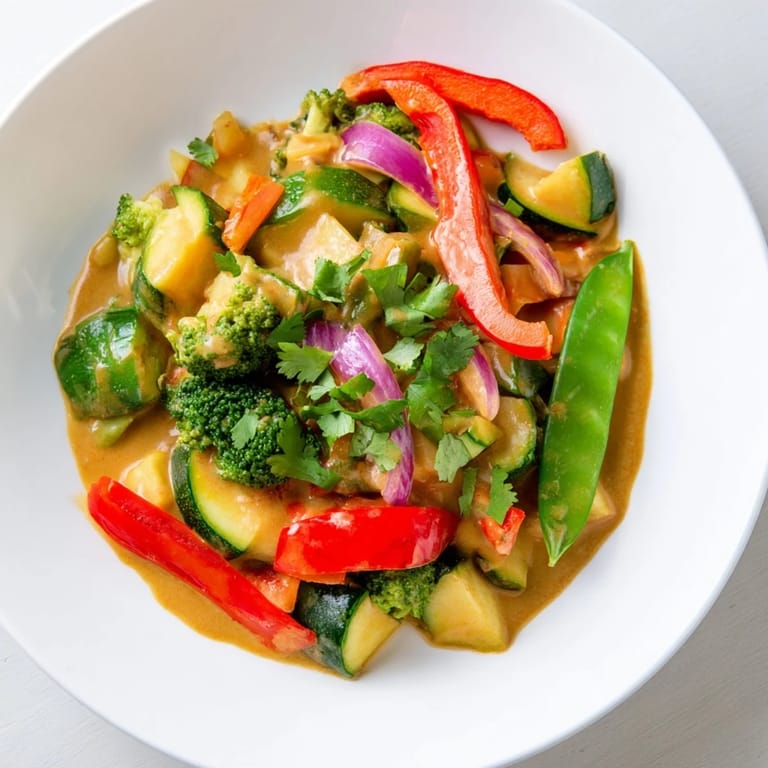
- Remove from heat and stir in the lime juice, tasting and adjusting the salt and pepper. Serve it hot with a generous handful of cilantro and lime wedges on the side, over rice or quinoa if you want.
 Save
Save 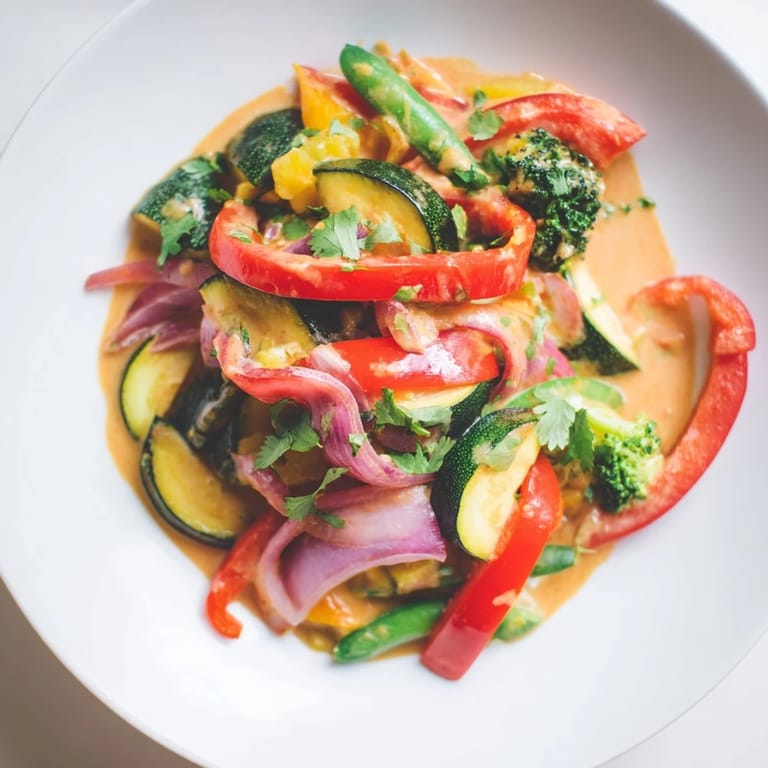 Save
Save One evening I made this for a quiet dinner alone and ended up eating it straight from the pot, standing at the stove with a wooden spoon. The lime and cilantro made every bite feel bright and new, and I realized sometimes the best meals are the ones you make just for yourself. It reminded me that cooking doesnt always need an audience to matter.
Make It Your Own
Swap in cauliflower, green beans, or mushrooms depending on whats in your fridge or what looks good at the market. I once added a can of chickpeas and a block of cubed tofu during the simmer, and it turned the curry into a full protein-packed meal. You can also use whatever vegetables are about to go bad, this curry is incredibly forgiving and actually tastes better when you trust your instincts.
Pairing and Serving
I usually serve this over jasmine rice because it soaks up the sauce perfectly, but quinoa works if you want something lighter or more protein. Sometimes I warm up a piece of naan and use it to scoop up the vegetables and every last bit of that creamy coconut broth. Leftovers reheat beautifully and often taste even better the next day once the flavors have had time to meld.
Storage and Reheating
Store leftovers in an airtight container in the fridge for up to four days, and reheat gently on the stove with a splash of broth or water to loosen the sauce. The vegetables will soften a bit more, but the flavor deepens and the curry paste gets even more integrated. I avoid the microwave because it can make the coconut milk separate, but if youre in a rush just stir it well after heating.
- Add a squeeze of fresh lime juice after reheating to bring back that brightness.
- If the sauce thickens too much, thin it with a little vegetable broth or coconut milk.
- Garnish with fresh cilantro every time you serve it, even leftovers deserve that pop of green.
 Save
Save 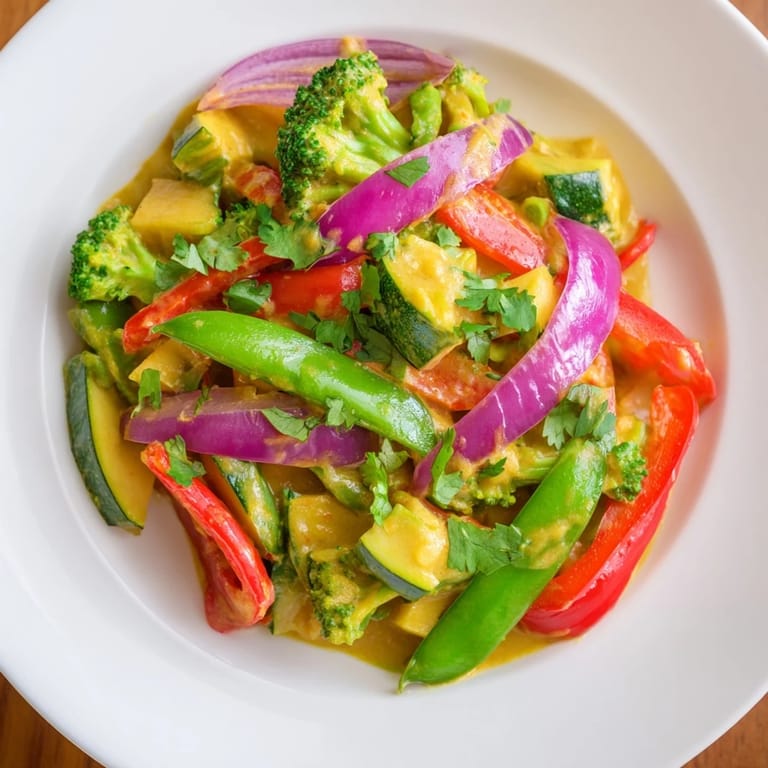 Save
Save This curry has become the kind of recipe I make without thinking, the one I turn to when I want something nourishing and familiar. I hope it brings the same kind of warmth to your table that it has to mine.
Common Questions
- → What vegetables work best in this curry?
- → How can I adjust the spiciness?
Modify the amount of red curry paste to suit your taste, using less for milder heat or more for a spicier dish.
- → Can I add protein to this dish?
Yes, chickpeas or tofu can be stirred in during the simmering step for added protein and texture.
- → What is the best way to serve this dish?
Pair it with jasmine rice, quinoa, or naan bread to complement the rich, flavorful curry sauce.
- → Are there common allergens to consider?
This dish contains soy from soy sauce or tamari and coconut from the coconut milk; choose coconut aminos for a soy-free option and verify curry paste ingredients to ensure suitability.