 Save
Save I discovered this bowl on a Tuesday morning when my spiralizer finally arrived, and I was determined to justify the counter space it would take up. The carrots transformed into these delicate, almost translucent noodles, and suddenly I was looking at something that felt too pretty to eat. But then I tasted it—bright, creamy, alive—and I understood why people get excited about vegetables.
I made this for my friend who was going through a phase of trying to eat better, and she kept asking what made it taste so good when there was no butter or oil involved. The tahini-lime dressing was the answer—that one small bowl of something creamy and tangy transformed what could have been a sad salad into something she actually wanted to eat again the next day.
Ingredients
- Carrots (3 large, peeled and spiralized): The foundation of this bowl, and they're so much more interesting when they're cut this way. Raw carrots have a sweetness that shows up once they're not competing with everything else on the plate.
- Cucumber (1 cup, thinly sliced): It adds coolness and crispness without being forgettable. I learned to slice it just before serving so it doesn't give up its water to the bowl.
- Red bell pepper (1 cup, julienned): The sharp, almost sweet bite that keeps the whole thing from tasting too earthy. Use a red one specifically—the color and flavor are worth it.
- Avocado (1 ripe one, sliced): The creamy moment. Pick one that yields slightly to pressure but isn't mushy, then slice it right before assembly.
- Baby spinach (2 cups): Tender enough that it doesn't need cooking, and it fills in the gaps so the bowl feels complete.
- Fresh cilantro (2 tbsp, chopped): A small amount goes surprisingly far—it ties the whole thing together with a brightness that makes people wonder what your secret is.
- Tahini (2 tbsp): The magic ingredient that makes this creamy without dairy. Make sure it's fresh; old tahini tastes bitter and ruins the whole thing.
- Lime juice (1 tbsp, freshly squeezed): Never bottled. The difference is real and it matters.
- Water (1 tbsp): Adjustable, depending on how thick your tahini is. Sometimes I add more to get the right pour-ability.
- Maple syrup (1 tsp): Just enough sweetness to balance the lime and make the dressing feel complete.
- Soy sauce or tamari (1 tsp): The umami note that makes everything taste intentional. Use tamari if you need it gluten-free.
- Garlic clove (1 small, minced): One clove is enough—more and it overpowers the delicate vegetables.
- Salt and pepper: Taste as you go. The dressing needs seasoning more than you'd expect.
- Toasted sesame seeds (1 tbsp): Buy them already toasted if you can, or toast them in a dry pan for about two minutes. That nutty warmth changes everything.
- Pumpkin seeds (1 tbsp): A little crunch and a hint of earthiness that feels intentional, not random.
Tired of Takeout? 🥡
Get 10 meals you can make faster than delivery arrives. Seriously.
One email. No spam. Unsubscribe anytime.
Instructions
- Spiralize your carrots:
- Peel them first, then feed them into the spiralizer with a gentle hand. You'll get long, delicate noodles that look almost too fragile to eat but have a satisfying bite to them.
- Arrange the base:
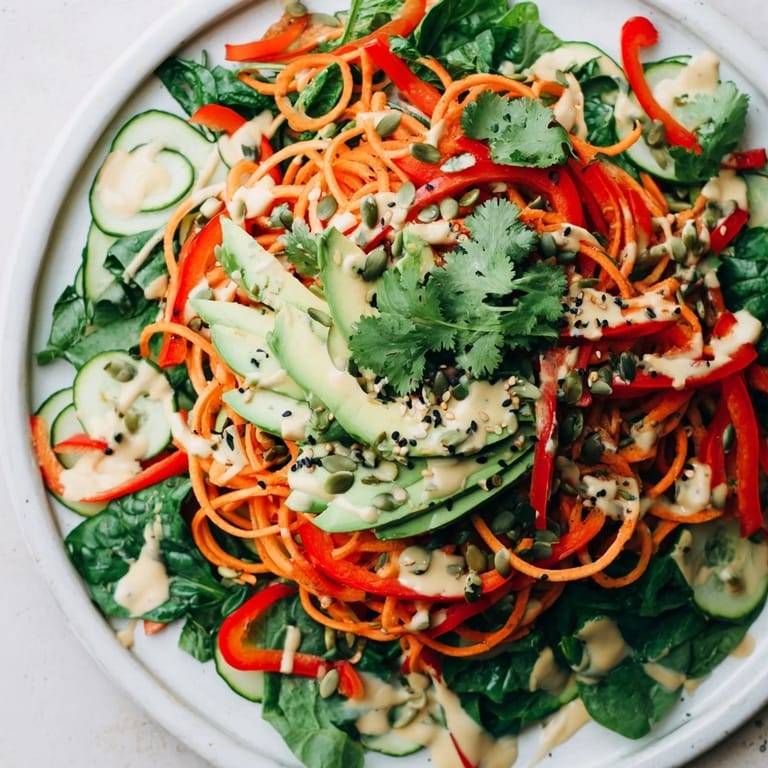
- Divide the carrot noodles between two bowls, forming a nest that gives you somewhere to pile everything else. Don't pack them down—leave them loose so they stay airy.
- Build the bowl:
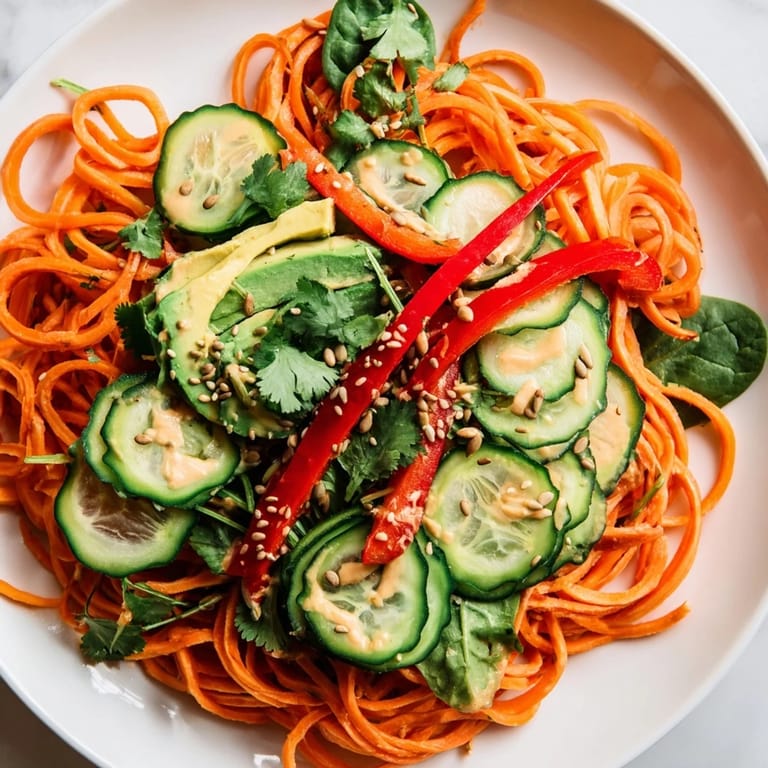
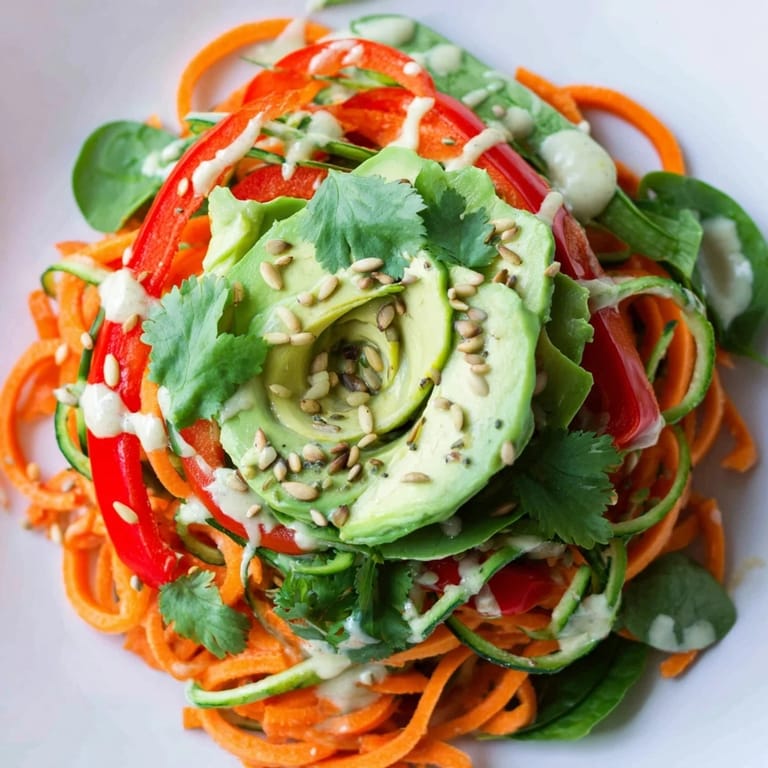
- Layer the cucumber, bell pepper, avocado, and spinach around the carrot noodles in whatever arrangement makes you happy. Sprinkle the cilantro over the top like you're finishing something beautiful.
- Make the dressing:
- In a small bowl, whisk the tahini, lime juice, and water together until the tahini softens and starts to come together. It'll look grainy at first, but keep whisking—it'll suddenly become creamy and pale. Add the maple syrup, soy sauce, and minced garlic, then taste and adjust the salt and pepper until it tastes bright and balanced.
- Finish and serve:
- Drizzle the dressing over each bowl in whatever pattern feels right, then scatter the sesame and pumpkin seeds over the top. Eat immediately while everything is still crisp and cold.
 Save
Save My partner came home one evening and found me standing at the counter, arranging vegetables like I was painting a canvas. He laughed and said it looked too nice to disturb, but then one bite changed his mind. That's when I realized this bowl had crossed over from being food into being something that made a moment feel special.
Why Raw Vegetables Shine Here
There's something about eating vegetables raw that makes you taste them differently. The crispness, the water content, the colors—they all feel more present. When you cook carrots, they soften and sweeten, which is wonderful in its own way. But spiralized and raw, they have a delicate crunch that supports everything else on the plate without demanding attention. The same goes for the bell pepper and cucumber; their rawness is the point. This bowl celebrates vegetables at their most honest.
The Tahini-Lime Equation
I spent a long time making tahini dressings that were either too thick or too thin, too bitter or too bland. Then I realized the balance matters more than I thought: the tahini needs water and time to become creamy, the lime juice needs to be fresh, and the sweet element of maple syrup needs to be present but not obvious. It's a small calculation that changes everything. Once you understand how these flavors work together, you can adjust them for your taste without losing what makes the dressing work.
Making It Your Own
This bowl is a foundation, not a mandate. I've added grilled tofu for extra protein, stirred in some cooked chickpeas when I wanted something more substantial, and scattered edamame for extra crunch. Some days I use almond butter instead of tahini because that's what I have on hand. The carrot noodles are the anchor, and everything else can shift based on what you have and what you're craving. That flexibility is part of what makes it so easy to come back to again and again.
- Try adding thinly shredded purple cabbage for color and an extra crisp element.
- If you want to make this more protein-rich, top it with baked tofu cubes or roasted chickpeas.
- Leftovers don't stay crisp, so make this fresh when you're ready to eat it.
 Save
Save This bowl taught me that healthy food doesn't have to taste like compromise. It can be bright, creamy, interesting, and actually something you're excited to make again.
Common Questions
- → How do you prepare the carrot noodles?
Peel the carrots and use a spiralizer to create thin noodle-like strands for a fresh, crunchy base.
- → What gives the dressing its creamy texture?
Tahini combined with lime juice, maple syrup, and a touch of water creates a smooth, tangy dressing that coats the bowl perfectly.
- → Can I add protein to this bowl?
Yes, adding grilled tofu or chickpeas complements the fresh vegetables and enhances satiety.
- → Are there any suitable substitutions for tahini?
Almond butter can replace tahini to offer a different nutty flavor while maintaining creaminess.
- → What toppings add extra texture?
Toasted sesame seeds and pumpkin seeds sprinkled on top provide a crunchy contrast to the fresh veggies.