 Save
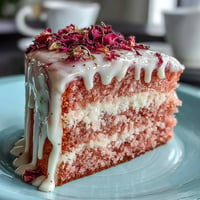
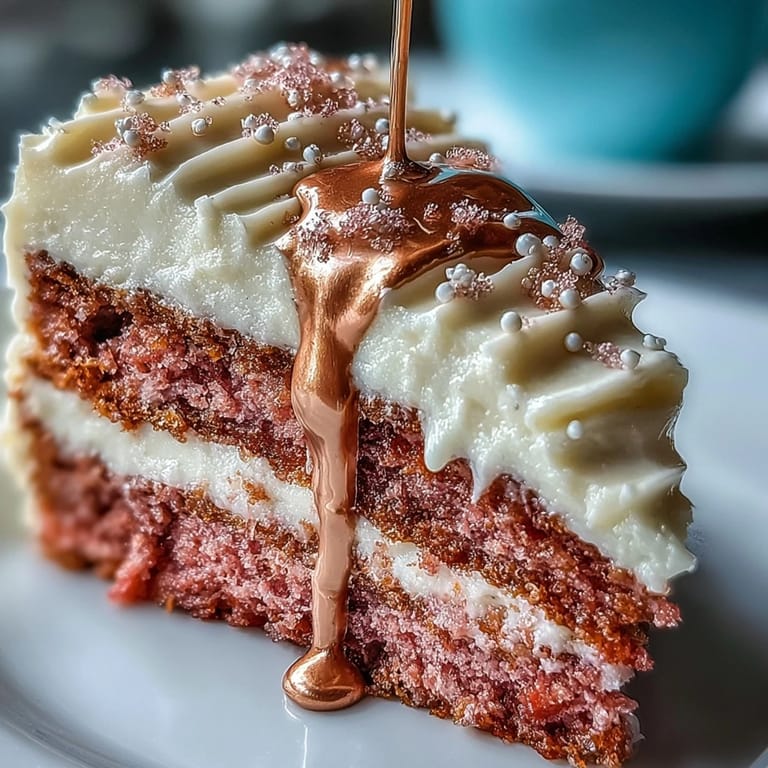
Save The first time rosé made its way into my cake batter, my kitchen was filled with the gentle fizz and floral notes reminiscent of a summer toast. I didn't plan for this cake to steal the show at my friend's bridal shower, but the sparkle of edible gold cascading down pillowy pink layers had everyone crowding nearer, phones in hand. That late afternoon, laughter bounced between pastel decorations and the scent of berries and vanilla warmth lingering above it all. I like to remember how my apron seemed to wear more frosting than I did. The secret, as it turns out, is in letting the rosé (and your mood) do a bit of the work.
I still grin about the moment we cut into that cake at Mia's bridal shower. Someone asked me how I got the pink so perfect—it sparked a lively debate about food coloring and natural blush, and by the time slices were served, frosting had ended up on more than one nose. It's these little kitchen stories, told over forkfuls of cake and gold-specked smiles, that give this recipe its magic. Serving it to people you care for feels like a celebration in itself. The laughter that day seemed to stick to every crumb.
Ingredients
- All-purpose flour: Creates a tender crumb; be sure to measure it with the spoon-and-level method for extra lightness.
- Cornstarch: Softens the flour's impact and lends that signature velvet texture.
- Unsweetened cocoa powder: A touch for subtle depth—don't be tempted to add more.
- Baking soda: Gives just the right lift; double-check it's still fresh for best results.
- Salt: Enhances flavor and balances the sweetness; a fine sea salt disperses most evenly.
- Unsalted butter: Brings richness and structure, especially when properly room temp—cold chunks will sabotage your batter.
- Granulated sugar: Sweetness and stability; regular white sugar creates the airy crumb we look for.
- Light brown sugar: Adds a subtle caramel warmth; pack it gently into your measuring cup.
- Eggs: Room temperature eggs blend more easily; this avoids a lumpy batter.
- Rosé wine: The star; choose a young, aromatic bottle for bright, fruity notes that shine through the cake.
- Buttermilk: Makes for a tangy, moist crumb—if you're out, sour some milk with lemon juice as a quick fix.
- Vanilla extract: The bakery essence; real vanilla makes a noticeable difference here.
- Pink gel food coloring (optional): Just a toothpick’s swirl for that blushing bridal glow, unless you prefer a soft natural hue.
- Cream cheese: Room temp is crucial for the silkiest frosting; cold cream cheese turns the mix lumpy.
- Confectioners' sugar: Sift it first to avoid little pockets of sugar bomb.
- White chocolate chips: Melt into a luscious canvas for the gold drip; don't overheat or they'll seize.
- Heavy cream: A few tablespoons transforms chocolate into a pourable, glossy ganache.
- Edible gold luster dust: The finishing touch that brings pure celebration—keep it dry until painting time.
- Clear vodka or lemon extract: Turns gold powder into edible paint; vodka evaporates cleanly, leaving just that touch of shimmer behind.
Tired of Takeout? 🥡
Get 10 meals you can make faster than delivery arrives. Seriously.
One email. No spam. Unsubscribe anytime.
Instructions
- Prep the pans:
- Line and grease three 8-inch cake pans, taking a moment to press parchment to the base—your future self will thank you when unmolding later.
- Whisk the dry ingredients:
- Sift flour, cornstarch, cocoa, baking soda, and salt together; the rising cloud always makes me feel like a bakery apprentice.
- Cream butter and sugars:
- Use your mixer to whip butter, white sugar, and brown sugar until barely golden and fluffy, about three minutes—it should look almost like frosting itself.
- Add the eggs and vanilla:
- Beat in eggs one by one with easy patience, scraping down the bowl, then swirl in that vanilla for a fragrant boost.
- Mix rosé and buttermilk:
- In a jug, stir together rosé and buttermilk; don't worry if it looks slightly curdled, it blends out in the batter.
- Combine wet and dry:
- Alternate adding the flour mixture and rosé-buttermilk to the buttery bowl, starting and ending with flour; add pink color until you smile at the shade.
- Fill and bake:
- Evenly divide the batter among the pans, smoothing the tops for even layers, then bake for about 30 minutes—listen for the faint crackle when they're done.
- Cool and unmold:
- Let cakes rest in pans a bit before transferring to a wire rack; sneaking a warm crumble is team baker's privilege.
- Make the frosting:
- Beat cream cheese and butter until creamy, then gradually whisk in sifted sugar, vanilla, and salt; keep mixing until it billows softly.
- Assemble and frost:
- Stack cooled cakes with frosting between each, smoothing the sides—don't stress over perfect swoops, rustic is beautiful.
- Chill the cake:
- A quick chill (about 30 minutes) firms everything up for drips and decorations.
- Prepare the gold drip:
- Gently melt white chocolate and cream together until silky, cool slightly, then coax ganache off the cake’s edge with a spoon, allowing pretty drips to form.
- Add the gold touch:
- Mix luster dust with vodka or lemon, then carefully paint the set drips—small brush, steady hand, and a deep breath help here.
- Finish as you wish:
- Scatter edible flowers or gold leaf if you're feeling extra celebratory; stand back and admire your shimmering masterpiece.
 Save
Save 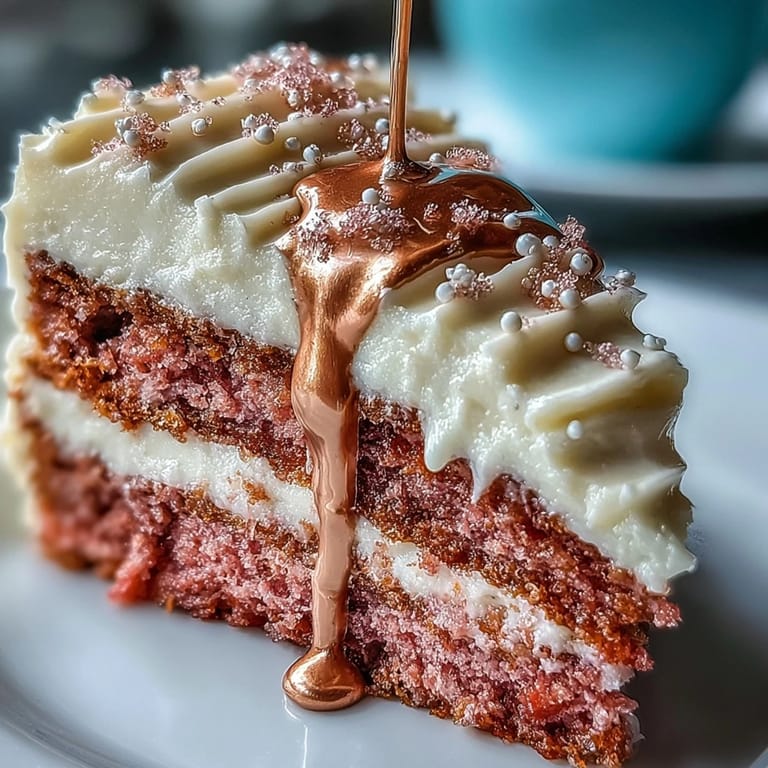 Save
Save There's a snapshot from that shower of our group, mid-cheer, with cake forks aloft and gold flecks catching sunlight like confetti. That moment cemented for me how food becomes memory when it's wrapped in a little bit of intention and a whole lot of joy.
Getting That Perfect Pink Hue
I learned after a few attempts that the pink gel food coloring can be surprisingly potent. Start with just a drop on a toothpick—too much and you'll end up with a shade reminiscent of bubblegum gone wild. The rosé on its own provides a gentle blush, but a tiny bit of coloring helps make it pop for special occasions. People love to guess whether it's nature or artifice behind the color, and the answer is usually 'a bit of both.'
Layering and Frosting Without the Drama
If you've ever watched your cake layers slide around like a stack of pancakes, you'll appreciate the chill step. Frosting between chilled layers gives you control and keeps things from getting lopsided. An offset spatula is a surprisingly satisfying tool once you get the hang of the swoop and swirl. Don't worry about perfection—it all gets shiny and gold in the end. The process is honestly half the fun.
Mastering the Gold Drip Effect
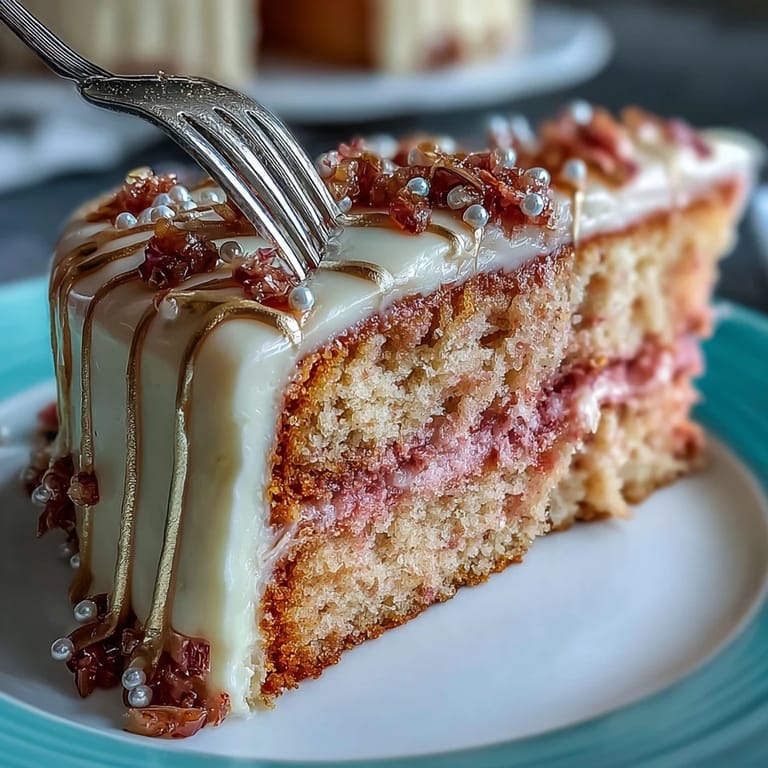
The first time I tried painting the gold drips, I was hesitant—until I realized the more imperfect the drip, the more modern and striking it looked. The trick is to let the white chocolate set until gently cool before brushing on your gold luster. Use a brush with short strokes, and don't overwork the paint or the chocolate will lose its shine. Go light at first, and you can always add more.
- If your white chocolate thickens too much, a second or two in the microwave will save it.
- A rotating cake stand helps create even more dramatic drips.
- Keep extra edible flowers or berries on standby for last-minute flair.
 Save
Save 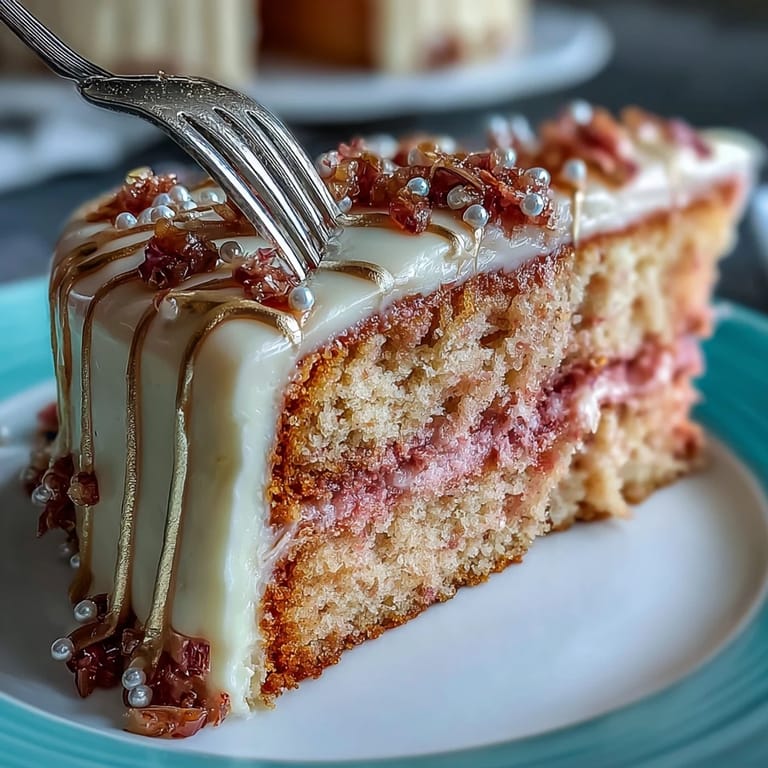 Save
Save May your celebrations be as golden and memorable as this cake. Here's to every joyful gathering, one beautiful slice at a time.
Common Questions
- → Can I omit alcohol and keep the same flavor?
Yes. Substitute an equal amount of pink grape juice or sparkling cider for rosé to retain the fruity aroma and color without alcohol.
- → How do I achieve a vibrant pink hue naturally?
Use a high-quality rosé and reduce browning from overmixing. A small amount of pink gel coloring boosts intensity if you want a brighter finish.
- → What’s the best way to get smooth cream cheese frosting?
Bring cream cheese and butter to room temperature, beat until completely smooth before adding sifted confectioners’ sugar, and chill briefly to firm up for easy spreading.
- → How do I make a stable gold drip?
Melt white chocolate with heavy cream to a pourable ganache, cool until slightly thickened, drip from the edge with a spoon, then paint the set drips with gold luster mixed with a few drops of vodka or lemon extract.
- → How should I store the finished cake?
Keep chilled in the fridge, covered lightly to protect decorations. Bring to room temperature 30–60 minutes before serving for best texture and flavor.
- → How can I prevent layers from sinking or baking unevenly?
Measure ingredients precisely, avoid overmixing, tap pans to release air, and bake until a toothpick comes out clean. Cool in pans 10 minutes, then transfer to a rack to finish cooling.