 Save
Save I still remember the first time I arranged an Asian fusion noodle board for friends at my apartment. It was inspired by a dinner I'd had at a trendy restaurant in the city, where the chef presented everything on a stunning wooden platter, and guests could customize their own bowls. Walking out of that restaurant, I thought, "I can recreate this at home." That evening, I spent time carefully slicing vegetables and arranging them like an artist preparing a canvas. What struck me most wasn't just how beautiful it looked, but how it transformed dinner into an experience—everyone leaning in, selecting their favorite combinations, mixing sauces, discovering new flavor pairings. Since then, this board has become my go-to when I want to impress without spending hours at the stove.
I'll never forget hosting my parents' book club one spring evening. I was nervous—these women had been to fancy restaurants across three continents. But when I brought out this noodle board, still steaming with freshly cooked noodles in the center, something magical happened. They gasped. Not because it was complicated, but because it was thoughtful. They spent the next two hours sampling different sauce combinations, swapping vegetables, telling stories. My mom told me afterward that it was her favorite dinner all year, not because of any single ingredient, but because the board made everyone feel like an artist at the table.
Ingredients
- Rice noodles or soba noodles (300 g): Rice noodles are my preference for their delicate texture and neutral flavor that won't compete with the other components. Soba works beautifully too if you want a slightly earthier, more substantial bite. The key is cooking them just until tender—slightly underdone is actually better here since they'll soften a bit as they cool and sit on the board.
- Sesame oil (1 tbsp): This is non-negotiable. It prevents the noodles from clumping together and adds a subtle, roasted warmth that ties the whole board together. Use a good quality oil—it makes a real difference in how the dish tastes and smells.
- Cooked chicken breast, thinly sliced (200 g): Cook it separately and slice it while still slightly warm so the knife glides through cleanly. Overcooked chicken becomes rubbery, so aim for a gentle simmer just until cooked through. You can poach it in broth for extra flavor.
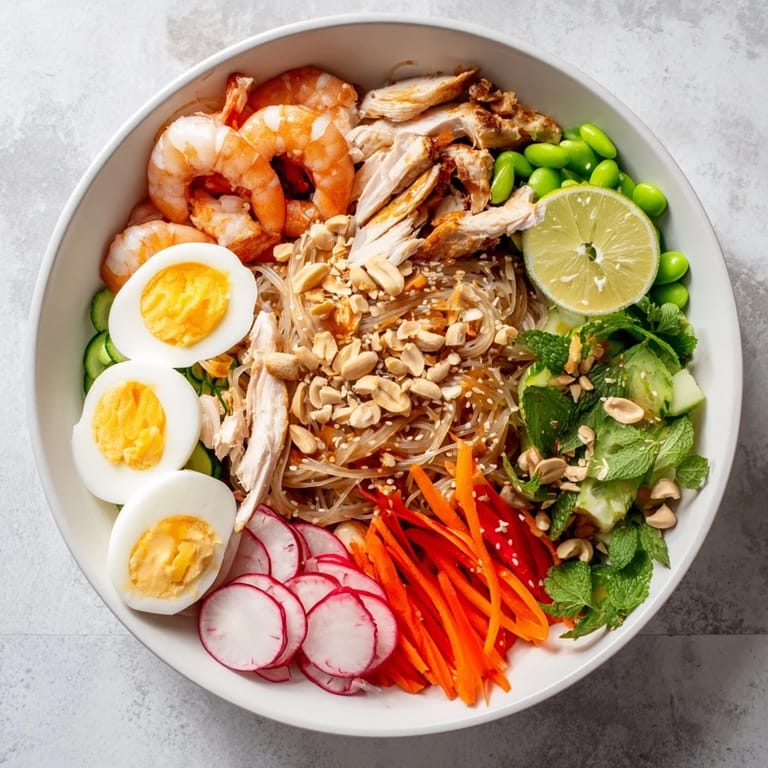
- Cooked shrimp, peeled and deveined (150 g): Buy pre-cooked shrimp if you're short on time—it's a real time-saver and honestly, no one will know the difference. Pat them dry before arranging so they look pristine on the board.
- Boiled eggs, halved (2): Soft-boiled eggs are prettier and more delicious than hard-boiled. Aim for 6-7 minutes in boiling water so the yolk is still golden and slightly runny. The contrast between the cooked white and jammy yolk is really beautiful visually.
- Julienned carrots (1 cup): Fresh, crisp carrots are essential here. I use a mandoline for thin, even slices, but a sharp knife works too. The sweetness of the carrot is a nice counterbalance to the savory and spicy elements.
- Cucumber, thinly sliced (1 cup): Choose a firm, crisp cucumber and slice it right before arranging. It wilts quickly and loses its snappy texture, so timing matters. The cool, refreshing quality of cucumber is what makes this board feel light and summery.
- Red bell pepper, julienned (1): The bright color matters here—red peppers are sweeter than green, and they add a visual pop that makes the whole board sing. Slice them into thin strips that are easy to pick up.
- Red cabbage, thinly sliced (1 cup): The natural purple-red color is gorgeous on a board, and cabbage stays crisp longer than most vegetables. Its slight crunch and subtle sweetness work wonderfully with the sauces.
- Cooked and shelled edamame (1 cup): These add protein, color, and a tender, slightly nutty flavor. If you can't find pre-cooked edamame, boil frozen ones for a few minutes and cool them. They're one of my favorite elements because they feel special but require minimal effort.
- Radishes, thinly sliced (4): Radishes bring a peppery crunch and their pale pink color adds visual contrast. They stay crisp all evening, making them ideal for a board that sits out during dinner. Slice them just before serving to keep them fresh.
- Sliced scallions (2): The mild onion flavor and fresh green color are important finishing touches. Slice them on the bias so they look elegant and are easier to grab.
- Fresh cilantro leaves (1/4 cup): Don't skip the fresh herbs—they're what make this feel bright and alive. Cilantro adds an herbal, almost floral note that's distinctly Asian. Use whole leaves for visual impact.
- Fresh mint leaves (1/4 cup): Mint brings coolness and a subtle sweetness. The combination of cilantro and mint is what I remember most vividly from that restaurant that inspired this recipe.
- Roasted peanuts, chopped (1/4 cup): Toasted peanuts add crunch and richness. Buy them already roasted if you can; it saves time and they're usually already at perfect flavor. The nuttiness rounds out the whole experience.
- Toasted sesame seeds (2 tbsp): Toast them in a dry pan for just a minute until fragrant—the aroma is intoxicating. They add a subtle nuttiness and visual texture that ties back to the sesame oil in the noodles.
- Lime wedges: Fresh lime juice brightens everything. I always put out more than I think people will use—they end up using them generously, squeezing over their personalized bowls.
- Soy sauce (1/3 cup): This is your savory anchor sauce. Quality matters—splurge on a good soy sauce. It's the foundation that most people will build other flavors on top of.
- Spicy peanut sauce (1/3 cup): This is the sauce people come back to. If you're making it from scratch, blend peanut butter, soy sauce, lime juice, garlic, and a touch of chili oil. Store-bought works too and saves tremendous time.
- Hoisin sauce (1/3 cup): This brings sweetness and depth. It's darker, richer, more complex than the other sauces. People who like their food a bit sweeter gravitate toward this one.
- Sweet chili sauce (1/3 cup): This is the wildcard that people either love or skip entirely. It's slightly sweet, moderately spicy, and adds visual interest with its reddish color. It pairs beautifully with the shrimp and eggs.
Tired of Takeout? 🥡
Get 10 meals you can make faster than delivery arrives. Seriously.
One email. No spam. Unsubscribe anytime.
Instructions
- Cook the noodles with intention:
- Fill a medium pot with water and bring it to a rolling boil. Add your noodles and follow the package instructions, but here's the secret—cook them about one minute less than recommended. You want them just slightly al dente because they'll continue to soften as they cool and sit on the board. Drain them through a colander and immediately run cold water over them, stirring gently with your fingers until they're completely cool. This stops the cooking process and prevents them from becoming mushy. Drizzle the sesame oil over the cooled noodles and toss with your hands or chopsticks until each strand is lightly coated. The oil should give them a subtle sheen and make them smell amazing.
- Prep everything else in advance:
- This is where organization wins. Before you even touch the noodles, prepare all your vegetables and proteins. Slice your carrots into thin julienne strips, slice your cucumber on the bias, cut your bell pepper into even strips, shred your cabbage, and slice your radishes. Pat your boiled eggs dry and halve them carefully. Cook your shrimp if you haven't already, and arrange your sliced chicken on a small plate. Keep everything in separate containers or small piles on your cutting board. Having everything prepped before you start arranging makes the whole process feel less rushed and more meditative.
- Arrange the board like you're creating art:
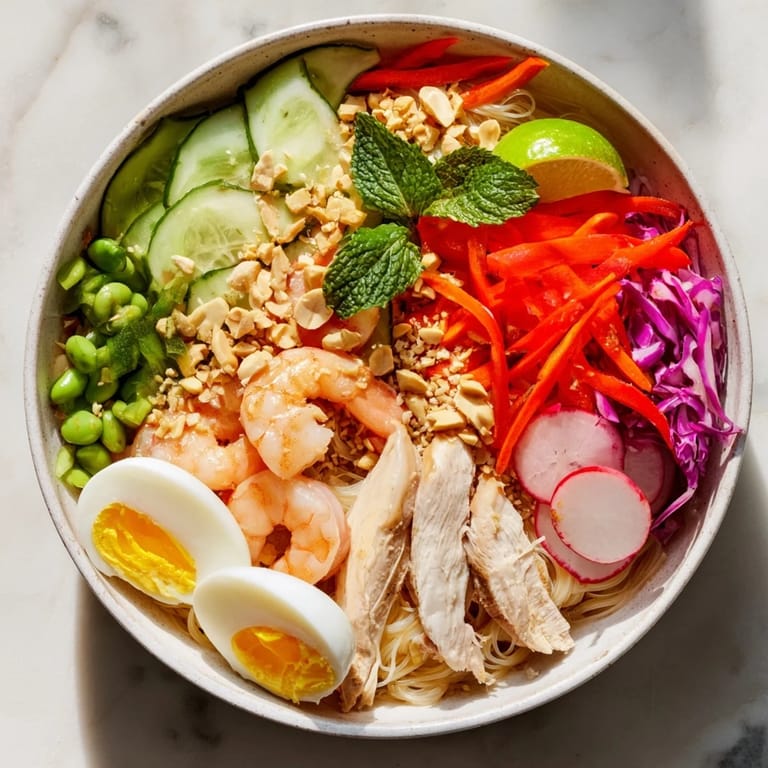
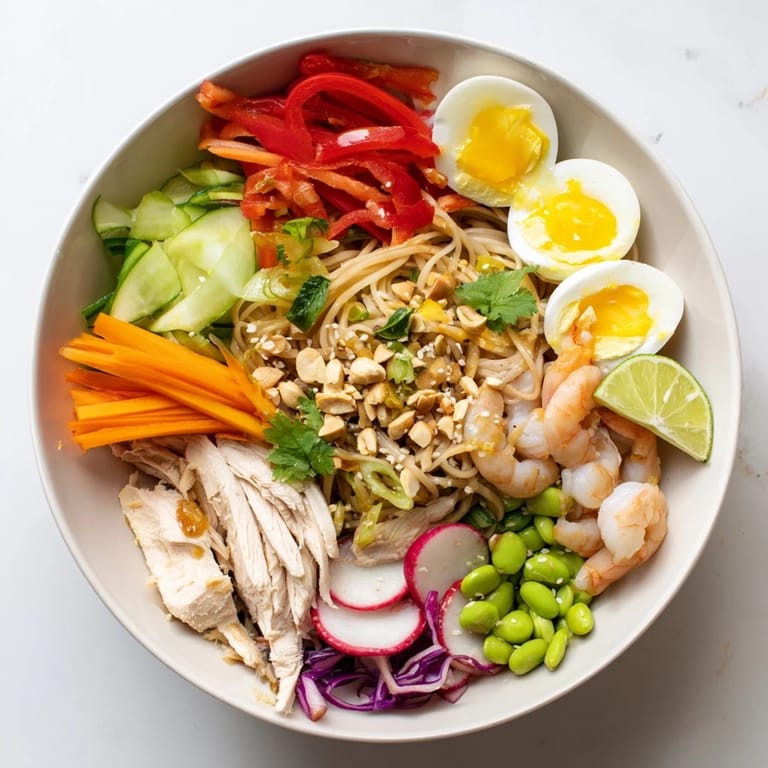
- Take your large board or platter and visualize it as a canvas. This is where you get to be creative. Some people arrange vegetables in neat rows; others prefer fans or staggered piles. The key is creating visual balance—alternate colors so no single color dominates. Put your ingredients in a circular pattern, radiating outward from the center, or in parallel lines, whichever speaks to you. Step back and look at it periodically. If something feels off-balance color-wise, switch it. The beauty of this dish is that there's no single right way—just trust your instincts.
- Create your sauce center strategically:
- Place a divided bowl or four small bowls in the very center of your board. This is the focal point. If you're using four small bowls, arrange them in a small cluster. If you're using a divided bowl, fill each quadrant with a different sauce: soy in one section, peanut sauce in another, hoisin in a third, and sweet chili in the fourth. Each sauce should be clearly visible and distinct in color. This isn't just functional; it's the visual anchor that tells your guests this is a special, thoughtfully prepared meal.
- Fill the spaces with proteins and noodles:
- Once your vegetables are arranged, create distinct sections for your cooked chicken, shrimp, and halved eggs. Keep them separate so guests can easily identify what they're grabbing. These are your premium components, so give them their own real estate on the board. Fill remaining gaps with the cooled noodles, piling them gently so they look abundant but not chaotic. Scatter them in places that break up the vegetable sections and create flow across the board.
- Finish with the flourishes that make it shine:
- This is the final magic. Right before serving—and I mean right before, not hours before—scatter your fresh cilantro and mint leaves across the board. Sprinkle the chopped peanuts and toasted sesame seeds in clusters, especially over the noodles and proteins. Tuck lime wedges into any remaining gaps. These finishing touches should look intentional but not overdone. You want the board to look abundant and inviting, but still organized enough that your guests can actually see what they're choosing from.
- Serve with openness and invitation:
- Place the board in the center of the table where everyone can reach it easily. A gentle announcement like, "Build your own bowl—there's no wrong combination" gives your guests permission to experiment. Watch as they lean in, select their favorites, and discover unexpected pairings. This is the moment when a beautiful board becomes a memory.
 Save
Save A few years ago, I made this board for my partner on a random Tuesday evening when they'd had a hard day at work. Nothing fancy, just an ordinary dinner. But I watched their face change when I set it down. They got to choose exactly what they wanted, build something uniquely theirs, and for those few hours around the table, the stress of their day seemed to melt away. That's when I realized this recipe was never just about the food—it was about giving people permission to slow down, to play a little, to feel seen and cared for.
The Art of Building Your Own Bowl
The magic of this noodle board happens when you give your guests agency. Instead of plating everything for them, you're offering a canvas where each person creates exactly what they want. Some people will want mostly vegetables and light sauce. Others will pile their bowls high with noodles and shrimp and multiple sauces mixed together. Both approaches are perfect. This flexibility is what makes the board feel special and personal. It transforms dinner from something you're serving them into something they're creating alongside you.
Making It Ahead: A Practical Timeline
If you're hosting and want to minimize stress, here's what I've learned through trial and error. You can prep all your vegetables up to 4 hours ahead—slice them, store them in separate containers, and keep them in the refrigerator. Cook your proteins and noodles up to 2 hours ahead and keep them at room temperature (cold noodles are actually more appealing than warm ones on a board like this). Toast your sesame seeds and peanuts the morning of. The only things that must happen in the final 30 minutes are arranging the board itself and adding the fresh herbs, lime wedges, and sauce. This approach means you can spend your evening actually enjoying your guests instead of frantically slicing vegetables while they're arriving.
Variations and Personal Touches
This board is incredibly adaptable, and I encourage you to make it your own. Vegetarians can easily skip the shrimp and chicken—the tofu, eggs, edamame, and abundance of vegetables make it completely satisfying. If someone has a peanut allergy, simply leave off the peanut sauce and peanuts; the other three sauces are enough. I sometimes add pickled vegetables or kimchi for extra tang and funk—they add a sophisticated depth that people find surprising and delicious. Some evenings I'll add thin-sliced beets for earthiness, or crispy chickpeas for extra crunch. The point is, this is a template, not a rule book. Use it as a starting place and let your own preferences and what's in your kitchen guide you.
- Try adding crispy wonton strips scattered over the noodles for textural contrast.
- A drizzle of sriracha or chili-garlic oil over the sauces adds even more heat for spice lovers.
- Swap the proteins entirely—Vietnamese pâté, grilled tofu, cooked duck, or even canned tuna work beautifully.
 Save
Save Every time I make this board, I'm reminded that cooking isn't just about technique or perfect ingredients—it's about creating space where people feel welcome, seen, and free to enjoy exactly what brings them joy. That restaurant visit that inspired this recipe taught me something unexpected: the most memorable meals aren't always the most complicated. They're the ones where someone took time to think about your happiness.
Common Questions
- → What types of noodles work best for this dish?
Rice noodles or soba noodles are ideal, as they absorb sauces well and offer a tender yet firm texture.
- → How can I make the platter vegetarian?
Substitute chicken and shrimp with firm tofu and ensure dipping sauces contain no animal products to keep it vegetarian.
- → What are some suitable dipping sauces for this board?
Popular choices include soy sauce, spicy peanut sauce, hoisin, and sweet chili sauce, each adding unique flavor profiles.
- → How should the vegetables be prepared?
Fresh vegetables should be thinly sliced or julienned to create an appealing arrangement and easy serving.
- → Can this dish accommodate gluten-free diets?
Yes, use tamari instead of soy sauce and verify all sauces are gluten-free to make this dish suitable for gluten sensitivities.