 Save
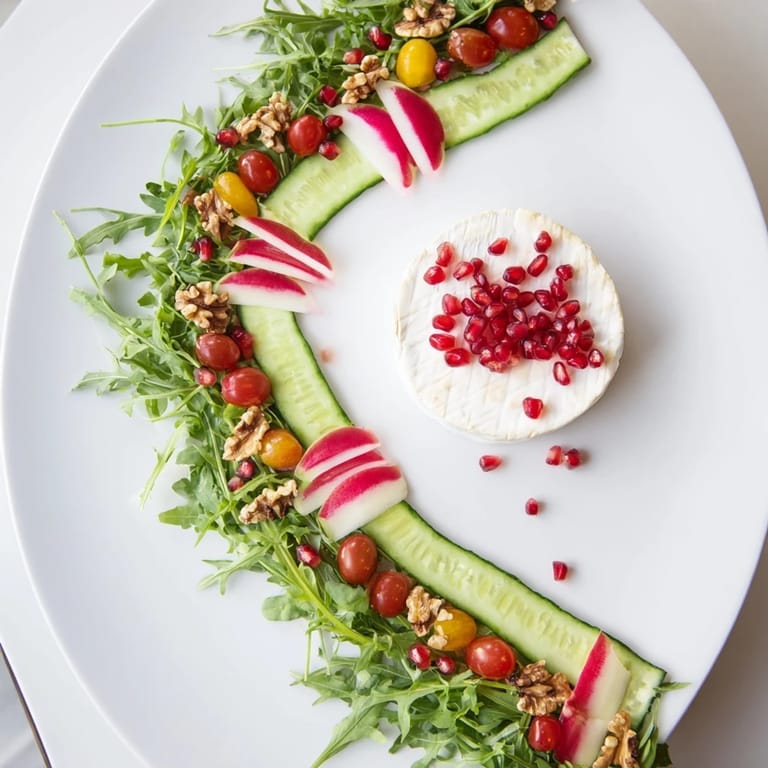
Save I discovered this salad while flipping through a coffee-table book on plated presentations, mesmerized by how the photographer had arranged vegetables in perfect radiating lines toward a glowing wedge of cheese. It struck me as impractical, honestly—until I tried it for a dinner party and watched my guests lean in, not just to eat, but to admire. The geometry of it all felt like edible art, and suddenly the extra five minutes of careful arrangement didn't feel like work anymore.
My sister visited last spring when the farmers market was overflowing with the first good produce of the season. She helped me arrange this salad on our biggest board, and we kept stepping back to squint at it like we were curating a museum exhibition. She laughed and said it was the first salad she'd seen that deserved a placard. That night, someone asked for seconds—and thirds, really—just sliced more cheese and kept going.
Ingredients
- Fresh baby arugula: Its peppery bite cuts through the richness of the cheese and keeps everything from feeling heavy; buy it pre-washed but rinse it again because sand hides in those tender leaves.
- Cherry tomatoes, halved: These little gems offer bursts of acidity and sweetness; choose ones that are fully ripe or they'll taste like nothing and ruin your geometry.
- Cucumber, thinly sliced: The watery crunch provides textural contrast and a cooling effect that balances everything else; a mandoline makes this foolproof but a sharp knife works too.
- Watermelon radish, thinly sliced: This is your visual anchor besides the cheese—those pink and white concentric circles are what make people stop and stare; if you can't find one, use regular radishes but you'll lose some of the drama.
- Pomegranate seeds: They're there for tartness, visual pop, and the satisfying little burst they make between your teeth; buy them pre-seeded if time is short.
- Toasted walnuts: Toast them yourself in a dry pan for two minutes to wake up their natural oils and flavor, which makes all the difference compared to raw.
- Extra-virgin olive oil: Don't waste a premium oil here—use something you actually like tasting because it's the backbone of your dressing.
- White balsamic vinegar: It's gentler than dark balsamic and won't stain your pale vegetables or overpower with vinegar taste; regular balsamic works but will darken everything.
- Honey: Just a touch to round out the acidity and add a whisper of sweetness that makes people wonder what the secret ingredient is.
- Dijon mustard: It acts as an emulsifier to help the dressing cling to things, plus adds a subtle spicy sophistication that elevates the whole affair.
- Artisanal cheese wheel: This is your star; pick something with a soft interior that will yield to a knife—Saint-Marcellin is absolutely perfect, but Brie, Camembert, or even a young goat cheese round will work beautifully.
Tired of Takeout? 🥡
Get 10 meals you can make faster than delivery arrives. Seriously.
One email. No spam. Unsubscribe anytime.
Instructions
- Choose your stage:
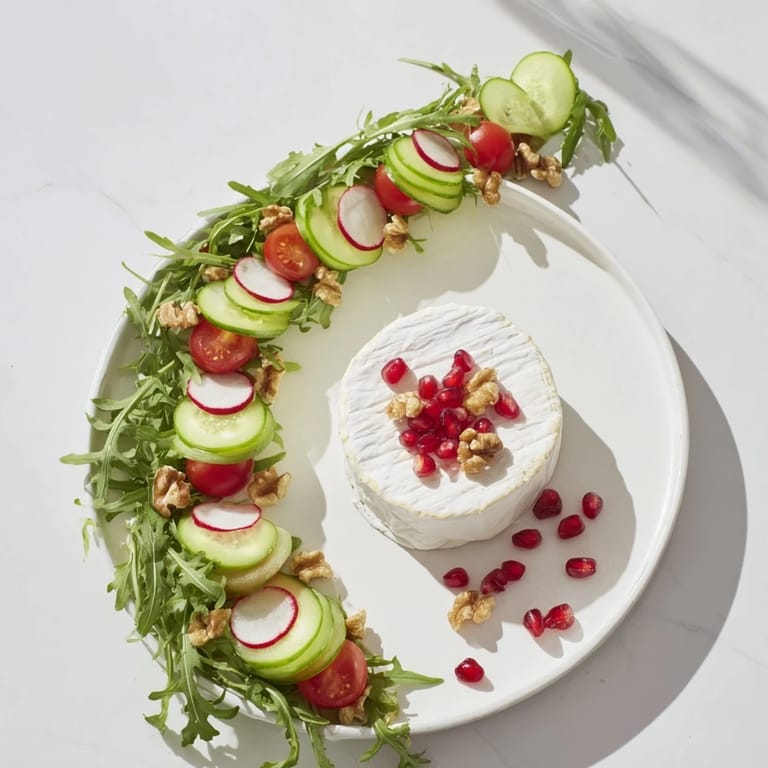
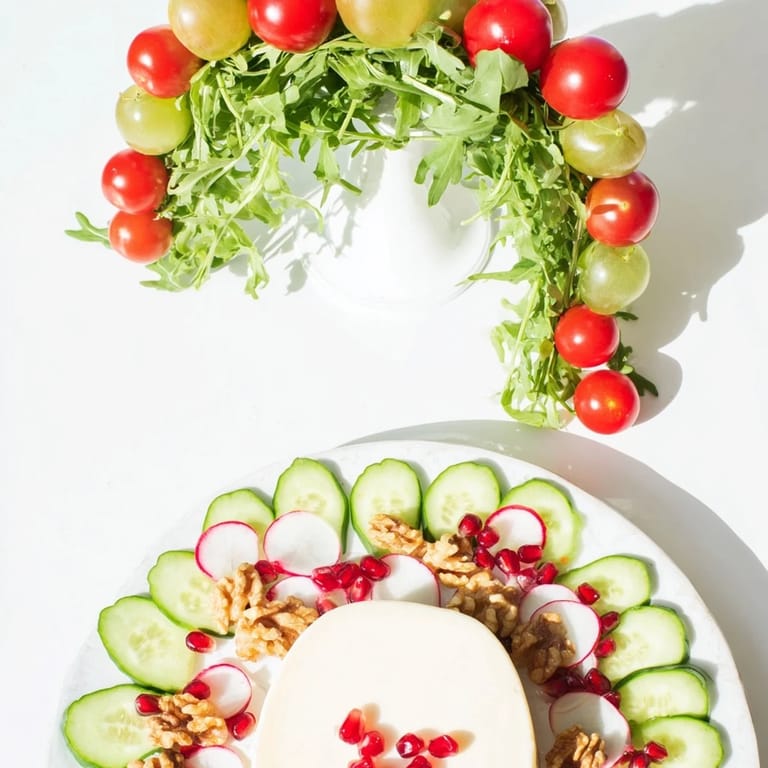
- Select a large platter or wooden board as your canvas—the bigger the better because you want plenty of empty space between ingredient lines to really see the radial pattern. If you have a small pedestal or shallow bowl, place the cheese wheel on it in one corner; if not, just rest it on the board directly. Either way, position it off-center so the arrangement has somewhere to flow toward.
- Create your arugula rays:
- Gently lay the arugula in a sweeping arc that radiates outward from the cheese like lines of light emanating from a source. Don't pack it too densely—let some board show through so the lines stay crisp and visible. The motion should feel deliberate, almost reverent, as you're literally pointing everything toward the center.
- Layer with intention:
- Arrange your tomato halves in a row parallel to your arugula arc, then the cucumber slices, then the watermelon radish thin enough to see light through them. Keep them all angled toward the cheese wheel—this consistency is what creates the optical magic. Step back between each layer to make sure your geometry is holding.
- Scatter your accents:
- Sprinkle pomegranate seeds and walnuts along the arranged vegetables, letting them fall naturally but still respecting the directional flow. These aren't random—they're the final brushstrokes that complete the composition.
- Mix your dressing:
- In a small bowl, whisk the olive oil, white balsamic, honey, and Dijon mustard together until it emulsifies into something silky and pale. Taste it and adjust—you want equal parts bright and rich, with just enough mustard to know it's there.
- Finish with restraint:
- Drizzle the dressing very lightly across the vegetables, completely avoiding the cheese wheel so it stays pristine and untouched. Use less than you think you need; the dressing will pool on the board and people can dip or drizzle as they plate.
- Present and serve:
- Bring this straight to the table while everything is still cool and the vegetables haven't started to wilt. Invite people to cut a wedge of cheese and combine it with whatever vegetables appeal to them—the cheese becomes warmer and softer as it sits, which is exactly what you want.
 Save
Save A friend once told me that food is the only art form you can eat, and this salad felt like proof of that philosophy. There's something about how people slow down when confronted with something beautiful on the table—they look first, then think about how to approach it. It transforms a salad from sustenance into an experience, and honestly, that's worth the few extra minutes of arrangement.
The Cheese Wheel as Centerpiece
The magic of this dish lives entirely in the cheese wheel—it's the reason everyone will talk about this salad, the detail that lingers in memory. You're not just choosing a cheese, you're selecting the emotional heart of the plate. A creamy, yielding cheese invites guests to cut exploratory wedges, while something more assertive creates bolder flavor combinations with the vegetables. Watching someone taste the combination of sharp watermelon radish against the buttery softness of the cheese is watching a small revelation happen. The cheese also dictates your flavor direction: go herbed goat for tangy brightness, Camembert for classic elegance, or something blue for unexpected richness.
Building the Visual Narrative
Every vegetable on this board has a supporting role in a visual story that leads back to one point. The pale arugula creates softer, wispy lines, while the geometric precision of the cucumber and radish introduces structure. The pomegranate seeds and walnuts are your punctuation marks, the moments your eye lands and rests. This isn't about perfection—it's about intention. A slightly irregular line of tomatoes feels more handmade and human than something robotically precise. The arrangement should reflect the person cooking it, not some impossible standard from a design magazine.
Pairing and Serving Thoughts
This salad doesn't want to be rushed; it's meant to be lingered over and shared, which makes it a natural centerpiece for the whole meal rather than just a first course. The wines mentioned—a crisp Sauvignon Blanc or a delicate dry rosé—act like extensions of the salad itself, adding another layer of freshness and sophistication. You can build an entire evening around this single plate, adding crusty bread, a good cheese board of other varieties, maybe some cured meats if you're feeling generous.
- Prepare all your vegetables first, then assemble the entire salad only when you're ready to serve to keep everything fresh and vibrant.
- If you're feeding more than four people, make two smaller arrangements rather than one oversized board that looks depleted once a few people have served themselves.
- Remember that the dressing should kiss the vegetables gently, never drown them, so every element stays crisp and defined.
 Save
Save This salad taught me that how we present food matters as much as how it tastes, and that sometimes the simplest ingredients shine brightest when they're arranged with care. It's become my answer to the question of how to make people feel welcome and celebrated at a table.
Common Questions
- → What types of cheese can be used as the centerpiece?
Soft-ripened cheeses like Saint-Marcellin, Brie, Camembert, or Humboldt Fog work well for the centerpiece, offering creamy textures and mild flavors.
- → Can the salad be made vegan?
To make it vegan, replace the cheese wheel with a plant-based alternative and ensure the dressing excludes honey.
- → What dressing complements this salad?
A light dressing of extra-virgin olive oil, white balsamic vinegar, honey, Dijon mustard, salt, and black pepper balances the fresh ingredients and adds subtle acidity.
- → How should the salad be served for best presentation?
Arrange ingredients radiating outward from the cheese wheel on a large platter, creating a striking visual effect that invites guests to mix flavors.
- → Are there options to add protein?
For added protein, thinly sliced prosciutto or smoked salmon can be incorporated, complementing the fresh produce and cheese.
- → What nuts are included and can they be substituted?
Toasted walnuts add crunch and earthiness, but toasted pecans or almonds can be good alternatives based on preference or allergies.