 Save
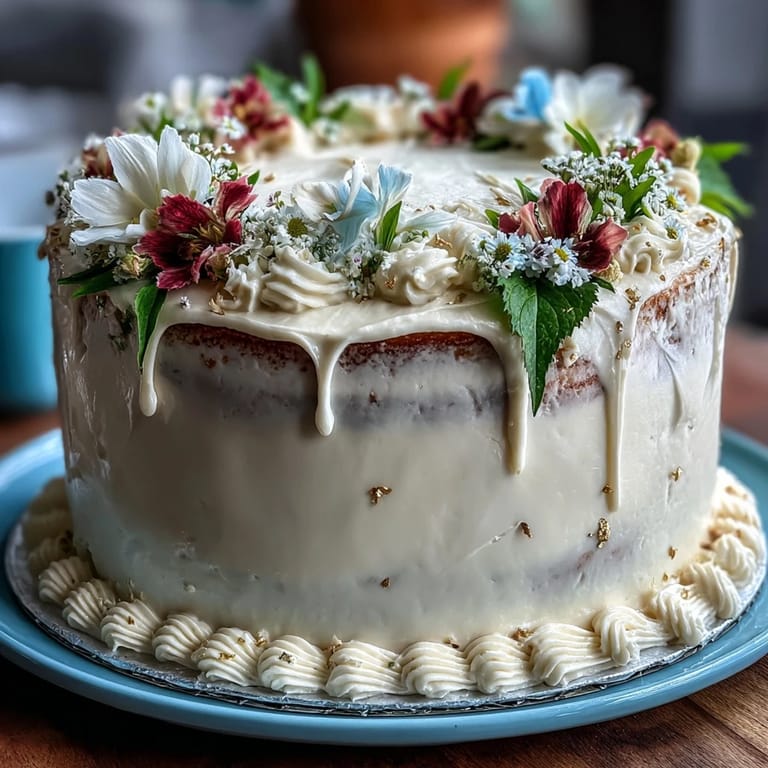
Save My friend texted me at midnight asking if I could make her a cake by the next evening. She'd just graduated and turned twenty-five, and there was something about her Taurus stubbornness that made me say yes before thinking it through. By morning, I had three cake pans lined and a color palette spread across my counter like I was about to paint a masterpiece. This vanilla cake became the canvas, the buttercream my palette, and watching her face when she saw those piped flowers made every rushed minute worth it.
I still laugh thinking about how I called my mom midway through piping because my petal tips kept clogging. She told me to thin the buttercream slightly, and suddenly these delicate roses started appearing like magic. That cake sat in the fridge for three hours while I obsessed over whether the gold leaf looked tacky or elegant, and when I finally set it on the table, the birthday girl cried actual tears.
Ingredients
- All-purpose flour (2 1/2 cups): The structure that holds everything together; make sure it's fresh and room temperature ingredients blend better with it.
- Baking powder (2 1/2 tsp): This is what gives the cake its tender crumb and slight lift; don't skip the sifting step or you'll get dense pockets.
- Salt (1/2 tsp): Sounds tiny but it balances the sweetness and makes the vanilla sing louder than you'd expect.
- Unsalted butter (1 cup for cake, 1 1/2 cups for frosting): This is where the flavor lives; softened butter at room temperature creams properly and creates that light, fluffy texture.
- Granulated sugar (2 cups): Beaten long enough with butter, it creates tiny air pockets that make the cake tender and moist.
- Eggs (4 large, room temperature): Cold eggs don't incorporate smoothly, so pull them out thirty minutes before baking; this matters more than you think.
- Pure vanilla extract (1 tbsp for cake, 2 tsp for frosting): Pure extract has actual vanilla flavor, not that artificial sharpness; it's worth the extra cost.
- Whole milk (1 cup, room temperature): Temperature matters here too; cold milk can seize the batter and create a grainy texture.
- Powdered sugar (5 cups): Sift it even if the bag says it's already sifted, because lumps in frosting are impossible to pipe through smoothly.
- Heavy cream or milk (2-4 tbsp): Start with two tablespoons and add more to reach the exact consistency you need; too thick and piping becomes painful, too thin and your flowers lose shape.
- Gel food coloring: Gel doesn't thin your frosting like liquid dyes do, so your colors stay vibrant and your consistency stays perfect for piping.
- Edible gold leaf or gold sprinkles: A small accent that says you went the extra mile; optional but it transforms the cake into something that feels truly celebratory.
- Piping tips: Invest in at least a petal tip and a leaf tip; they're inexpensive and completely change what you can create.
Tired of Takeout? 🥡
Get 10 meals you can make faster than delivery arrives. Seriously.
One email. No spam. Unsubscribe anytime.
Instructions
- Set up your workspace:
- Preheat to 350°F and grease three 8-inch round pans, lining the bottoms with parchment paper so the cakes slide out cleanly. Have everything measured and ready before you start mixing because once you begin, it moves fast.
- Build the dry mixture:
- Whisk flour, baking powder, and salt together in a bowl; this aerates the flour and distributes the leavening evenly. Set it aside and don't skip this step thinking you can just dump everything together.
- Cream the butter and sugar:
- Beat softened butter and granulated sugar on medium speed for three to four minutes until it's pale and fluffy, like whipped clouds. This creaming process is what makes the cake tender; rushing it creates a dense crumb.
- Add eggs one at a time:
- After each egg, beat well so it fully incorporates before adding the next one; this ensures even distribution and prevents a curdled appearance. The mixture should look smooth and creamy, not broken or separated.
- Alternate wet and dry ingredients:
- Start with flour, then milk, then flour again, mixing just until combined each time; overmixing develops gluten and toughens the cake. The batter should look smooth and pourable, not overworked.
- Divide and bake:
- Pour batter evenly among the three pans and smooth the tops; bake for 28 to 35 minutes until a toothpick comes out clean. Cool in pans for ten minutes, then turn out onto wire racks to cool completely.
- Make the buttercream:
- Beat softened butter on medium speed until creamy, then gradually add sifted powdered sugar while beating; this prevents lumps and incorporates air for a fluffy texture. Add vanilla and cream one tablespoon at a time until you reach a pipeable consistency.
- Color your frosting:
- Divide buttercream into bowls and tint each with gel coloring, using a toothpick to add color drop by drop; it's easier to add more than to lighten it. Let the colors sit for a minute so you can see the true shade.
- Assemble the layers:
- Place the first cake layer on a plate and spread buttercream on top, repeat with the remaining layers, and level each cake with a serrated knife if they're domed. This creates a sturdy, level cake that doesn't wobble.
- Apply the crumb coat:
- Spread a thin layer of buttercream over the entire cake, chill for twenty minutes, then apply the final smooth coat; the crumb coat traps loose crumbs so your final layer stays clean. This is the secret to a polished appearance.
- Pipe your florals:
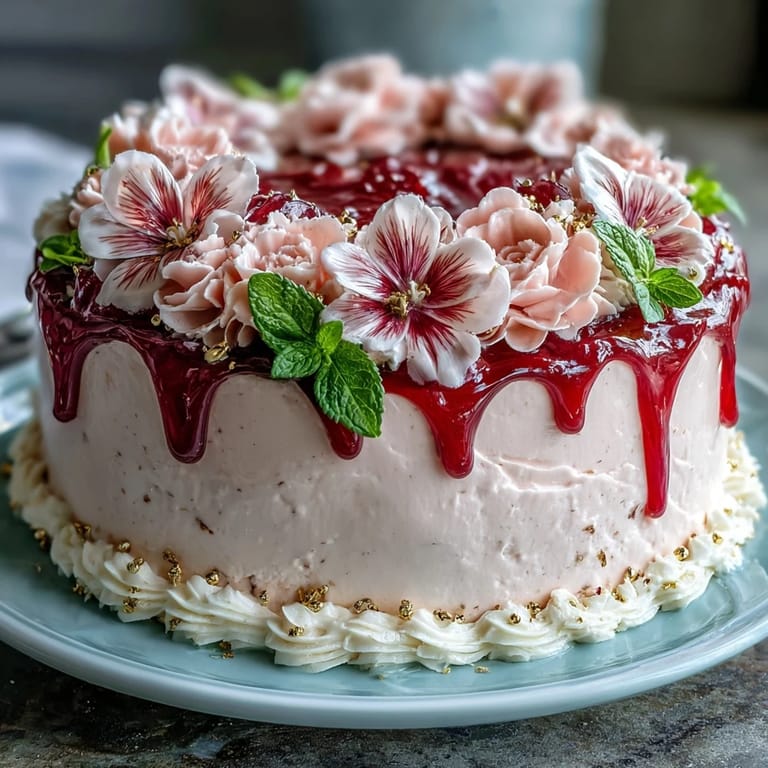
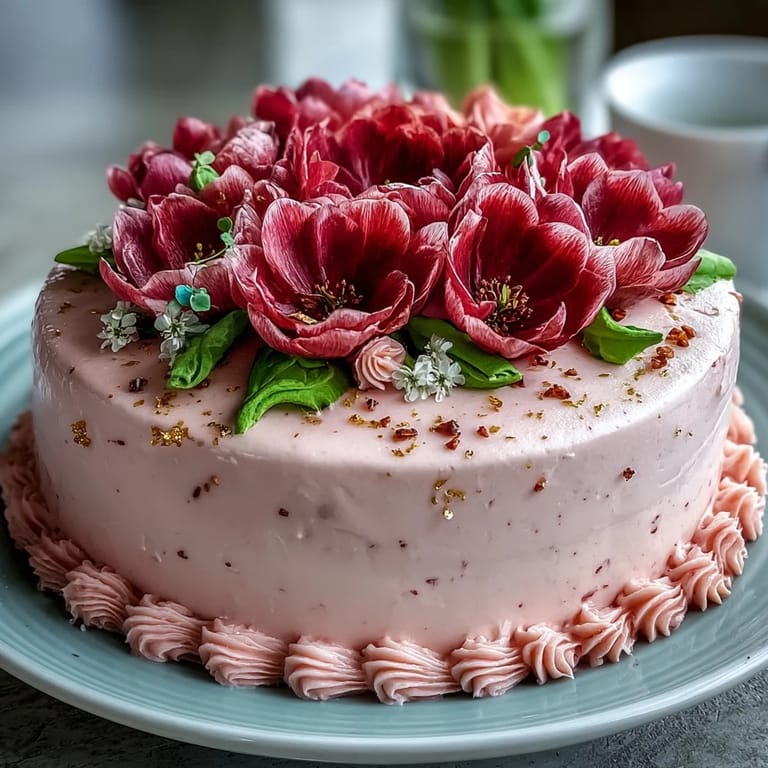
- Fill piping bags with colored buttercream and use petal tips for flowers and leaf tips for greenery; work around the cake in sections so you don't second-guess yourself. Step back occasionally to see the design balance.
- Add the final touches:
- Place gold leaf gently with tweezers or sprinkle gold dust around your flowers; chill until serving time. Bring the cake to room temperature for fifteen minutes before slicing so the flavors come through.
 Save
Save The moment that stuck with me wasn't actually during the decorating—it was the next morning when I got a photo of the empty cake plate with a note that said 'best graduation gift ever.' She'd saved a slice and eaten it while looking at old photos from childhood, and somehow a cake I'd stressed over became part of her memory of that milestone.
Why Floral Buttercream Is Actually Easier Than It Looks
The first time I attempted a petal tip, I thought I'd need to take a class. What I learned instead is that piping is just muscle memory and repetition, not artistic talent. Start with simple roses by holding the tip sideways and rotating the cake slightly, letting gravity and the shape of the tip do most of the work. After five roses, your brain figures out the rhythm and suddenly you're creating something beautiful without overthinking it.
Personalizing This Cake for Your Celebration
The Taurus symbol can be piped in gold or silver food coloring, or you can use edible markers to draw it on a fondant circle placed on top. If it's a graduation cake, consider incorporating the school colors into your floral palette or piping a tiny cap somewhere subtle. These small personal touches transform a beautiful cake into one that feels made specifically for that person, which is honestly the whole point.
Storage and Serving Tips
This cake actually improves slightly after sitting overnight because the flavors mellow and the crumb sets; bake it the day before if your timeline allows. Store it in a cake box or under a loose cake cover in a cool room for up to three days, and bring it to room temperature for fifteen minutes before slicing for the best texture and flavor.
- If you're piping ahead of time, pipe flowers onto parchment, chill them until firm, then transfer them to the finished cake using a thin offset spatula.
- A cake turntable makes decorating easier but isn't essential; even with just a plate, you can rotate as you go.
- If your buttercream becomes too soft from piping, pop it back in the fridge for five minutes to firm up.
 Save
Save Making this cake is less about following rules perfectly and more about showing up for someone on a day that matters. The imperfect flowers are the ones that feel real and memorable.
Common Questions
- → What is the best way to achieve smooth buttercream frosting?
Beat softened butter until creamy, then gradually add sifted powdered sugar. Incorporate vanilla and cream slowly, beating until fluffy for a smooth texture.
- → How do I prevent the cake layers from drying out?
Ensure not to overbake the layers and allow them to cool completely on wire racks before frosting to maintain moisture.
- → What piping tips work best for floral designs?
Petal, leaf, and round tips are ideal for creating various floral motifs and detailed decorations on the cake.
- → Can I prepare the buttercream decorations in advance?
Yes, floral buttercream can be piped onto parchment and chilled before transferring, allowing for intricate designs ahead of time.
- → What ingredients enhance the vanilla cake flavor?
Adding a teaspoon of almond extract to the batter enriches the flavor profile subtly without overpowering the vanilla.