 Save
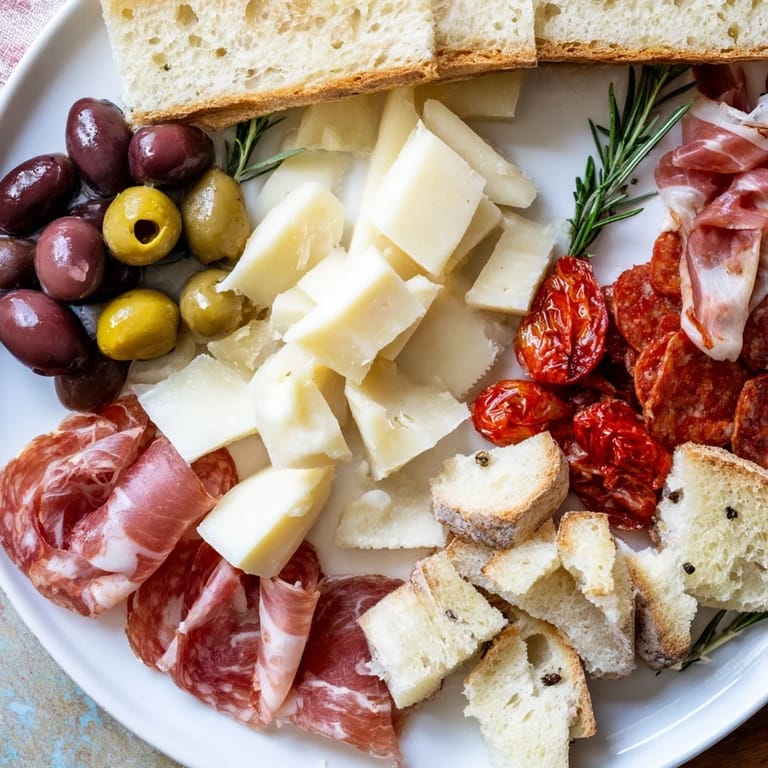
Save I'll never forget the first time I stood in a small trattoria in Tuscany, watching an elderly woman arrange an enormous wooden board with such care and intention. She moved slowly, almost ceremonially, placing chunks of cheese, draped meats, and crusty bread as if she were composing a painting. That moment taught me that the most memorable meals aren't always complicated—sometimes they're just about gathering the best ingredients and letting them speak for themselves. This Rustic Italian Farmhouse Board became my love letter to that experience, a way to bring that countryside generosity straight to my own table.
I served this board at a dinner party last spring when a dear friend was visiting from Italy, and I watched her eyes light up as she recognized the flavors of home. She sat there for hours, picking thoughtfully, sharing stories about markets in Rome and Sunday lunches with family. That's when I understood—a board like this isn't just food, it's an invitation to slow down and connect.
Ingredients
- Parmigiano-Reggiano, 200 g broken into large chunks: This is the backbone of authenticity—its sharp, crystalline bite cuts through the richness of other ingredients. Always break it with your hands or snap it with a cheese knife rather than slicing; those irregular shards catch the light and invite people to pick.
- Pecorino Toscano, 200 g cut into wedges: Sharper and more peppery than Parmigiano, this sheep's milk cheese adds a distinct character. Cut it into wedges so people can tear off pieces at their own pace.
- Taleggio, 150 g torn into rustic pieces: This is your wild card—creamy, funky, and pale pink with a washed rind. Tear it rather than cutting; it feels more generous and shows off its texture.
- Prosciutto di Parma, 150 g loosely piled: The soul of any Italian board. Let it cascade and fold naturally—those loose drapes are what make it look abundant and inviting. Never stretch it thin or arrange it too neatly; that takes away its elegance.
- Finocchiona salami, 120 g thickly sliced: This Tuscan salami studded with fennel seeds brings a subtle licorice note that balances the board beautifully. Slice it thick so people can taste its texture.
- Coppa, 120 g arranged in rustic folds: Marbled with fat, this meat is forgiving and flavorful. Let it fold on itself naturally for visual drama.
- Large rustic Italian loaf like ciabatta, torn into rough pieces: Your canvas for everything else. Tear it the day of serving so it's still tender but structured enough to hold toppings.
- Castelvetrano olives, 1 cup: These buttery green olives are milder than other varieties and won't compete—they're the peacekeepers of the board.
- Sun-dried tomatoes in olive oil, 1 cup drained: These add visual warmth and concentrated flavor. Drain them well so they don't weep oil across your beautiful board.
- Marinated artichoke hearts, 1 cup quartered: These bring bright acidity that refreshes the palate between bites of rich cheese and meat.
- Fresh grapes or figs, 1 small bunch halved: Fruit is your secret weapon—the sweetness and juiciness cut through richness and add unexpected elegance. I prefer figs in autumn, grapes in spring.
- Extra-virgin olive oil, 1/4 cup for drizzling: Use something genuinely good here. This final drizzle is what ties everything together and says 'I care.'
- Fresh rosemary sprigs for garnish: These aren't just decoration—scattered across the board, they perfume everything and make people feel like they're dining in Tuscany.
- Coarse sea salt and cracked black pepper to taste: Apply these right before serving, as salt will draw moisture from the cured meats if it sits too long.
Tired of Takeout? 🥡
Get 10 meals you can make faster than delivery arrives. Seriously.
One email. No spam. Unsubscribe anytime.
Instructions
- Start with your foundation:
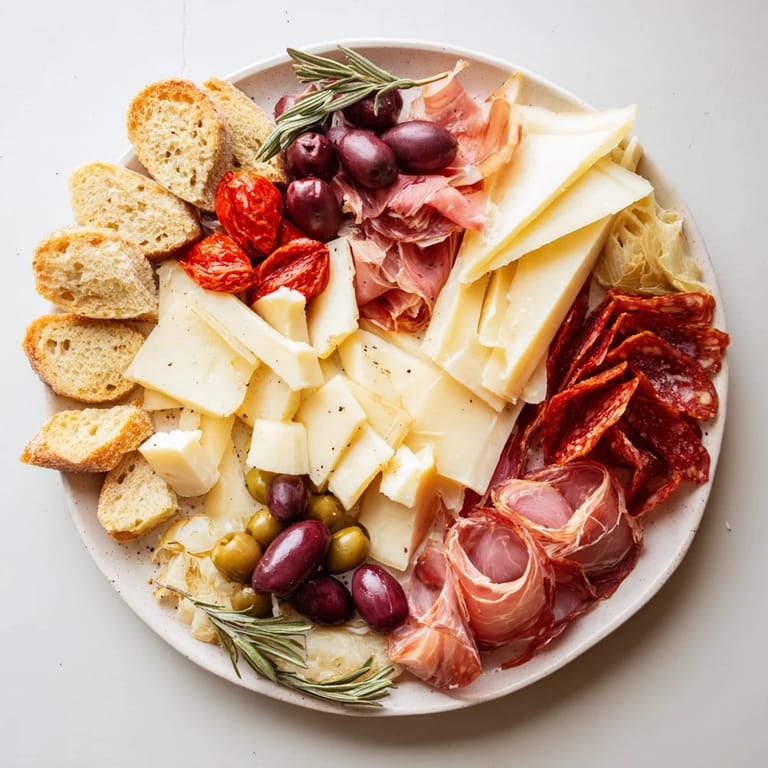
- Place your wooden board in front of you like you're about to paint. Take your time arranging the cheese chunks first—Parmigiano in one area, Pecorino wedges nearby, then tear the Taleggio into pieces and scatter them. There's no right way; you're creating a landscape of textures and colors. Step back and look at what you've created before moving forward.
- Layer in the meats:
- Now comes the fun part. Take your prosciutto and let it drape and fold across the board in loose piles—think romantic, think abundant, think 'a peasant's feast.' Arrange your salami slices in overlapping layers like roof tiles. Fold the coppa naturally on itself. Don't make it look planned; make it look generous and full of movement.
- Scatter the bread:
- Tear your rustic loaf into rough, uneven pieces—some larger, some smaller. This variety is what makes it feel authentic and inviting. Scatter these pieces around the board, nestling some between the cheese and meats, leaving others as little invitations at the edges.
- Add the supporting cast:
- In the empty pockets of your board, add generous piles of olives, sun-dried tomatoes, artichoke hearts, and fruit. Don't be shy. Use small bowls if you prefer for the very oily items, but nestle them right into the board. This is about abundance and invitation.
- Finish with intention:
- Drizzle a little extra-virgin olive oil over the bread pieces and across some of the cheese. Scatter fresh rosemary sprigs across the entire board—tuck them between ingredients, let them break up the composition. The rosemary should feel random but planned, decorative but also edible.
- Season and serve:
- Just before people gather, finish with a light sprinkle of coarse sea salt and cracked black pepper. Serve immediately, while the bread is still tender and everything is fresh. Watch your guests' faces as they approach the board—that moment of hesitation followed by joy is everything.
 Save
Save I learned something profound while arranging my first board: this isn't really about feeding people, it's about honoring the people you're feeding. When someone takes time to select authentic ingredients and arrange them with care, they're saying 'I value you enough to do this properly.' That recognition, that intentionality—that's what lingers long after the last olive is gone.
Choosing Your Wooden Board
The board itself is a character in this story. I learned early on that wood conducts temperature differently than ceramic or marble—your cheeses stay at the perfect temperature longer. Hunt for a large board with a slight wood grain that shows off the colors of what you're arranging. Some boards have wells for olives or a small moat for oil; these are genuinely helpful. I've found that 16 by 24 inches is the perfect size for six people—large enough to feel generous, but not so vast that the center looks empty. Oil your board with food-safe mineral oil before serving to deepen the color and protect the wood.
Wine Pairings and Serving Strategy
This board is designed to be a journey, not a single meal. Pour a Chianti Classico or a robust Sangiovese—something with enough structure to stand up to the salty cured meats and rich cheeses. I've learned that people eat boards differently than they eat plates. They linger. They come back multiple times. They discover new combinations as they go. Don't rush them. Instead, set out small plates and napkins, let people graze, encourage conversation. The magic happens in those moments between bites, when someone finds an unexpected flavor combination and shares it with the person next to them.
Variations and Personal Touches
Once you've mastered the basic structure, this board becomes a canvas for your creativity and what's available in your market. I've learned that the best boards reflect both tradition and your personal taste. In winter, I swap in roasted hazelnuts or candied walnuts for the fresh fruit. In autumn, I add fresh figs and maybe a drizzle of honey. I've experimented with adding thin slices of spicy Asiago when I want more bite, or creamy Gorgonzola when I'm feeling adventurous. Try adding roasted chestnuts for winter elegance, or pickled red onions for brightness. The framework stays the same—it's the details that make it yours.
- Swap out Finocchiona for Guanciale or Soppressata if you prefer different flavor profiles or can't find it locally.
- Add roasted almonds, candied walnuts, or toasted breadcrumbs to introduce unexpected texture and crunch.
- Include a small bowl of honey on the side—drizzle it over the Taleggio and watch people's reactions transform.
 Save
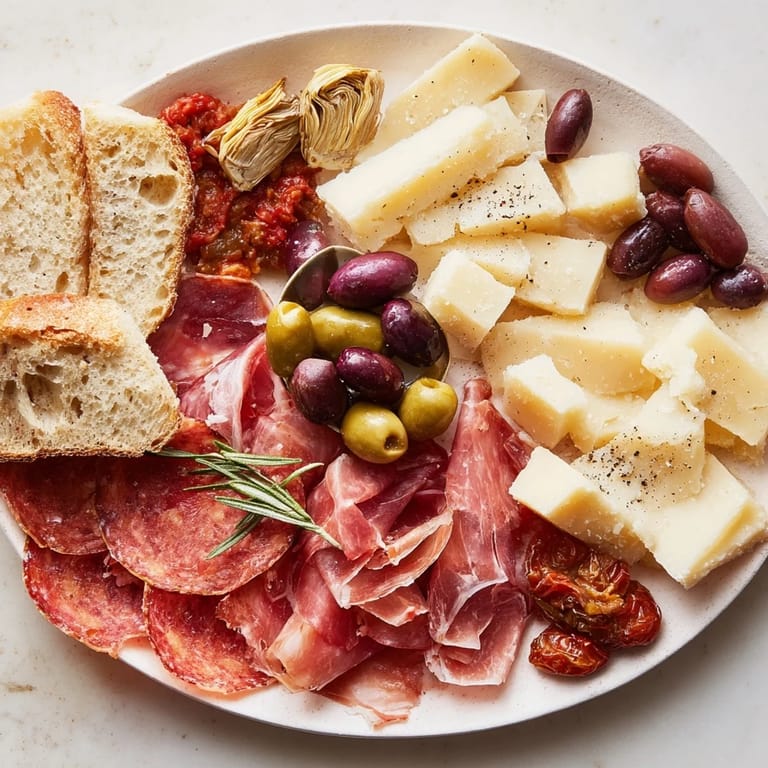
Save At its heart, this Rustic Italian Farmhouse Board is an act of hospitality. It says to the people gathering around it: 'Your company is worth my time and thoughtfulness.' Make it yours, trust your instincts, and remember that the most beautiful boards aren't the ones that look perfect—they're the ones that look loved.
Common Questions
- → What cheeses are ideal for this board?
Parmigiano-Reggiano, Pecorino Toscano, and Taleggio provide a variety of textures and flavors that complement the cured meats and accompaniments.
- → Can I substitute the cured meats?
Yes, similar quality cured meats like coppa, prosciutto, and salami create an authentic Italian flavor profile but you can adjust based on preference.
- → What bread works best for tearing?
A rustic Italian loaf such as ciabatta offers a sturdy yet airy texture that complements the richness of the cheeses and meats.
- → How should I arrange the board for best presentation?
Layer cheeses in chunks and wedges, pile cured meats loosely, and scatter torn bread pieces around. Place olives, sun-dried tomatoes, and fruits in clusters between for balance.
- → Are there suggested drink pairings?
Robust Italian red wines such as Chianti or Sangiovese enhance the flavors and match well with the savory components of the board.
- → How can I add extra texture to the board?
Including roasted nuts or pickled vegetables adds variety and crunch, enhancing both flavor and mouthfeel.