 Save
Save I discovered the magic of this salad on a sweltering July afternoon when my fridge was bursting with vegetables I couldn't ignore. My partner stood at the counter holding a red bell pepper, half-joking that we'd need to eat our way through the farmers market haul, and I suddenly saw an opportunity: what if I turned this abundance into something as beautiful as it was practical? The tahini dressing came together almost by accident, a creamy bridge that made each crisp vegetable sing instead of feel like punishment on a plate.
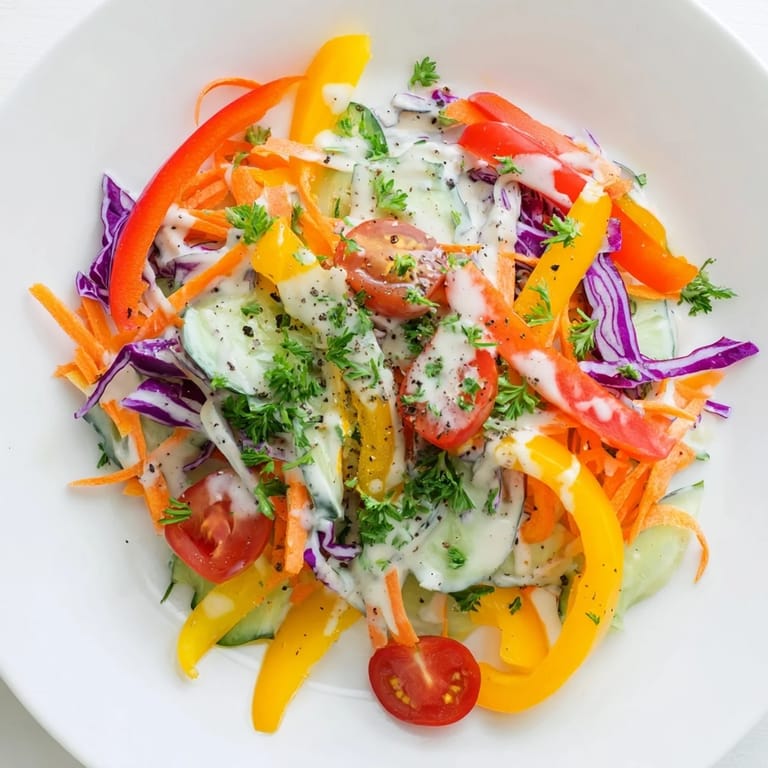
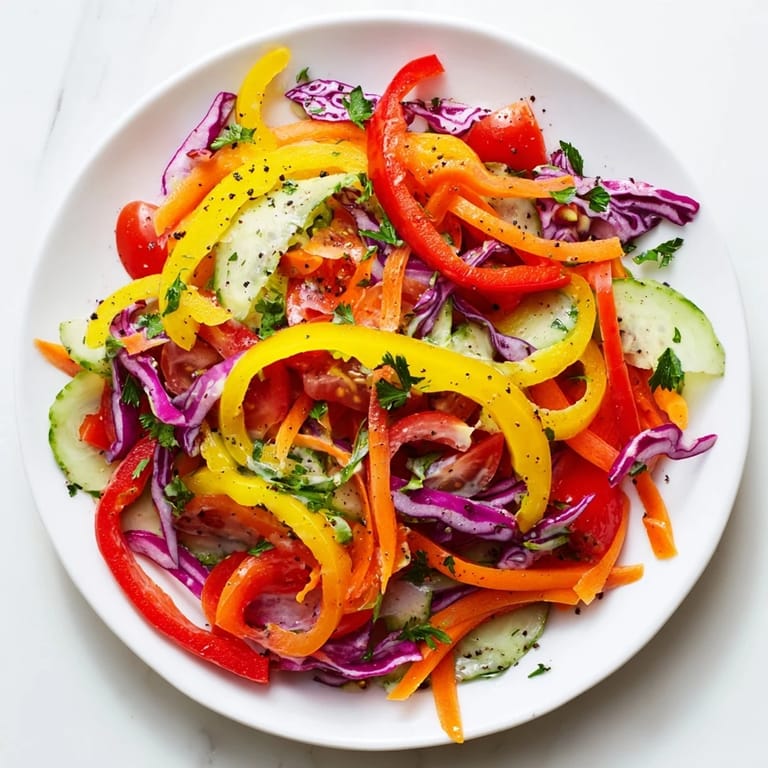
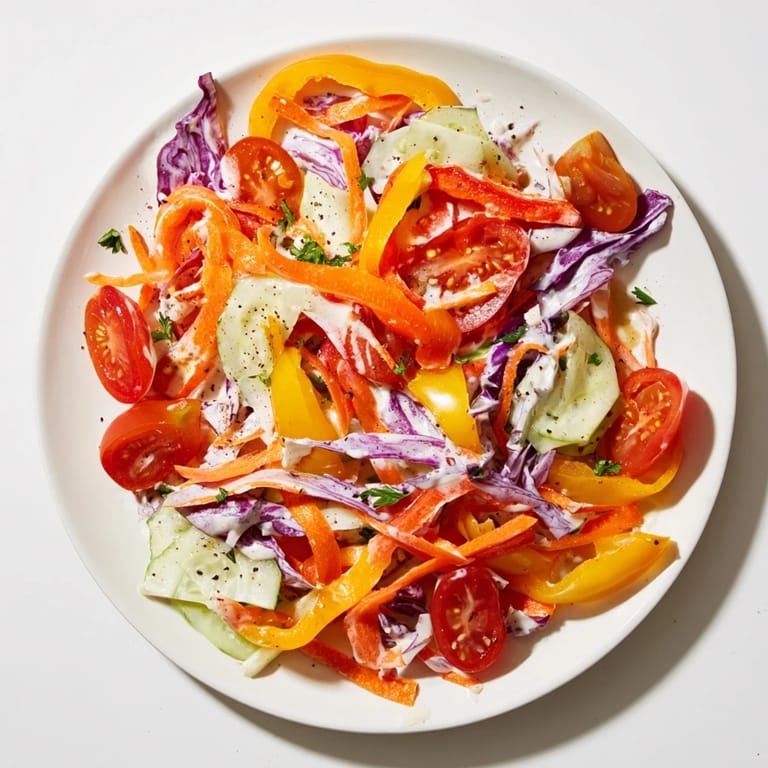
I've learned this salad is a quiet showstopper at potlucks, the kind of dish people keep going back to without quite understanding why. My friend Emma brought a fancy casserole to a summer gathering last year, but somehow half the table ended up talking about the colors on my salad board—how the purple cabbage looked almost unreal next to the yellow peppers. Moments like that remind me that food doesn't have to be complicated to feel special.
Ingredients
- Red bell pepper (1 cup, thinly sliced): Use ones that feel heavy for their size—they're sweeter and juicier, and that brightness matters when this is your star.
- Yellow bell pepper (1 cup, thinly sliced): Yellow peppers are slightly sweeter than red, so they balance any bitterness from the greens.
- Carrot (1 cup, julienned): Cut them into thin matchsticks so they stay crisp and don't overwhelm the other vegetables in texture.
- Purple cabbage (1 cup, shredded): This is your color anchor—it barely wilts and stays vibrant even if you make this the night before.
- Cucumber (1 cup, sliced): Add this last if you're prepping ahead, or it'll weep water into everything and make the dressing diluted.
- Cherry tomatoes (1 cup, halved): Halving them instead of leaving whole keeps them from rolling around your plate and makes them easier to eat with a fork.
- Sweet corn kernels (1/2 cup, cooked or canned): Fresh corn is best in summer, but frozen thawed corn works beautifully and honestly tastes just as good.
- Red onion (1/4 cup, thinly sliced): A small amount goes a long way—this is the whisper of sharp flavor that makes people ask what the secret ingredient is.
- Mixed salad greens (2 cups, arugula, spinach, or romaine): These are your bed; choose what's in season and what you actually enjoy eating.
- Tahini (1/4 cup): The creamy backbone of this salad—get the kind without added oil, and stir it well before using because it separates.
- Lemon juice (2 tablespoons, freshly squeezed): Fresh juice makes the dressing taste bright and alive; bottled just doesn't capture that.
- Maple syrup or honey (1 tablespoon): This rounds out the tahini's earthiness and keeps the dressing from tasting aggressively savory.
- Olive oil (1 tablespoon): A good quality oil adds silkiness to the dressing—this is worth using something you actually like.
- Garlic (1 clove, minced): One clove is enough; too much and you're eating a garlic salad instead of a vegetable salad.
- Water (2–3 tablespoons): This is how you control the dressing's flow—add it slowly until it's the consistency of melted ice cream.
- Salt (1/2 teaspoon) and ground black pepper (1/4 teaspoon): Season the dressing itself, not just the vegetables, so the flavor builds throughout.
- Toasted sunflower seeds (2 tablespoons, optional): These add a nutty crunch that's worth the five minutes of toasting in a dry pan.
- Fresh herbs (2 tablespoons, chopped parsley, cilantro, or mint, optional): Herbs brighten the whole thing at the last second—a gentle reminder that salad can feel alive.
Tired of Takeout? 🥡
Get 10 meals you can make faster than delivery arrives. Seriously.
One email. No spam. Unsubscribe anytime.
Instructions
- Slice and prep everything:
- Arrange your cutting board and get all the vegetables ready—this takes about ten minutes if you're not in a hurry. The physical act of slicing peppers and shredding cabbage is almost meditative, so don't rush it.
- Build your dressing:
- Whisk tahini, lemon juice, maple syrup, olive oil, and minced garlic in a small bowl until they're blended, then add water one tablespoon at a time until you have something that flows off a spoon without being thin. Taste it as you go—you might find you like it a little thicker or thinner than you expected.
- Combine everything in the bowl:
- Toss the vegetables and greens together first, then pour the dressing over and gently fold everything until every piece glistens. Don't be aggressive; you're coating vegetables, not wrestling them into submission.
- Finish with toppings:
- Scatter sunflower seeds and fresh herbs across the top right before serving—they stay crisp this way and feel like an intentional flourish rather than an afterthought.
- Serve or chill:
- Eat it immediately if you love contrast and crunch, or refrigerate for ten to fifteen minutes if you prefer everything slightly softened and the flavors mingled together.
 Save
Save There's a moment when you look at a finished salad and realize you've made something that tastes better than it has any right to taste—something you'd pay twenty dollars for at a restaurant but made in your own kitchen in less time than it takes to scroll through your phone. This salad does that for me every time.
The Tahini Dressing Secret
The first time I made tahini dressing, I added all the water at once and ended up with soup instead of dressing—a hard lesson, but one that stuck. Now I know that tahini has this magical moment where it suddenly loosens from something thick and paste-like into something smooth and pourable, and you have to watch for it rather than assume you know how much liquid you need. Temperature matters too; a room-temperature dressing tastes more vibrant than a cold one straight from the fridge.
Making It Your Own
The real gift of this salad is how it bends to whatever's available to you. In summer, I add fresh corn and heirloom tomatoes; in autumn, I swap in roasted beets and thinly sliced apple; in winter, I use raw kale instead of spinach and add pomegranate seeds for color and tartness. The vegetables are just a canvas; the tahini dressing is what holds it all together, so that stays constant while everything else shifts with the season.
Protein and Staying Power
For a long time I treated this salad as a side dish, but I learned it can anchor a meal if you add something substantial. A handful of chickpeas, some grilled tofu, or even hard-boiled eggs transform it from a companion to the main event, and suddenly it becomes the kind of lunch you actually look forward to.
- Chickpeas (canned or cooked) add heartiness and pair beautifully with tahini.
- Grilled or pan-fried tofu brings texture and absorbs the dressing flavor.
- Hemp seeds or pumpkin seeds can replace or supplement the sunflower seeds for variety and extra nutrition.
 Save
Save This salad reminds me that sometimes the best meals come together without fanfare or fuss, just good ingredients and a willingness to let them shine. It's become my go-to when I want to feed people something that feels considered without any performance involved.
Common Questions
- → What vegetables are used in the rainbow salad?
The salad includes red and yellow bell peppers, carrot, purple cabbage, cucumber, cherry tomatoes, sweet corn kernels, red onion, and mixed salad greens like arugula, spinach, and romaine.
- → How is the tahini dressing prepared?
The dressing is made by whisking tahini with lemon juice, maple syrup or honey, olive oil, minced garlic, salt, and pepper. Water is added gradually to reach a pourable consistency.
- → Can I customize the salad with other ingredients?
Yes, you can swap vegetables based on season or preference, and add protein like chickpeas, grilled tofu, or edamame for extra nutrition.
- → Are there any allergens to be aware of?
The dressing contains sesame from tahini. If honey is used instead of maple syrup, it is not vegan. Check for possible cross-contamination with nuts in tahini and sunflower seeds.
- → What tools are needed to prepare this dish?
You'll need a large salad bowl, small bowl for dressing, whisk, sharp knife, and cutting board to prepare and combine the ingredients.
- → How should the salad be served for best texture?
Serve immediately for freshness, or chill for 10–15 minutes if a crisper texture is preferred.