 Save
Save I'll never forget the autumn morning I wandered through the Pacific Northwest forests with my grandmother, basket in hand, collecting wild mushrooms and observing how nature arranged itself on the forest floor. Years later, standing in my kitchen, I realized I could recreate that magical woodland scene on a plate, layering earthy mushrooms, toasted nuts, and dark berries just as they naturally clustered beneath the ancient trees. This dish became my love letter to those foraging days and to the beauty of simplicity.
I remember the first time I served this to friends at a dinner party, and watched their faces light up when they saw it emerge from the kitchen. What started as nostalgia turned into something everyone wanted the recipe for, and now it appears on my table whenever I want to feel connected to those forest memories while feeding the people I love.
Ingredients
- Mixed wild mushrooms (chanterelle, shiitake, oyster), 200 g (7 oz): These three varieties give you a flavor symphony, each bringing its own earthiness. Chanterelles add delicate sweetness, shiitake brings deep umami, and oyster mushrooms contribute a tender texture. Clean them gently with a damp cloth rather than rinsing to preserve their delicate structure.
- Olive oil, 1 tbsp: This is your cooking fat for the mushrooms, helping them develop that beautiful golden-brown exterior where all the flavor lives.
- Unsalted butter, 1 tbsp: Butter adds richness and helps create those caramelized edges that make mushrooms absolutely sing. You can substitute plant-based butter if needed.
- Garlic clove, minced, 1: Just one clove perfumes the mushrooms without overwhelming them, a lesson learned after many garlicky mistakes.
- Salt and freshly ground black pepper, to taste: Season as you cook, tasting as you go. This is where you develop layers of flavor.
- Toasted hazelnuts, coarsely chopped, 50 g (1.75 oz): Hazelnuts bring a buttery, slightly sweet crunch that echoes the forest floor. Toasting them yourself makes an enormous difference in flavor intensity.
- Toasted walnuts, coarsely chopped, 30 g (1 oz): Walnuts contribute an earthy, slightly bitter note that deepens the woodland feeling and balances the sweeter hazelnuts.
- Fresh blackberries, 80 g (2.8 oz): These dark jewels add pops of tartness and gorgeous visual contrast against the earthy mushrooms.
- Fresh blueberries, 60 g (2 oz): Blueberries offer sweetness and smaller visual texture, helping create those natural-looking organic clusters.
- Fresh flat-leaf parsley, 20 g (0.7 oz): Parsley forms the base of your herb moss, providing fresh green color and a clean herbal note.
- Fresh dill, 10 g (0.35 oz): Dill adds brightness and a whisper of anise flavor that somehow makes everything taste more forest-like.
- Fresh chervil or tarragon, 10 g (0.35 oz): Either one adds sophistication. Chervil is delicate and subtle, tarragon brings slight licorice notes. Choose what speaks to you.
- Fresh chives, finely snipped, 1 tbsp: Chives contribute mild onion flavor and help bind the herb moss together visually.
- Olive oil, 1 tbsp: This second measure of oil dresses the herbs, making them cling together in that delicious mossy texture.
- Lemon zest, 1 small lemon: The zest adds brightness that cuts through richness and awakens every other flavor on the plate.
- Flaky sea salt, pinch: Flaky salt on top of the herb moss creates little pockets of concentrated saltiness that make you pause and appreciate each flavor.
- Edible flowers and microgreens or baby sorrel (optional): These finishing touches are your signature. Edible flowers add color and delicate flavor, while microgreens contribute peppery brightness.
Tired of Takeout? 🥡
Get 10 meals you can make faster than delivery arrives. Seriously.
One email. No spam. Unsubscribe anytime.
Instructions
- Prepare your mise en place:
- Before you start cooking, gather everything you need. Slice your mushrooms into thin, even pieces so they'll cook uniformly. Mince your garlic. Having everything ready means you won't miss that critical moment when mushrooms turn from raw to golden.
- Sauté the mushrooms to golden glory:
- Heat olive oil and butter in your large skillet over medium heat until the butter foams. Add your minced garlic and let it perfume the fat for just 30 seconds. Then add your sliced mushrooms in a single layer, though they might overlap a bit. Don't stir them immediately. Let them sit and develop that beautiful brown crust, about 3 minutes, then toss and cook another 3 to 5 minutes until they're tender and golden. You'll know they're done when they've released their moisture and begun to concentrate. Season generously with salt and pepper as they cook.
- Build your herb moss:
- While the mushrooms cool slightly, finely chop your parsley, dill, chervil or tarragon, and chives. The finer you chop, the more it will look like moss. Combine these fresh herbs in a small bowl with the olive oil, lemon zest, and a pinch of flaky salt. Toss it together with your fingers, really working it until it becomes slightly clumpy and cohesive, like actual moss. Taste it and adjust the salt and lemon to your preference.
- Toast your nuts to aromatic perfection:
- If your nuts aren't already toasted, spread them on a baking tray and slide them into a preheated oven at 180°C (350°F). After 8 to 10 minutes, you'll smell something wonderful, that's your cue. They should be golden and fragrant. Let them cool on the tray, then coarsely chop them. Don't make them too fine; you want texture and visual interest.
- Compose your forest floor:
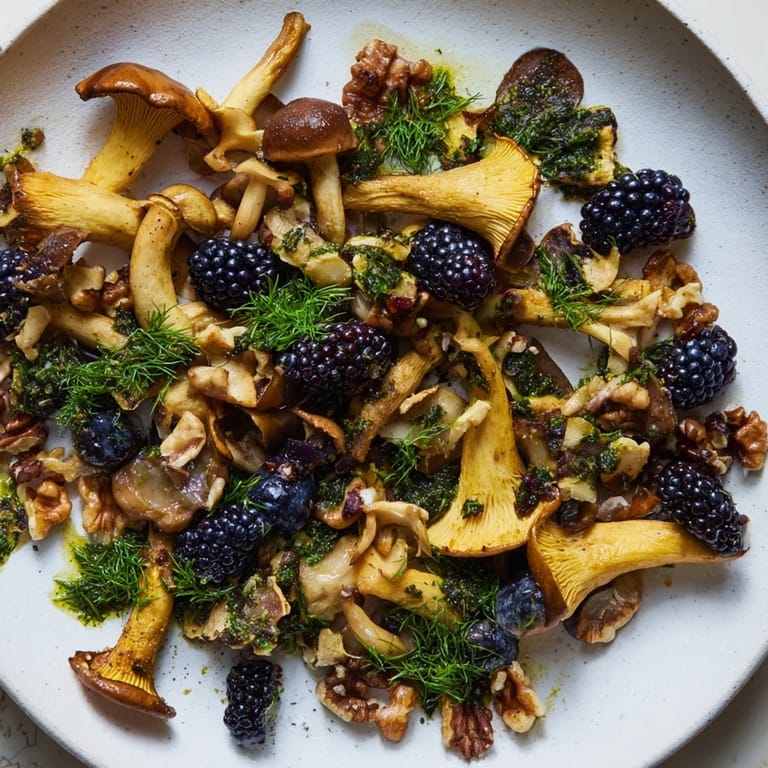
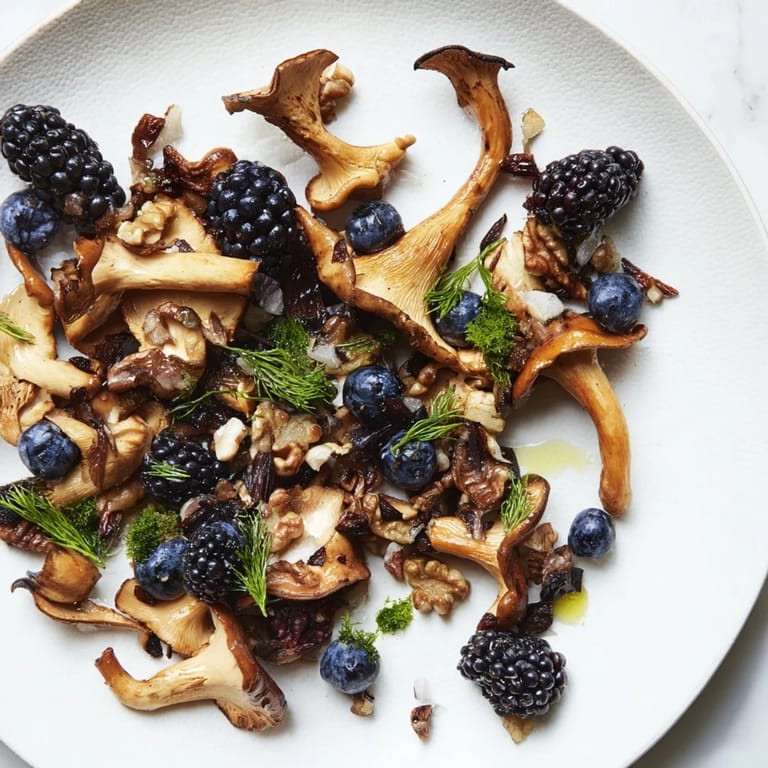
- This is where intuition meets technique. On a large platter or individual plates, begin scattering your cooled mushrooms in small clusters. Then add clusters of hazelnuts and walnuts, varying the densities as if they've naturally settled. Scatter your blackberries and blueberries throughout, creating pockets of dark color. Now generously spoon your herb moss around and between all these elements, letting it flow like actual moss would, filling crevices and creating visual cohesion.
- Finish with flourish:
- If you're using edible flowers, scatter them delicately across the composition. Add microgreens or baby sorrel for peppery brightness if desired. Step back and look at it like the artwork it is. Serve at room temperature, letting all those flavors sing without any heat to muddy them.
 Save
Save There's a moment during every dinner party when someone tastes this and closes their eyes. That's when I know I've succeeded in turning a memory into something others can experience, something that connects them to nature even when they're sitting at a table indoors.
Why This Dish Feels Special
This isn't just food, it's a moment captured on a plate. It represents the Pacific Northwest's generous abundance, that feeling when you walk through the forest and realize nature is an artist. Every element serves a purpose beyond flavor: the dark mushrooms ground you, the nuts add texture and remind you of earth, the berries pop like wild discoveries, and the herbs light everything up. It's restaurant-quality plating that you can make at home, which is perhaps the greatest magic of all.
Flavor Combinations That Work
The beauty of this dish is that it's genuinely forgiving to variations. Once you understand the principle of balancing earthy and bright, you can adapt. Roasted root vegetables like beets or parsnips add earthiness. Pickled shallots introduce acidity and crunch. Pecans or pine nuts substitute beautifully for the hazelnut and walnut blend. The herb moss is where your personality comes through, so feel free to use whatever fresh herbs you have thriving in your kitchen or garden.
Serving and Pairing Wisdom
Serve this at room temperature, never chilled, because cold dulls the subtle flavors you've worked to develop. It's equally at home as an elegant appetizer for a dinner party or as a composed salad course that makes people slow down and pay attention. For beverages, a light Pinot Noir whispers alongside it perfectly, or try a crisp dry cider that echoes the orchard origins of both the apples and the recipe's spirit. If you're serving vegetarian guests, this is the dish that makes them feel celebrated rather than accommodated.
- Make it ahead by preparing each component separately, then assemble just before serving so the herbs stay vibrant and the berries stay fresh
- For a vegan version, simply omit the butter entirely and use a quality olive oil, the dish remains stunning
- Double-check all ingredient labels if serving to anyone with tree nut allergies, as cross-contamination is possible even in toasted nut products
 Save
Save This dish taught me that sometimes the most impressive cooking isn't about complexity, but about respect for ingredients and an understanding of how flavors dance together. Every time I make it, I'm grateful for those forest walks and for the chance to share them on a plate.
Common Questions
- → What types of mushrooms work best?
Mixed wild mushrooms such as chanterelle, shiitake, and oyster offer an earthy depth and variety of textures that complement the dish's forest theme.
- → How is the herb moss prepared?
Fresh parsley, dill, chervil or tarragon, and chives are finely chopped, then tossed with olive oil, lemon zest, and flaky sea salt until slightly clumpy and vibrant.
- → Can the nuts be substituted?
Yes, toasted pecans or pine nuts make excellent alternatives, offering different earthy notes while maintaining texture and warmth.
- → How should the nuts be toasted?
Spread nuts evenly on a baking tray and toast in a 180°C (350°F) oven for 8-10 minutes until golden and fragrant, then let cool before chopping.
- → Is this suitable for vegan diets?
For a vegan version, omit butter or replace it with a plant-based alternative to maintain richness without dairy.
- → What pairings complement this dish?
This earthy and fresh creation pairs well with a light Pinot Noir or a crisp dry cider, enhancing the woodland flavors.