 Save
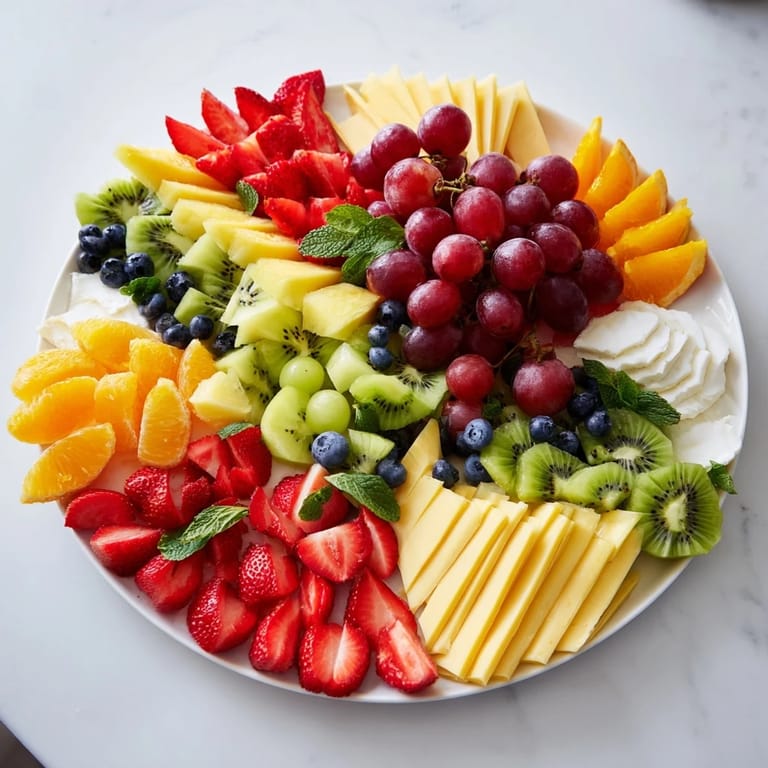
Save A friend once brought this to a dinner party, and I watched the entire table go silent when she set it down. Not because of the flavors, though those were lovely, but because of the pure geometry of it—fruit and cheese arranged like a mandala, each wedge catching the light differently. I realized that night that the most memorable dishes aren't always the most complicated. Sometimes they're the ones that make people pause before they eat, just to admire what's in front of them.
I made this for my sister's engagement party last spring, and I remember being nervous about whether the colors would stay vibrant under the afternoon sun streaming through the windows. They did. What surprised me more was how many guests came back for seconds not because they were hungry, but because they wanted to try different combinations of cheese with each fruit. The platter became less about presentation and more about conversation.
Ingredients
- Seedless red grapes: 1 cup These hold their shape beautifully and add a jewel-like pop of color that catches light.
- Fresh strawberries: 1 cup, hulled and halved Their brightness is essential for the visual impact, and halving them keeps the wedge theme consistent.
- Kiwi: 1 cup, peeled and sliced into wedges The green is irreplaceable on any colorful platter, and the tart flavor balances rich cheeses perfectly.
- Pineapple: 1 cup, cut into small wedges Golden pieces add warmth and sweetness that plays beautifully against sharp cheddar.
- Blueberries: 1 cup These are your gap fillers and your tonal depth, creating visual resting points between louder colors.
- Orange: 1 small, peeled and segmented Fresh citrus adds a brightness you can't get from canned, and the natural oils release as guests handle each segment.
- Aged cheddar: 100 g, cut into triangular wedges Sharp and satisfying, it's the anchor that keeps all the fruit from feeling too light.
- Manchego: 100 g, sliced into thin wedges Nutty and smooth, it bridges the gap between fruit and richer cheeses without overwhelming anyone's palate.
- Brie: 100 g, cut into small wedges The creamy texture softens the overall composition, and its pale color provides crucial contrast to bright fruits.
- Goat cheese: 100 g, sliced into rounds Tangy and pale, it's the surprise element that makes people pause mid-bite.
- Fresh mint leaves: Optional but worth it, mint adds aroma and one more layer of green that ties everything together.
Tired of Takeout? 🥡
Get 10 meals you can make faster than delivery arrives. Seriously.
One email. No spam. Unsubscribe anytime.
Instructions
- Prepare your canvas:
- Wash all fruits and lay them out on clean towels to dry completely. Moisture is the enemy of a pristine presentation, and any beading will catch dust and distract from the geometry.
- Cut everything true:
- Slice all fruits into consistent wedges and your cheeses into matching shapes. This isn't about perfection, it's about creating a pattern your eye can follow.
- Start at the edge and work inward:
- Place your first fruit wedge at the outer edge of a large round platter, then position your first cheese beside it. The repetition begins here.
- Build the pattern:
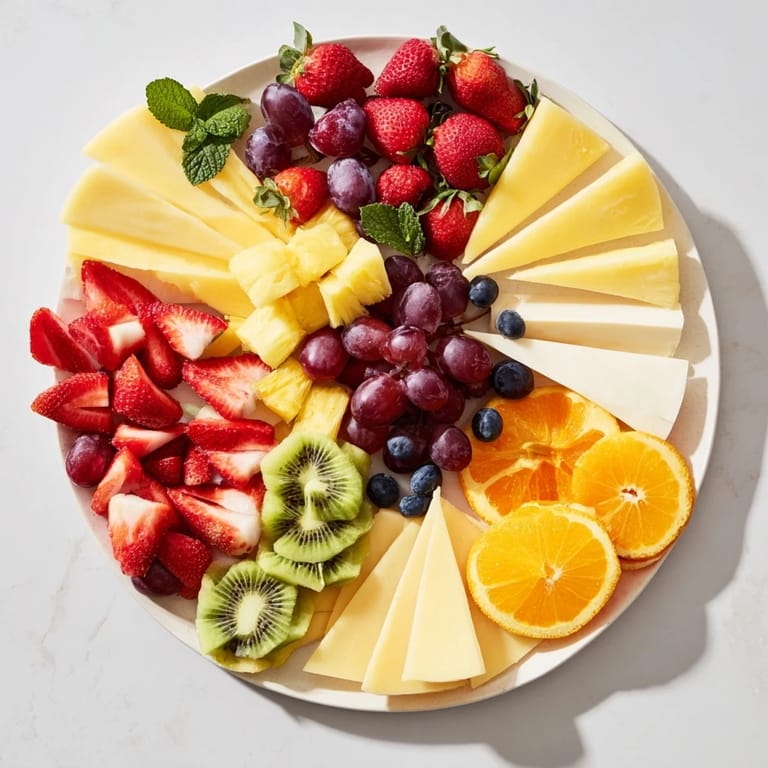
- Continue alternating fruit and cheese around the circle, like you're creating a wheel. Step back occasionally to check that colors are distributed evenly and no single hue dominates one arc of the circle.
- Layer if you have space:
- Create concentric circles as you move toward the center, maintaining the alternating pattern. Each inner ring should feel intentional, not accidental.
- Fill the gaps with intention:
- Use blueberries and grapes as your finishing details, placing them where the eye needs a moment to rest or where a gap would otherwise break the pattern.
- Add mint and serve:
- Scatter fresh mint across the platter just before guests arrive. The final touch is always the one people remember.
 Save
Save I'll never forget the moment when my youngest nephew asked if the platter was too beautiful to eat. His mom said yes at first, then we all laughed and dug in anyway. That's when I understood the real magic of this recipe: it's not about impressing people with complexity, it's about giving them permission to take a moment and enjoy something that simply exists in front of them, complete and unrushed.
The Color Wheel Effect
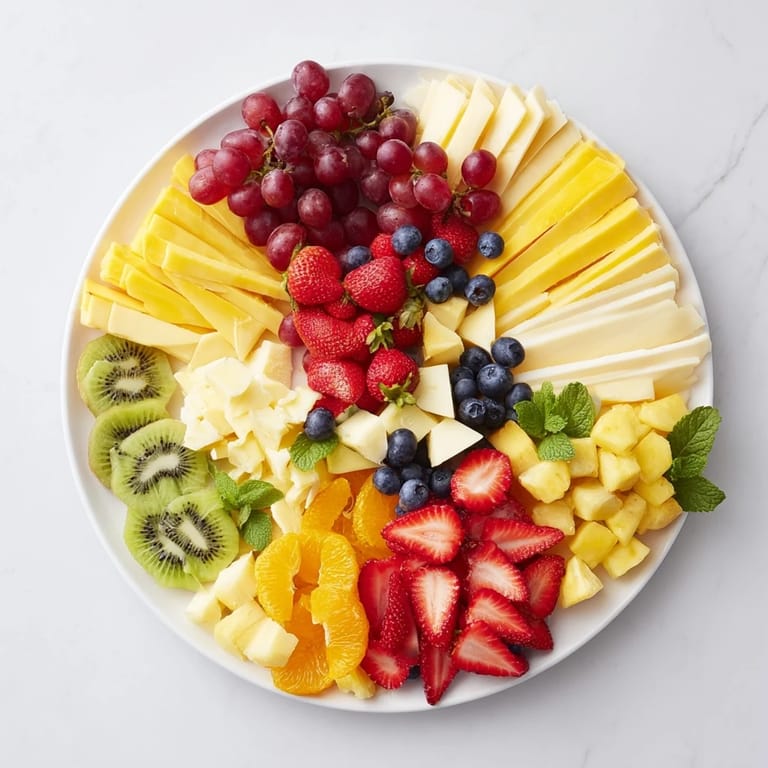
The more you think about color placement, the better your platter becomes. Red grapes, strawberries, and orange segments create one emotional temperature, while kiwi, blueberries, and brie create another. Pale Manchego and aged cheddar bridge the gap, and goat cheese acts like a neutral reset button between color families. This isn't accidental—it's how your eye moves around the dish and why people keep coming back to different sections.
Cheese and Fruit Pairings That Surprise
Don't think of this as a platter where fruit and cheese just happen to sit next to each other. Each pairing has a story: sharp cheddar with sweet pineapple creates a moment of tension that resolves into something memorable, while creamy brie with tart strawberry feels like a conversation between old friends. Goat cheese with kiwi is a discovery most people haven't made, and when they do, they feel like they've cracked a code. This is where the magic actually lives.
Making It Yours
The beauty of a kaleidoscope platter is that it's a framework, not a prison. Winter calls for pomegranate seeds, pear slices, and grapes. Summer begs for fresh berries and stone fruits. You can swap hard cheeses for soft ones, add honeycomb or nuts, or follow your guests' preferences. The only rule is that your arrangement should make you happy to look at, because if you're excited about it, everyone else will be too.
- Prep all elements the morning of and store them separately in airtight containers so nothing picks up stray flavors.
- Use a platter with a rim; it keeps everything contained and feels intentional.
- If you're nervous about presentation, practice once on a smaller board first, just for yourself.
 Save
Save This platter has become my answer to the question of what to bring when I want people to feel special without me disappearing into the kitchen. It's proof that elegance and ease can exist in the same moment.
Common Questions
- → How should the fruits and cheeses be prepared?
Wash and slice fruits into uniform wedges or segments. Cut cheeses into matching shapes like wedges or rounds for a harmonious presentation.
- → What is the best way to arrange the platter?
Alternate fruit and cheese wedges around a large round platter, creating repeating colorful and symmetrical segments for a kaleidoscope effect.
- → Can seasonal variations be used?
Yes, seasonal fruits and cheese varieties can be swapped to maintain freshness and enhance flavors while preserving the visual appeal.
- → Are there suggested garnishes for this platter?
Fresh mint leaves add color and aroma, and optional additions like olives or roasted nuts can be included for savory touches.
- → How should the platter be served or stored?
Serve immediately for best presentation, or cover and refrigerate until ready to serve to keep freshness.