 Save
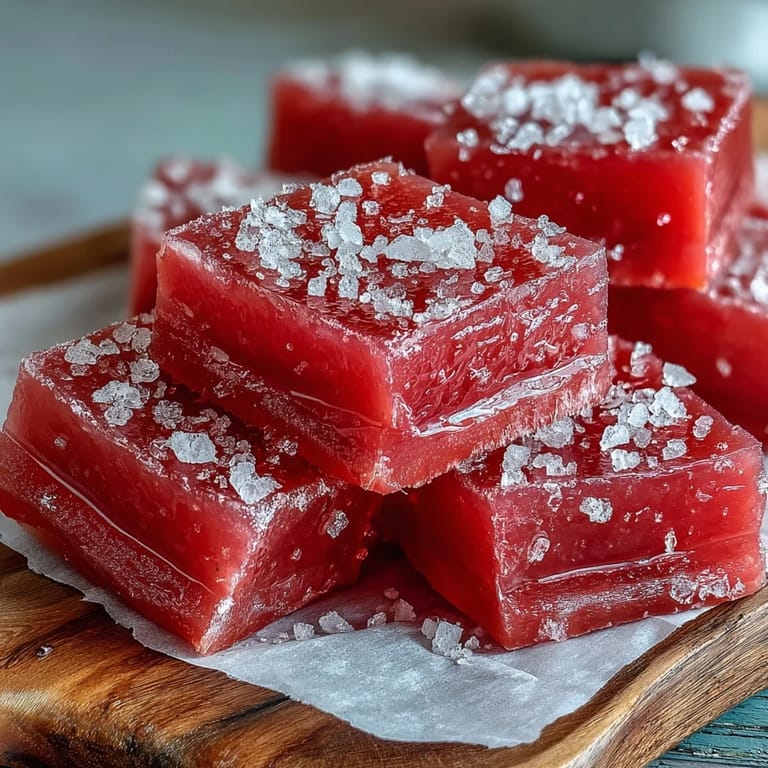
Save My aunt's kitchen in Goa always smelled like something was transforming on the stove, and one afternoon I caught her stirring what looked like liquid rubies in a heavy pan. She was making guava cheese, she explained, though it had nothing to do with dairy—it was this old Portuguese-influenced sweet that turns fruit into something almost jewel-like. Watching the mixture thicken from runny pulp into a glossy, firm mass felt like witnessing alchemy, and when she cut it into perfect squares and rolled them in sugar, I understood why it's been treasured for generations in her family.
Years later, I made this for a dinner party and my hands were literally stained pink from stirring the mixture—my friend laughed and said I looked like I'd been caught red-handed in a fruit heist. When I finally unmolded those squares and they held their shape perfectly, even I was impressed, and serving them with strong black tea while everyone debated whether guava or lime was the real star felt like sharing something quietly magical.
Ingredients
- Ripe guava, peeled and deseeded (800 g or about 4 cups): Choose fruit that's fragrant and yields slightly to pressure—the flavor and moisture content matter enormously, so avoid hard or underripe guavas.
- Water (1/2 cup): This helps soften the fruit gently without diluting the final flavor too much.
- Granulated sugar (450 g or 2 1/4 cups): Sugar is what transforms the fruit into that glossy, spreadable-then-settable texture, so don't skip it or reduce it drastically unless you enjoy a softer result.
- Fresh lime juice (2 tbsp): This brightens the sweetness and prevents the confection from feeling one-note; it's the secret chord that makes people wonder what they're tasting.
- Unsalted butter (2 tbsp, plus extra for greasing): Butter adds richness and helps the mixture achieve that silky, finished quality that separates homemade from ordinary.
- Superfine sugar for dusting (1/4 cup, optional): A light coating adds texture and visual appeal, though it's entirely your choice whether to include it.
Tired of Takeout? 🥡
Get 10 meals you can make faster than delivery arrives. Seriously.
One email. No spam. Unsubscribe anytime.
Instructions
- Set up your workspace:
- Grease an 8x8-inch baking pan with butter and line it with parchment paper, letting the edges hang over the sides so you can lift the finished block out easily later. This step saves frustration.
- Soften the guavas:
- Place chopped guava and water in a heavy-bottomed saucepan over medium heat, simmering until the fruit collapses into soft pulp, about 15 minutes. You'll notice the color deepen and the fruit becoming almost translucent at the edges.
- Create a smooth puree:
- Blend or process the cooked guava until completely smooth, then push it through a fine sieve to catch any stubborn seeds or fiber. This extra step keeps your final texture silky rather than grainy.
- Measure and combine:
- Measure out exactly 2 cups of the strained puree and return it to a clean heavy-bottomed saucepan. Add the sugar and lime juice, stirring to combine before heat.
- Cook until transformed:
- Over medium heat, stir constantly with a wooden spoon or heatproof spatula as the mixture thickens, watching as it gradually turns from a sauce into something that pulls away from the pan's sides and holds peaks when you lift the spoon, usually 30 to 40 minutes. Your arm will start to feel it—resistance from the thickening paste is your signal you're close.
- Add the finishing touch:
- When the mixture looks glossy and thick enough to hold its shape, add the butter and stir vigorously until it's fully incorporated and the surface shines. This happens quickly, so watch carefully.
- Transfer while hot:
- Immediately pour the hot mixture into your prepared pan and smooth the top with a spatula. Speed matters here because it sets up fast once cooled.
- Cool with patience:
- Leave the pan at room temperature for a full hour; the confection will firm up as it cools, though it won't be hard.
- Cut and serve:
- Lift the entire block out using the parchment overhang, place on a cutting board, and cut into 1-inch squares or diamonds with a greased knife (greasing prevents sticking). If desired, roll each piece in superfine sugar for a light, glittering coat.
 Save
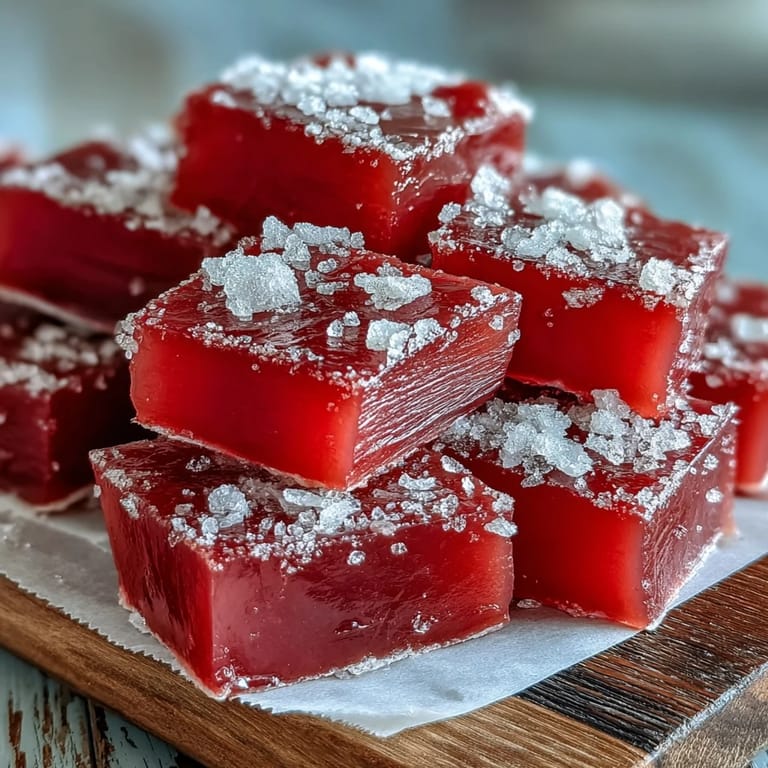
Save I once brought a box of these to a neighbor who'd been under the weather, and when she bit into one, her eyes lit up in a way that had nothing to do with politeness. She wanted to know where I'd bought them, and telling her I'd made them felt like being handed a compliment wrapped in surprise.
Choosing and Preparing Your Guavas
The quality of your starting fruit determines everything here, so choose guavas that smell sweet and fragrant, not musty or underripe. Pink-fleshed varieties tend to be slightly sweeter and more forgiving than white-fleshed ones, though both work beautifully. If you can only find firm guavas, they'll still work—just give them a couple of days on the counter to soften before you start cooking.
Texture and Storage
This confection walks a beautiful line between spreadable and firm, and where you land depends entirely on how long you cook it. I've discovered that aiming for that stage where the mixture just barely holds a peak but still feels faintly loose gives you pieces that are luxurious to bite through rather than dense and stiff. Once cooled and cut, store your guava cheese in an airtight container at room temperature where it keeps for up to two weeks, though it's almost never around that long.
Serving and Pairing Ideas
Guava cheese shines brightest alongside strong, bitter tea where the acidity and sweetness dance against each other, though it also deserves a place on cheese boards with soft cheeses like fresh ricotta or cream cheese. Some people enjoy it tucked into pastry or crumbled over ice cream, and I once tried it with a sharp aged cheddar, which created this unexpected sweet-salty conversation. The possibilities expand once you have a box of these glossy squares on hand.
- Pair with black tea, strong coffee, or even sparkling wine for an unexpected dessert course.
- Nestle alongside creamy cheeses on a board to balance richness with brightness.
- Store in a pretty jar or box wrapped with ribbon for an elegant homemade gift that tastes like you spent hours in the kitchen.
 Save
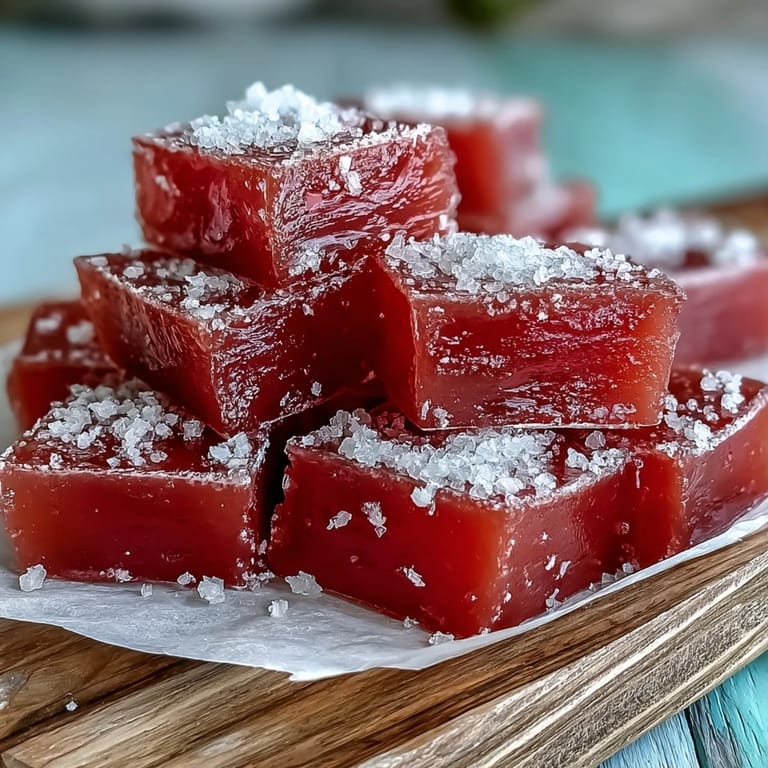
Save Making guava cheese taught me that some of the most elegant treats come from patience and fruit, with no fancy techniques required. It's the kind of recipe that becomes a quiet ritual, something you make again and again until people start asking for it by name.
Common Questions
- → What is guava cheese?
Guava cheese is a traditional Goan confection made by slowly cooking ripe guava puree with sugar and lime juice until it thickens into a fudge-like consistency. Despite its name, it contains no dairy cheese—the term refers to the firm, sliceable texture. The result is a jewel-toned sweet with tropical guava flavor and subtle tangy notes.
- → Can I use white or pink guava?
Both white and pink guava varieties work beautifully. Pink guava yields the classic jewel-toned ruby color, while white guava produces amber-hued pieces. The flavor profile remains similar—sweet and fragrant with that characteristic tropical essence. Choose fully ripe, aromatic fruit for the best results.
- → How do I know when the mixture is ready?
The mixture is ready when it thickens noticeably, becomes glossy, and starts pulling away from the sides of the pan. It should form a mass that holds its shape rather than spreading. A simple test: drop a small amount on a plate—if it sets without being runny, it's done. This typically takes 30–40 minutes of patient stirring.
- → Why add butter to guava cheese?
Butter serves two purposes: it enriches the flavor with a subtle creamy note and creates a glossy, polished finish. The fat also helps prevent the mixture from becoming too sticky or tacky. For those avoiding dairy, vegan butter works as a suitable alternative while maintaining similar textural benefits.
- → How should I store guava cheese?
Store pieces in an airtight container at room temperature for up to two weeks. The sugar acts as a natural preservative. For extended storage, refrigerate for up to a month, though this may slightly firm the texture. Layer pieces between parchment paper to prevent sticking. Avoid humid conditions as moisture can affect the texture.
- → What can I serve with guava cheese?
Guava cheese shines alongside afternoon tea, balancing the beverage's tannins with its sweet-tropical flavor. It also pairs beautifully with soft cheeses like brie or cream cheese on a dessert platter. Some enjoy it as a standalone treat, while others incorporate it into pastries or serve it as a finale to an Indian-inspired meal.