 Save
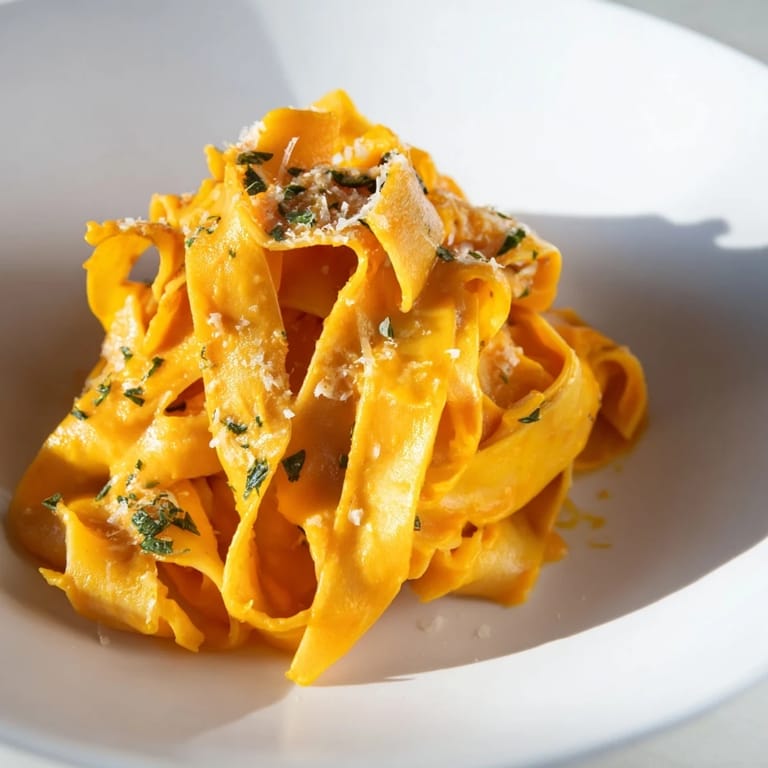
Save There's something about autumn that makes me want to stand in my kitchen with the windows open, just watching the steam rise from a pot of pasta. One October afternoon, I found myself with a butternut squash I'd bought at the farmers market, and instead of roasting it plain, I decided to turn it into something richer—a sauce so creamy and velvety it felt almost decadent. That first bite, with its subtle sweetness and hint of sage, made me realize this wasn't just a side dish anymore. It had become the reason I gather people around my table when the weather turns cool.
I made this for my sister during her first visit after moving back to the city, and she sat at my kitchen counter asking for the recipe before she'd even finished eating. That moment—when someone you love recognizes that what you've made matters—that's when I knew this dish had staying power. Now whenever she mentions craving something warm and comforting, this is what I make.
Ingredients
- 1 medium butternut squash (about 2 lbs), peeled, seeded, and cubed: The star of the show, and choosing one that feels heavy for its size means it's full of flesh and flavor, not just water.
- 2 cloves garlic, unpeeled: Roasting it whole mellows the sharpness and lets it meld into the sauce without any harsh edges.
- 1 small yellow onion, diced: It sweetens as it sautés and adds a subtle depth that rounds out the earthiness of the squash.
- 1 tablespoon fresh sage leaves, chopped (or 1 teaspoon dried): This is the secret flavor that makes people ask what you did differently—it's herbaceous but not overpowering.
- 2 tablespoons fresh parsley, chopped (for garnish): Just a sprinkle at the end, but it brings brightness and reminds your palate why this is autumn in a bowl.
- 12 oz (340 g) dried fettuccine or tagliatelle (or fresh pasta): The wide ribbons catch the sauce better than thin pasta would, so every bite feels intentional.
- 2 tablespoons olive oil: Split between roasting and sautéing, it keeps everything tasting fresh rather than heavy.
- 1/2 cup (120 ml) heavy cream (or full-fat coconut milk for vegan): This is what transforms the squash from puree into something silky and craveable.
- 1/3 cup (35 g) grated Parmesan cheese (or vegan alternative): It adds umami and a subtle nuttiness that deepens the whole dish.
- 3/4 cup (180 ml) vegetable broth: Keep it warm if you can, as cold broth will cool down your sauce while blending.
- Salt and black pepper, to taste: Season as you go, not just at the end.
- Pinch of nutmeg (optional): When you do add it, use less than you think you need—it whispers rather than shouts.
Tired of Takeout? 🥡
Get 10 meals you can make faster than delivery arrives. Seriously.
One email. No spam. Unsubscribe anytime.
Instructions
- Get your oven ready and prep the stars:
- Preheat to 400°F and line your baking sheet with parchment paper. Cube your squash and toss it with the unpeeled garlic cloves, 1 tablespoon olive oil, salt, and pepper until everything glistens.
- Let the oven work its magic:
- Roast for 25–30 minutes, turning halfway through. You'll know it's ready when the edges are caramelized and the flesh is tender enough to break apart with a spoon.
- Start your pasta water and get the pasta cooking:
- Fill a large pot with salted water and bring it to a rolling boil. Cook your pasta to just under al dente, since it'll finish cooking in the sauce.
- Sauté your aromatics:
- In a large skillet, warm the remaining 1 tablespoon olive oil over medium heat. Add your diced onion and sage, stirring occasionally for about 4 minutes until the onion softens and becomes translucent.
- Transform everything into sauce:
- Squeeze the roasted garlic from its skins directly into a blender. Add the roasted squash, the sautéed onion and sage, your warm vegetable broth, and cream. Blend until completely smooth and creamy, about 1 minute.
- Bring it all together:
- Pour the sauce back into your skillet over low heat. Stir in the Parmesan and a whisper of nutmeg if you're using it. Taste and adjust your seasoning—this is your moment to make it exactly right.
- Marry the pasta and sauce:
- Add your drained pasta to the skillet and toss gently for 2–3 minutes. If the sauce feels too thick, splash in some of that reserved pasta water until it coats the noodles like a light blanket.
- Finish and serve:
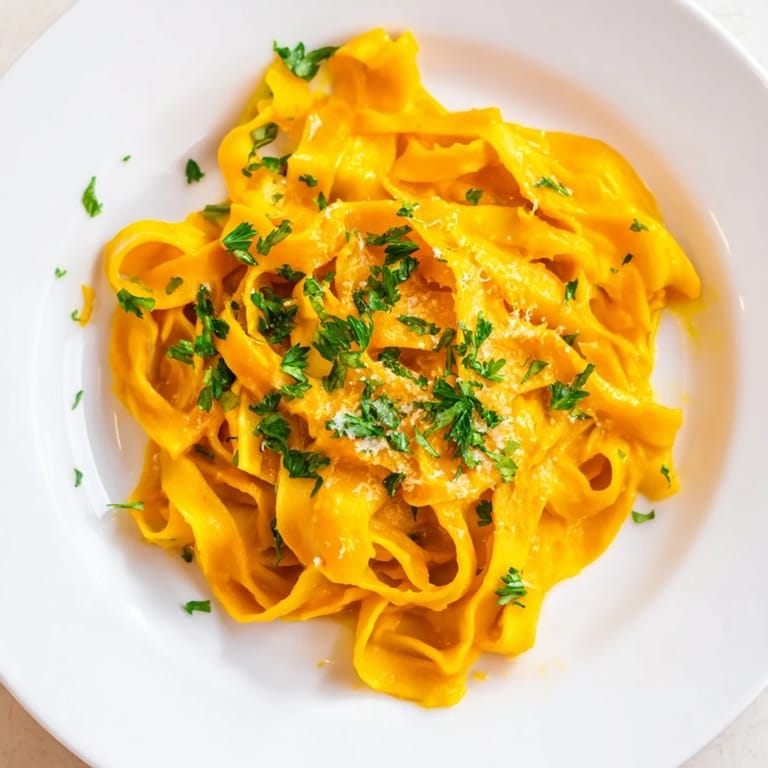
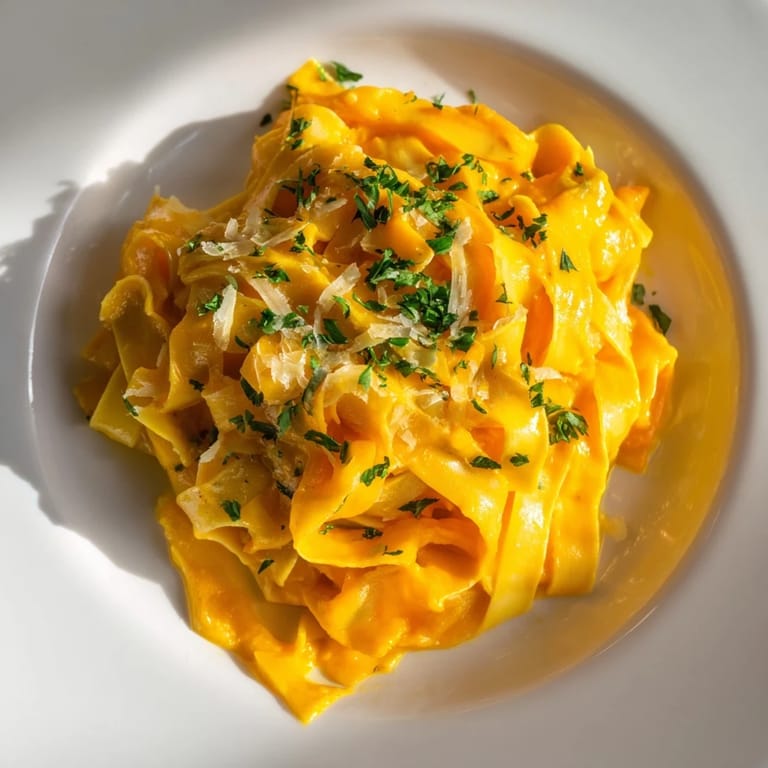
- Transfer to serving bowls or a platter, scatter with fresh parsley, and finish with extra Parmesan and a grind of pepper.
 Save
Save I've learned that the best meals are the ones where you taste someone's care in every spoonful. This dish does that—it feels special without requiring you to be a special cook. It's proof that sometimes the simplest ingredients, treated with a little attention, become the most memorable.
Why Roasting Makes All the Difference
Roasting the squash instead of steaming or boiling it concentrates its sweetness and brings out a subtle caramelization that tastes almost nutty. The high heat breaks down the cell walls differently than moist heat would, which is why this sauce feels so luxurious compared to versions made with boiled squash. It's one of those cooking techniques that seems small until you taste the result and realize it changed everything.
Playing With Variations
This sauce is a canvas. I've stirred in crispy sage leaves for extra texture, added sautéed mushrooms for earthiness, and once swirled in a handful of fresh spinach just before serving. Each time it felt new, even though the foundation stayed the same. The sauce is also sturdy enough to hold up to toasted walnuts for crunch, crispy breadcrumbs for substance, or even a drizzle of truffle oil if you're feeling fancy.
Making It Your Own
The beauty of this recipe is how it bends to what you have on hand and what you're craving. Swap the cream for coconut milk and the Parmesan for nutritional yeast, and you've got something entirely vegan that tastes just as good. Use whatever pasta shape you love—pappardelle, rigatoni, even shells all work. The sauce is forgiving enough to accommodate your preferences, and that's what makes it worth returning to again and again.
- If your sauce breaks or looks grainy while blending, strain it through a fine mesh sieve into a clean bowl and whisk in the cream by hand.
- Leftover sauce freezes beautifully for up to three months, so make extra on nights when you have the time.
- This pairs beautifully with a simple green salad dressed in lemon vinaigrette, which cuts through the richness and brightens the plate.
 Save
Save This is the kind of meal that reminds you why you cook in the first place. Simple, honest ingredients transformed into something that feels like a hug from the inside.
Common Questions
- → How do I roast the butternut squash for the sauce?
Peel, seed, and cube the squash, then toss with olive oil, salt, and pepper. Roast at 400°F for 25–30 minutes until tender and caramelized.
- → Can I use a different type of pasta?
Yes, fettuccine or tagliatelle work well, but any long pasta will pair nicely with the creamy squash sauce.
- → What makes the sauce creamy?
The sauce blends roasted squash, garlic, sautéed onion, vegetable broth, and heavy cream to achieve its velvety texture.
- → How can I make a vegan version?
Substitute heavy cream with full-fat coconut milk and Parmesan with a vegan alternative to maintain creaminess and flavor.
- → Are there any suggested additions for extra texture?
Consider adding sautéed mushrooms, spinach, or toasted walnuts to enhance texture and flavor complexity.
- → How do I adjust the sauce consistency?
If too thick, stir in reserved pasta water gradually until the desired creamy consistency is reached.