 Save
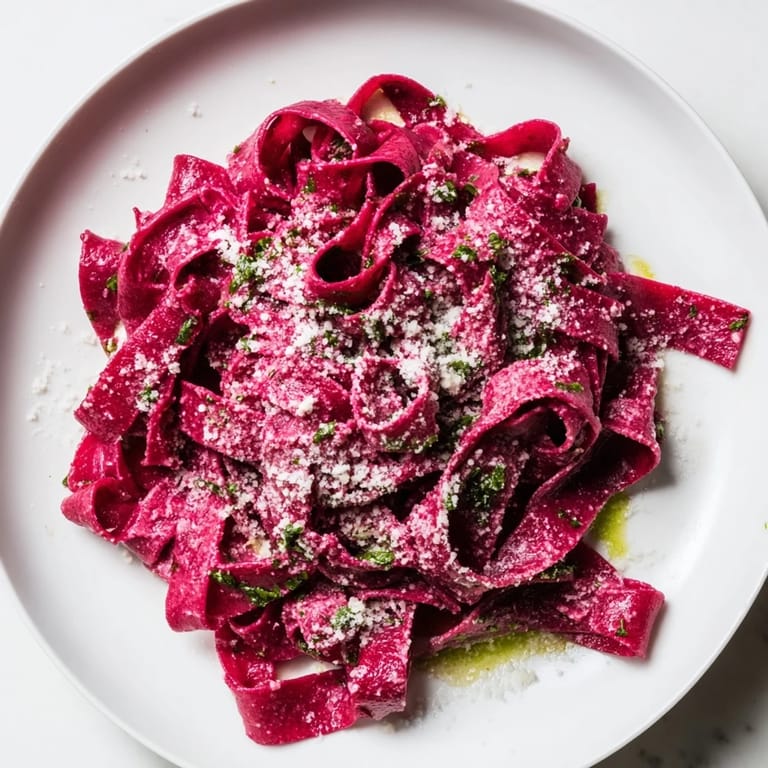
Save The first time I made beet pasta, my hands turned a shocking shade of magenta and I couldn't figure out why the dough looked like it belonged in an art project rather than my dinner bowl. My partner walked in, took one look, and laughed—apparently I'd smeared beet puree across my face without realizing it. But when those noodles hit the boiling water and transformed into this gorgeous, jewel-toned ribbon, something clicked. This wasn't just pasta with a gimmick; it was earthy, slightly sweet, and honestly beautiful enough to make people pause before twirling it onto their fork.
I made this for a dinner party once, nervous that magenta noodles might look too strange to my guests. Instead, everyone wanted the recipe before dessert even arrived, and someone asked if I'd added beetroot to improve the flavor or just for show—which made me realize that the why doesn't matter when the result tastes this good and looks this striking.
Ingredients
- Medium beet (about 180 g): This is where all the magic happens—roasting concentrates the sweetness and makes peeling effortless.
- Olive oil (1 tablespoon for roasting): A light coating helps the beet caramelize slightly and prevents it from drying out in the oven.
- Salt (pinch): Brings out the beet's natural flavor before it becomes puree.
- All-purpose flour (2 cups or 250 g): The foundation of the dough—measure by weight if you can for consistency.
- Large eggs (2): These bind everything together and create the silky texture fresh pasta is known for.
- Salt (1/2 teaspoon): The second pinch of salt goes into the dough itself for seasoning throughout.
- Roasted beet puree (1/4 cup or 60 g): This is your star ingredient—smooth, vibrant, and ready to transform plain dough into something memorable.
- Unsalted butter or olive oil (2 tablespoons for serving): A light finish that lets the beet flavor breathe without overwhelming it.
- Fresh herbs (basil or parsley): These brighten the earthiness and add a moment of freshness with every bite.
- Grated Parmesan or pecorino cheese: Optional but adds a sharp, salty contrast that makes the whole dish sing.
Tired of Takeout? 🥡
Get 10 meals you can make faster than delivery arrives. Seriously.
One email. No spam. Unsubscribe anytime.
Instructions
- Start with the beet:
- Preheat your oven to 400°F, wrap a medium beet in foil with a light drizzle of olive oil and a pinch of salt, then roast for 45 to 60 minutes until a fork slides through easily. You'll know it's done when the skin practically falls off once it cools.
- Create your puree:
- Once cool enough to handle, peel away the papery skin and blend the beet until completely smooth. You need about 1/4 cup for the dough, though I always make extra—it freezes beautifully and sneaks into soups or smoothies later.
- Build the dough:
- Mound your flour on a clean surface, create a well in the center, and pour in your eggs, salt, and beet puree like you're making a pasta nest. Using a fork, slowly draw flour from the inside walls of your mound into the wet center until you have shaggy clumps that hold together.
- Knead with purpose:
- Push and fold the dough for 8 to 10 minutes until it becomes smooth and elastic—this is when it stops sticking to your hands and starts feeling alive under your palms. If it's too sticky, dust with a tiny bit more flour; if it's dry, wet your fingers slightly before continuing.
- Let it rest:
- Wrap the dough in plastic wrap and leave it at room temperature for 30 minutes—this relaxation period makes rolling much easier and gives the gluten time to settle. You'll notice the difference when you touch it again; it'll feel more cooperative.
- Roll and cut:
- Divide the dough into four pieces and roll each through a pasta machine or with a rolling pin to about 1 to 2 millimeters thick. Cut into whatever shape calls to you—tagliatelle ribbons, fettuccine strands, or even lasagne sheets if you're feeling ambitious.
- Cook to al dente:
- Drop your fresh noodles into a large pot of salted boiling water and watch them carefully—fresh pasta cooks in just 2 to 3 minutes, much faster than the dried kind. Taste one strand after a couple of minutes; when there's just a whisper of resistance in the center, it's time to drain.
- Finish with care:
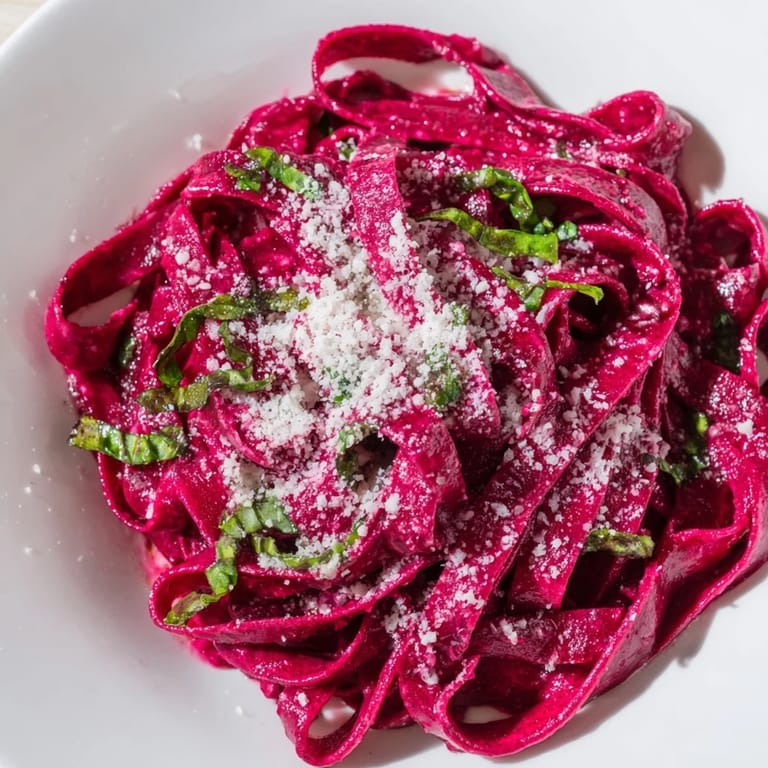
- Toss the hot pasta with butter or olive oil while it's still steaming, then scatter with fresh herbs and cheese if you're using them. The warmth of the noodles will melt everything into a light, glossy coating.
 Save
Save There's something almost meditative about making pasta by hand, standing at the counter with flour under your fingernails and the smell of roasted beet lingering in the air. The moment it all comes together—when the dough stops resisting and starts dancing under your hands—that's when you understand why people have been making pasta this way for centuries.
Flavor Pairing That Makes Sense
Beet pasta has a subtle earthiness that can disappear entirely if you pair it with heavy, complicated sauces, so I've learned to keep the toppings simple. Brown butter and sage is my go-to because the sage's peppery bite cuts through the sweetness, while brown butter adds richness without noise. A squeeze of fresh lemon or a light cream sauce works beautifully too—anything that lets the beet's quiet personality shine.
Making It Your Own
Once you nail the basic technique, this recipe becomes a launching point for experimentation. I've made versions with roasted carrots, added a touch of garlic to the puree, or even stirred in fresh dill for an unexpected direction. The dough is forgiving enough to handle small adjustments, and each variation teaches you something new about how vegetables and flour speak to each other.
Scaling and Storage Wisdom
This recipe scales beautifully if you're doubling for a crowd—just remember that more dough needs more resting time and more patience when rolling. Cooked pasta keeps in the fridge for a day or two tossed lightly in olive oil, though fresh pasta is always best eaten within hours of cooking.
- Uncooked dough freezes perfectly wrapped tightly in plastic—just thaw overnight in the fridge before rolling and cooking.
- If you have leftover beet puree, freeze it in ice cube trays for future pasta batches or stirred into morning smoothies.
- Make this recipe in spring when beets are tender and sweet, or any time you want your dinner table to stop people mid-conversation.
 Save
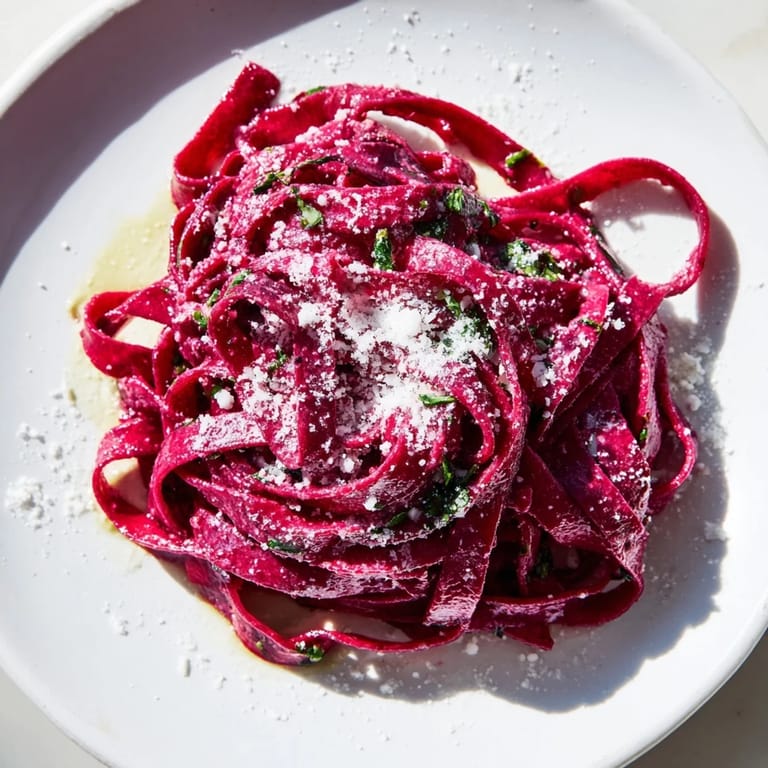
Save Making beet pasta reminds me that the best meals often come from small moments of experimentation and the willingness to get a little messy. Serve it with people you want to linger at the table with.
Common Questions
- → How do I achieve the vibrant color in the noodles?
Roasting the beet before pureeing intensifies its natural pigments, providing the noodles with a bright magenta hue when mixed into the dough.
- → Can I substitute the eggs in the dough?
Yes, for a vegan alternative, replace eggs with 1/4 cup water and 1 tablespoon olive oil to maintain dough consistency.
- → What is the best way to roll and cut the noodles?
Use a pasta machine or rolling pin to roll dough to about 1–2 mm thickness, then cut into tagliatelle, fettuccine, or your preferred noodle shape.
- → How long should the noodles be cooked?
Boil the noodles in salted water for 2–3 minutes until al dente for optimal texture.
- → What toppings complement these beet noodles?
Lightly toss with butter or olive oil, fresh herbs like basil or parsley, and grated Parmesan or pecorino cheese for enhanced flavor.